

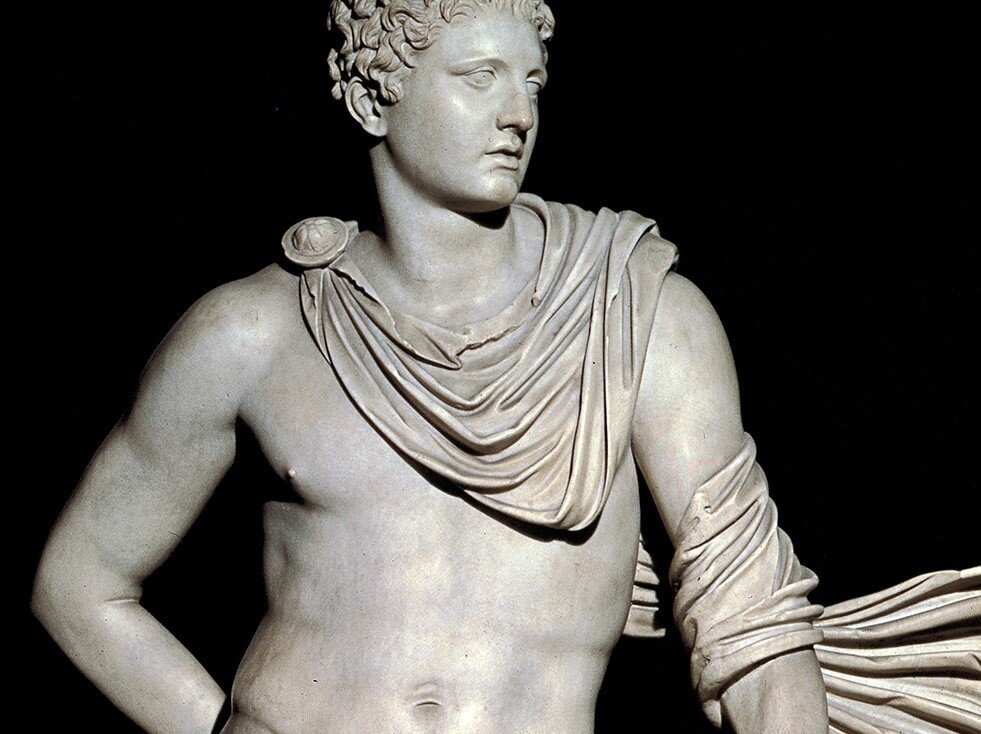
You know well how surprises at the Vatican Museums in Rome never fail. In particular, the Pio Clementino Museum, the main section containing the classical art collection, is truly rich with priceless treasures. I think of the Belvedere Torso, for example, which also inspired the famous Michelangelo. But just before, between the so-called Octagonal Courtyard and the room with the Torso, there are two small rooms containing a real marble zoo: the Hall of Animals. Being surrounded by marble sculptures, of different colors and workmanship, depicting animals of all kinds (lions, frogs, hares, eagles, deer, and much more), is something intriguing. But in this section, we also have ancient sculptures depicting mythological characters like Meleager, a very skilled hunter. The connection with animals is quite fitting. But let's discover together something more about both the work and the mythological character. Follow your tour guide in Rome on this journey back in time and space.
Who was Meleager, then? According to Greek mythology, he was the most skilled hunter in Greece, so great that he succeeded in a very difficult task, where other heroes like Jason, Theseus, or Pirithous failed. One day, to celebrate a year of good harvests, King Oeneus decided to thank all the Gods, starting with the agrarian ones (like Ceres or Bacchus for example), to reach everyone. Everyone, except one deity: Diana. A mere oversight that the Goddess took to heart, thus sending a monstrous boar to devastate the King's lands. As Ovid tells us in his Metamorphoses (from which we also learn about a mythological episode that inspired Bernini, as you can read here), the boar was truly monstrous: "Its eyes spew blood and flames, its bristly neck is swollen, and the bristles stand up like straight spears [...] the tusks are like those of Indian elephants; a lightning-like flash comes from its snout, and the foliage catches fire at the touch of its breath." King Oeneus asked for help from anyone, and many young heroes answered the call, joining forces and preparing for the terrible hunt. The battle was terrible and bloody, because repeatedly the boar was struck by the weapons wielded by Meleager and the others, without any effect. The terrible monster, moreover, was capable of striking the young heroes with strength and cruelty, even causing casualties. In the end, Meleager threw two spears, and one of them lodged right on the animal's back. As Ovid describes: "Without delay, while it (the beast, ed.) rages and moves around and vomits hissing saliva mixed with fresh blood, the author of the wound approaches it, excites its anger, and plants a shining spear in the middle of the shoulders in front of it". A great victory indeed, which however did not save Meleager from a tragic end that led to his death. The ancient Greeks already considered the young man a great example of cunning and strength, especially applied to hunting. This was common in the Greek religious and cultural landscape, as many of the heroes did nothing but represent, often even to excess, all human tendencies or characteristics. Not surprisingly, therefore, Meleager became a favored subject sculpted by numerous masters, as you can see here at the Vatican.
It seems, in fact, that the same Greek master Skopas, in the 4th century BC, created the sculptural group of Meleager which inspired this marble work at the Vatican, sculpted during the 2nd century AD. What you can admire here is a Roman copy, one of the many that today adorn museums around the world. After all, in some way, we must really thank the ancient Romans who, once in contact with the wonders of Greek art, originally much more mature than Roman art, began to replicate as much as possible the works they considered most valuable (obviously pursuing objectives, particularly political, typical of the Roman world). For this reason today, although many masterpieces by prominent personalities like Skopas have been lost, they still survive thanks to the skills of the Romans. In our case, we see the proud face of the young Meleager, a victorious hero in the prime of his physical prowess. The attitude and pose suggest patience and power, calculation and ruthlessness. He, surrounded by those animals that, alas, he skillfully knew how to hunt. It's nice to understand how, once again, various stories and traditions, first oral then written, have been able to generate such wonders.