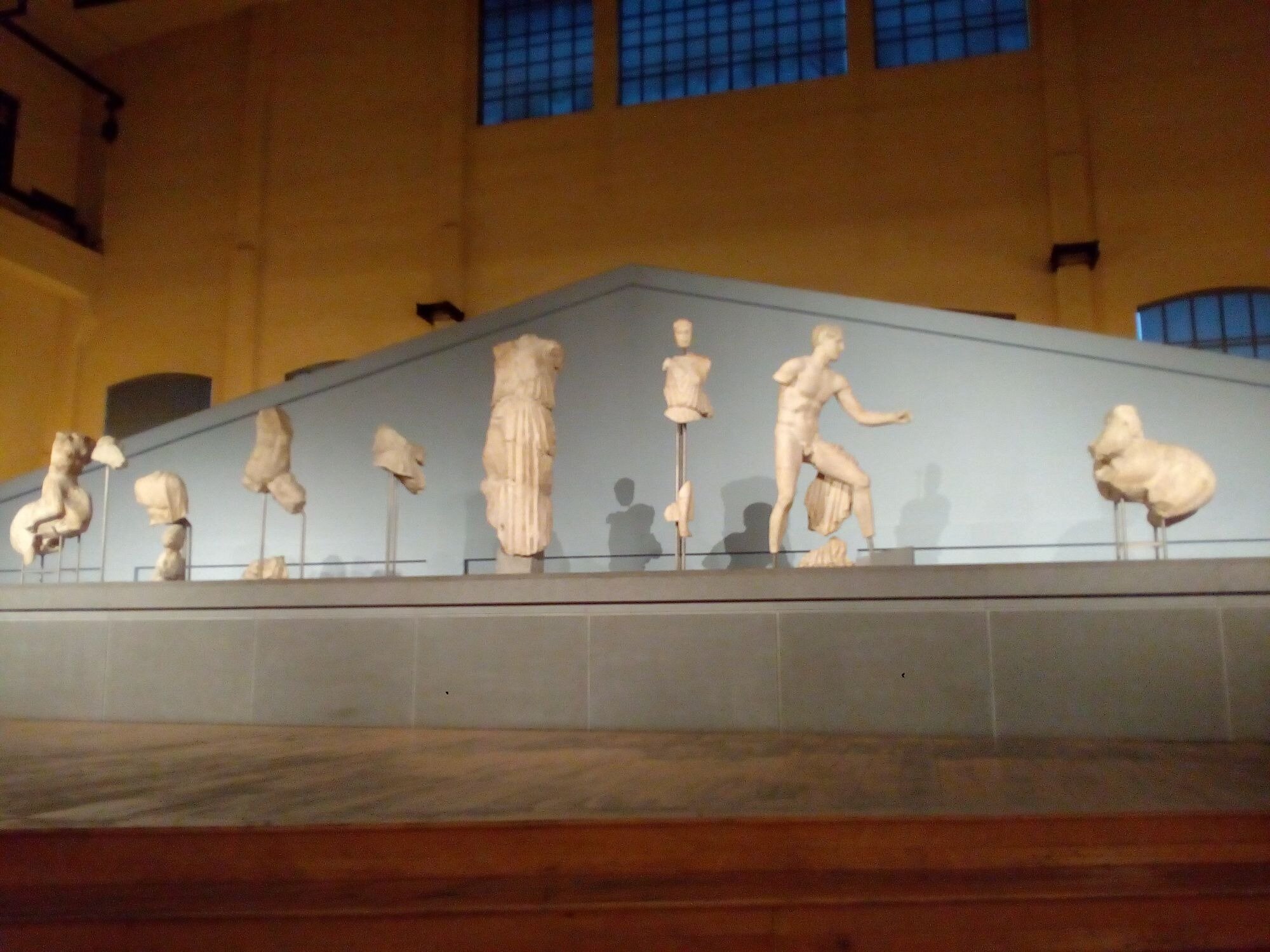
At the Centrale Montemartini Museum, the curios archaeological museum of Rome along the Via Ostiense, we also find some fragments of the frieze of the ancient Temple of Apollo Sosiano, architectural and artistic evidence of a beautiful temple complex still partially visible in Rome and, above all, capable of give an extra motivation to visit this extraordinary museum. Studying to be a local tour guide I was surprised to understand how little remains of the past are able to open a new world to the art, the culture, the mystery and the religion of the ancient roman civilization.
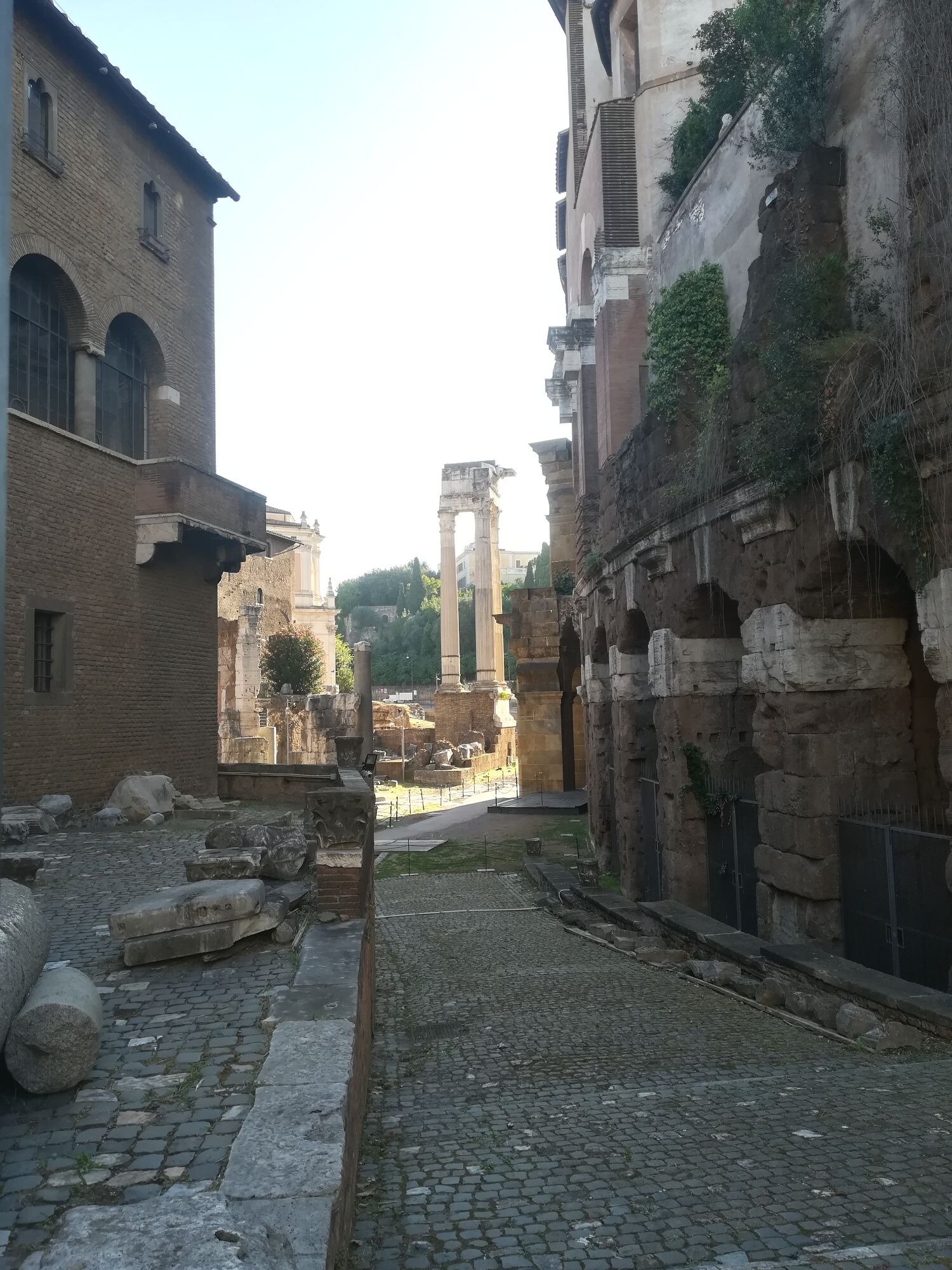
The Temple of Apollo Sosiano was very dear to the Romans not only for the divinity itself (certainly among the most famous already at the time and among those that more than others received templar buildings as a gift), but also for the historical phases in which it was brought into question! In fact, this temple was built right next to the Teatro Marcello (and you can click here to know more about it), and even to date we have three splendid columns on site to remind us of this, managing, among other things, to determine one of the most beautiful views of the whole city. The first nucleus of the temple was built in the 5th century b.C., when the Romans wanted to erect a sacred place to Apollo, a divinity at that time also closely linked to medicine, as well as to divination. It was a period of wars, above all civil and social, and Rome often found itself fighting with famines and plagues that decimated the population and weakened society itself. But this templar building has other firsts, considering that it was the very first cult building in Rome dedicated to Apollo (to find another we have to wait for Augustus). Among other things, the cult itself was probably brought to the city by the Tarquins, therefore before the fifth century b.C., when a simple uncovered altar was raised in the area where the temple was later built. The Temple of Apollo Sosiano underwent various restorations, but there was one man in particular who changed its destiny: Julius Caesar. It was he, in fact, who gave new life to the temple of Apollo especially with the decision to erect a new masonry theater that would increase his prestige by giving Rome a completely new building for the enjoyment of the citizens. The theater in question, known today as Teatro Marcello and completed by Augustus, is not surprisingly located right in front of the remains of the Temple of Apollo Sosiano.
After all, we know how this god was also linked to the arts and to the Muses, personifications of the arts themselves. As often happens in similar situations, it is today difficult to establish with certainty what the frieze decoration of the pediment of a temple of 2,500 years ago could have been like, and what the figures could be carved in it! But at Centrale Montemartini Museum of Rome they tried, and among these marble remains we can find fragments of Amazonomachy, a mythical fight between Greeks and Amazons, in which heroes such as Theseus and Heracles also appear among the Greek ranks! Last curiosity: these works of art were probably transported to Rome directly from Greece. A wealthy businessman, named Sosio, in the Augustan age stripped a temple in Greece, dating back to the 5th century b.C., of his decorations, to take them to Rome and to install them here, on the pediment of this sacred place. A kind of big recycling…