

In the underground of the Parioli district stood a sacred grove and a fountain dedicated to Anna Perenna, a goddess to whom the Romans of old were very devoted.
In 1999, near Piazza Euclide in Rome, excavations brought to light something truly exceptional. Imagine a fountain with a large rectangular basin, with a slightly raised cistern set behind it. Then imagine that, overall, archaeologists found two small altars and a block of marble. On two of these three artifacts the dedicatory inscription to the special deity to whom this fountain was dedicated is crystal clear: Anna Perenna. Indeed, to be precise, the nymphs are also mentioned here, mythological semi-divine creatures often linked to springs or water, as in this case. In fact, the inscription says “Nymphis sacratis Annae Perennae”. It is certainly not the only monument of its kind, since the so-called Spring of Juturna in the Roman Forum is similar. But it doesn't end here—there is much more, because here in Rome archaeologists were amazed to have brought to light various artifacts and objects from different centuries, which allows us to say that the fountain was built around the 4th century BC and used until the end of the empire. Almost a thousand years of dedications to Anna Perenna. But who was she, really? This is where your local tour guide in Rome will shed some light.
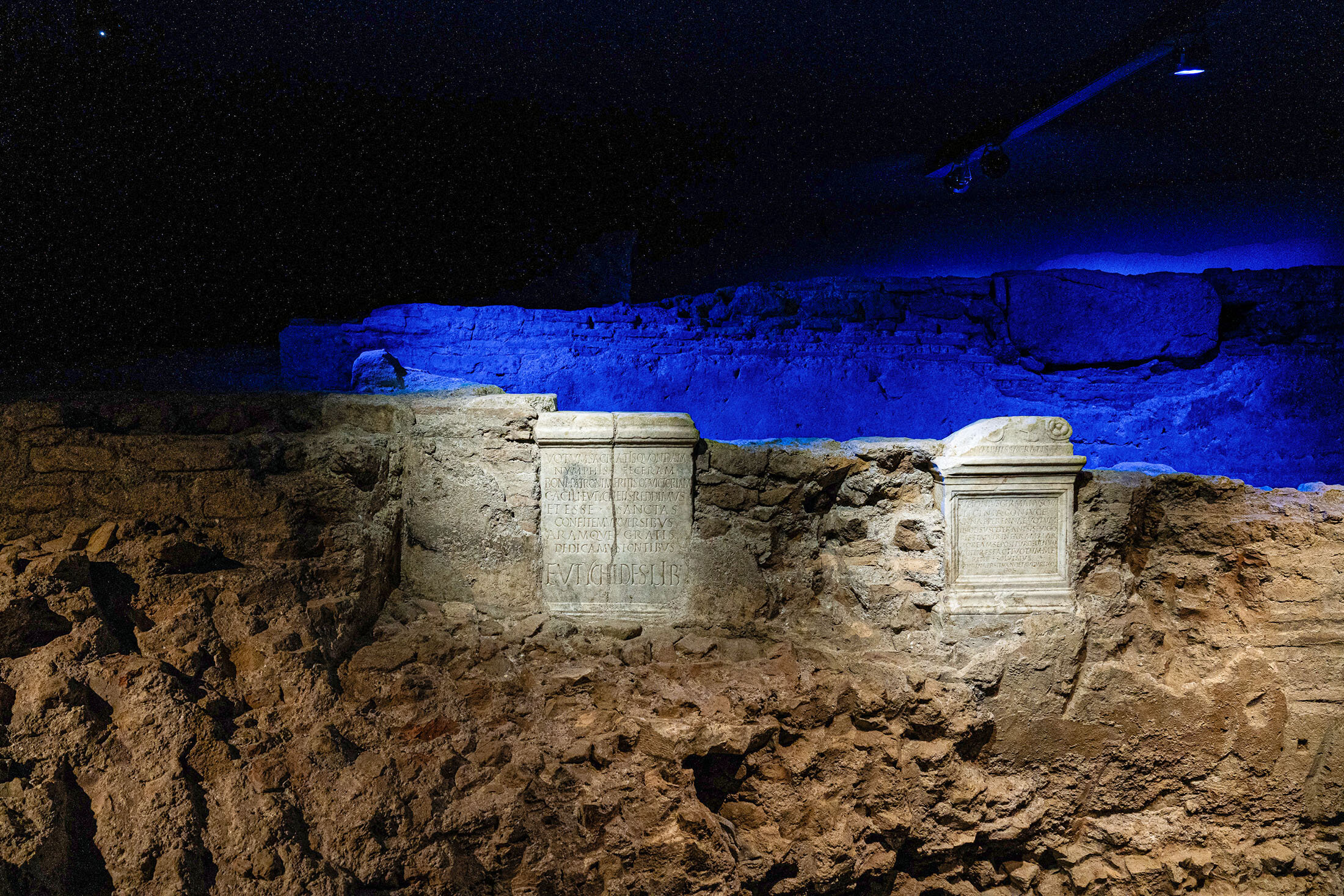
There are various ancient historical sources to draw on to learn about the origins of Anna Perenna, this peculiar mythical figure. Above all, one can refer to the Fasti by Ovid, which tells us a lot about the different theories that hovered around our Anna. For example, we can suppose that Anna was the sister of poor Dido, abandoned in Carthage by the hero Aeneas (a Trojan hero crucial to Rome’s story, as you can read here). It seems that Anna fled the city and was shipwrecked right on the coasts of Latium, where she was protected by Numicius, a river deity of the area of Lavinio, the city founded by Aeneas. The wording amnis perennis, therefore, could mean the goddess who protects the waters of the Lavinio area. It is also said that Anna was a woman who fed the plebeians, during one of their rebellions, near Boville, and that she was then forever thanked for her gesture. Some identify her with a nymph, others still with the nurse of Jupiter. The fact remains that, in the Roman calendar, Anna Perenna was the first divinity of the year to be honored and celebrated by the Romans, on the occasion of their New Year, which fell on March 15. A goddess who, therefore, cyclically and endlessly returns and is renewed for a new, sunlit year for the Romans. It was a time of celebration and revelry, a time when inhibitions were let go to celebrate with great joy, exactly as we do at New Year. And the crowd of Romans gathered especially here, where today there are the remains of this spring and where, once, a small grove stood. It was spring, maybe it was even a fine day, and people would lie on the grass to sing, eat and pray. Above all to drink, perhaps, as Ovid tells us: “everyone staggers and puts on a show of themselves”. But it wasn’t only a feast.
After all, Roman religion permeated every aspect of public life in the ancient Urbs. Imagine, then, how people gathered here not only to start the new year in the best way, but also to leave devotional and propitiatory signs that would prompt Anna Perenna to ensure a good harvest, a new victory on the battlefield, a glorious political leadership. It is striking to think that nothing, basically, changed over the roughly 8 centuries during which the spring of Anna Perenna was in use, in every sense. Excavating the archaeological site, experts found 549 coins and 72 oil lamps, as well as terracotta finds, various kinds of pottery, little jugs. But, above all, seven small figurines with grotesquely anthropomorphic shapes also came to light, along with sheets engraved with curses, the so-called defixiones. Superstition was at home in ancient Rome, and this discovery makes us think that, perhaps shortly after the site was abandoned with the shift from paganism to Christianity, the area became the dwelling of a witch by trade. Many of the finds discovered here are, today, kept in the museum of the Baths of Diocletian (where you can also find this other artifact in particular). No doubt about it. The underground of Rome, as always (and as in this particular case), never ceases to amaze us.
