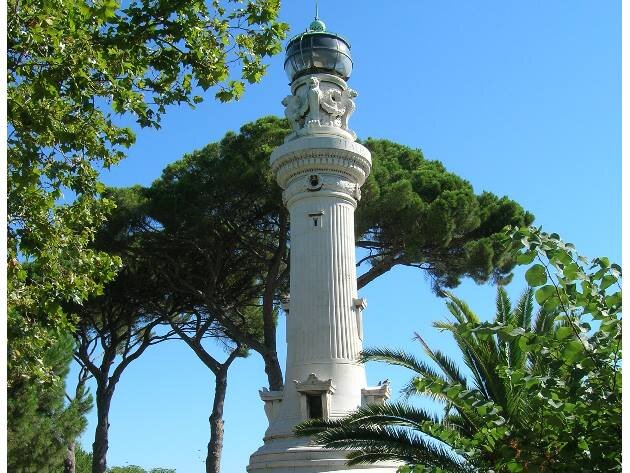
Even Rome, although it is not near the sea, has its own lighthouse. Just climb up to the Gianicolo to spot it.
The Gianicolo is the landmark for anyone who wants to admire Rome from a truly unique viewpoint, even for a tour guide like me. The hill also has its architectural surprises, just think of the Renaissance Villa Lante, or its places of memory (like the monastery where Torquato Tasso died, click here to learn more). But no one can miss this elegant white marble lighthouse, rising not far from the main square (from which you get the best view of the area), dedicated to Garibaldi. This lighthouse was built in 1911, the year when, especially in Rome, the fiftieth anniversary of the Unification of Italy was celebrated. Who wanted and funded it? None other than the Italian community who had emigrated to Argentina, especially those living in Buenos Aires. It was a way for people who left the peninsula when, perhaps, it was not yet a single nation, to pay tribute to what Italy had truly become: a country. Not by chance, since at that time the search for symbols and monuments to honor Italy was in full swing, the marble chosen was the pure white Botticino, the same used to build the Altar of the Fatherland. But the patriotic and historical references certainly do not end here.
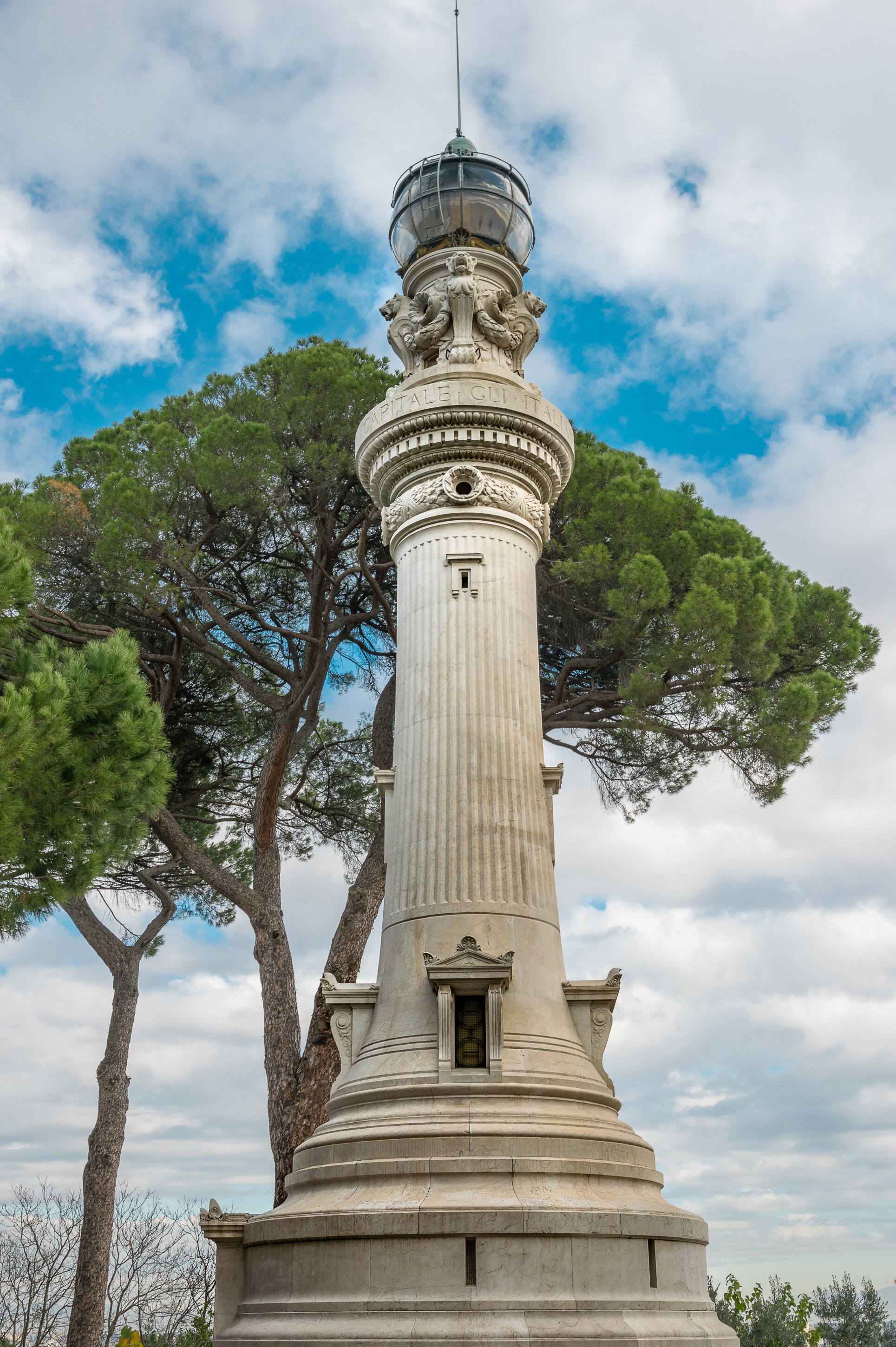
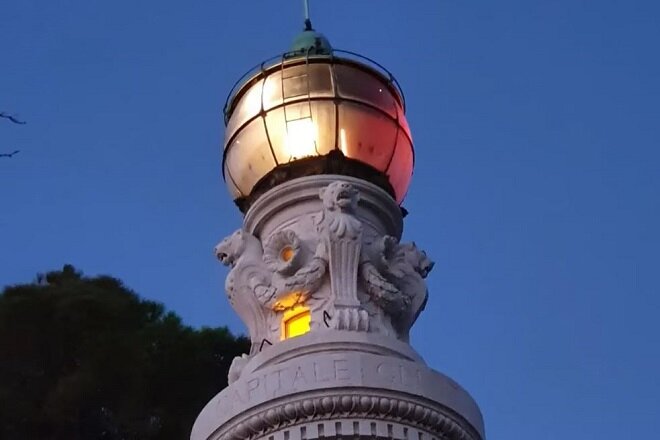
First of all, it should be noted how the column is fluted, in the style of Doric columns that were so fashionable not only in ancient Rome, but also in the modern city that wanted to revive the glory of the imperial era. Near the top, you can read the dedication chosen to honor the monument: “To Rome, the Capital, from the Italians of Argentina MCMXI.” A date written in Roman numerals, leaving nothing out. Even the frame just below the top, with its decorative frieze of natural motifs, shows the intention to recall ancient models. After all, the architect who designed the work, Manfredo Manfredi, was the same who created the monumental tomb of the first King of Italy, Vittorio Emanuele II, at the Pantheon. He certainly knew what he was doing. The whole is sober and severe, but at the same time elegant. The small upper lantern is still lit today on certain occasions or special days, casting green, white, and red lights into the air around, always paying tribute to the homeland. But there is more.
As mentioned, we are on the Janiculum, so just a few steps from Trastevere. Not only that, because in a straight line, heading towards the Tiber, very close by is the Regina Coeli prison. It's curious how a prison like that is right in the city center, but in Rome surprises are never lacking. Well, imagine that decades ago it wasn't so easy to communicate with inmates. There were no smartphones (and theoretically they shouldn't even have them in prison) nor instant means of communication. So what to do if you wanted to tell a father or husband about the birth of a child, or the death of a parent? Simple, you just had to shout! Yes, because many, especially relatives of inmates, would climb almost to the top of the lighthouse and shout towards the prison, sharing happy or terrible news. Technically it was an illegal act, but they let it happen, with a touch of humanity. As you can see, it's intriguing how Rome also offers surprises like this. A lighthouse, which can be almost like a light of hope in a place like the Janiculum that, in 1849, was also a battlefield (here for more details). A lighthouse as a bridge between Italy and one of the many Italian communities around the world. Just one of many.