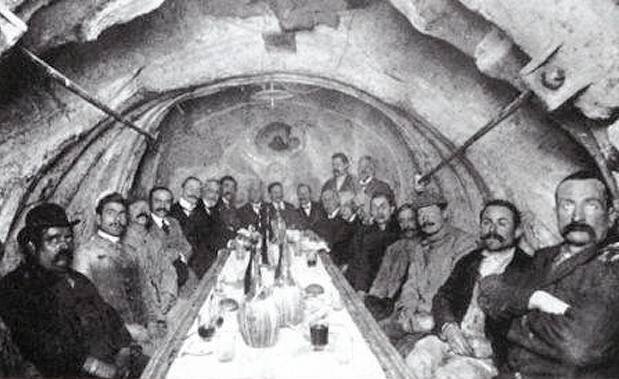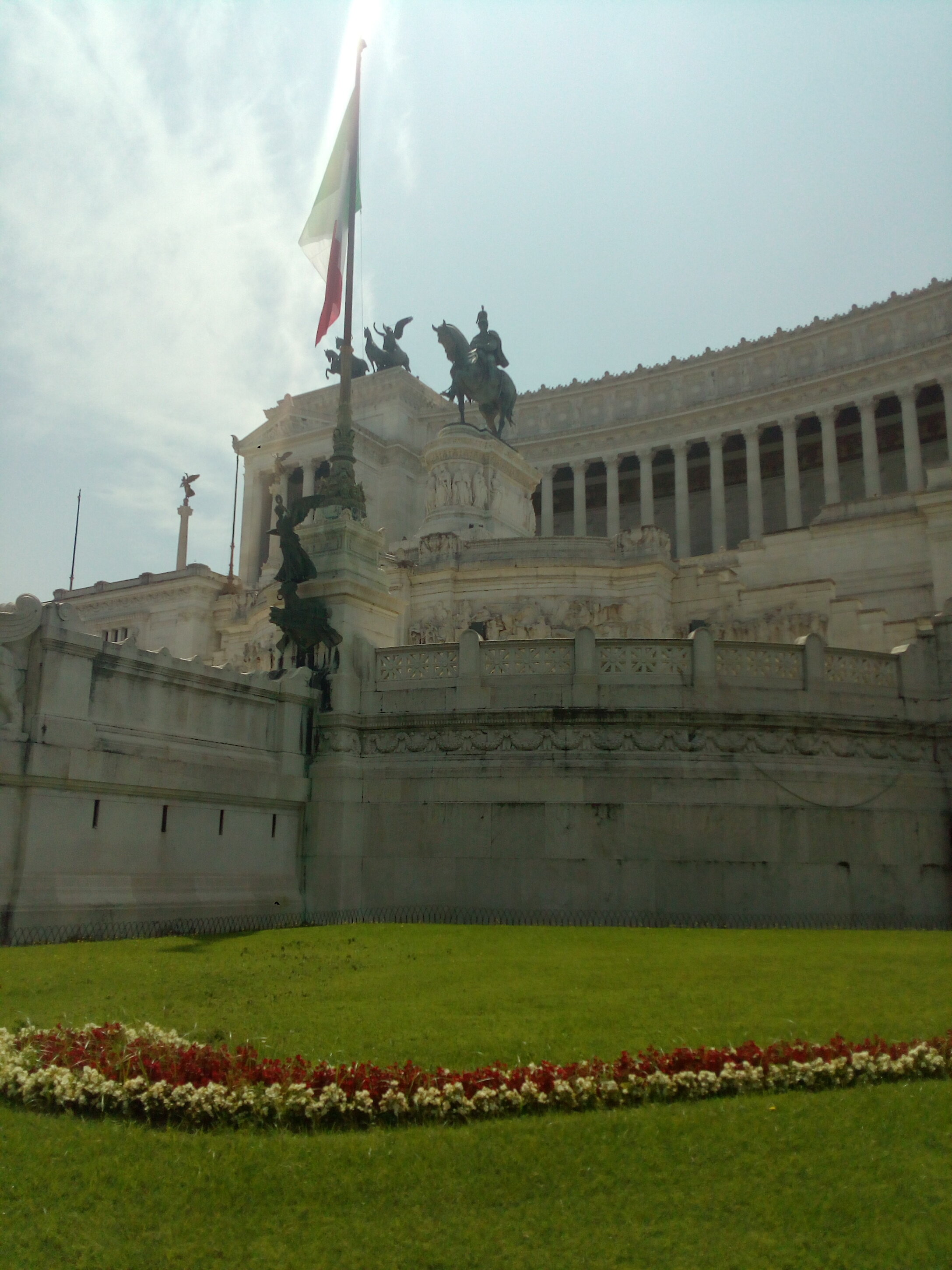
The Vittoriano, or Altar of the Fatherland, is adorned with the grand bronze equestrian statue depicting the first King of Italy, inside which more than twenty people even had the chance to snack on some food!
Although it has often been the subject of various criticisms, it is undeniable that the Altare della Patria, or Vittoriano, is certainly one of the modern symbols of Rome. Set there, just a few steps from the Roman Forum and the Colosseum, and also strategically covering the Church of Santa Maria in Ara Coeli, the huge building designed by Giuseppe Sacconi, the Altare della Patria is the first real monument to united Italy hosted in Rome. Of course, considering the times, the Vittoriano (and the name says it all) was also meant to honor the man who led to the unification of the country, the first King of Italy: Vittorio Emanuele II. You can well understand how the relationship between him and the pope, at the time Pius IX, was not exactly the best (as you can read here). After all, Rome had been under papal rule for centuries. It is also understandable that the Vittoriano, built in white botticino marble thanks to Zanardelli, who pushed to use a material from his birthplace (around Brescia), was inaugurated in 1911, when the fiftieth anniversary of the Unification of Italy was celebrated in Rome. All this even though the building was unfinished. What had already been completed, however, was the grand equestrian statue in bronze that still stands out at the center of the Altare della Patria. A tribute to the king but also a truly unique case.
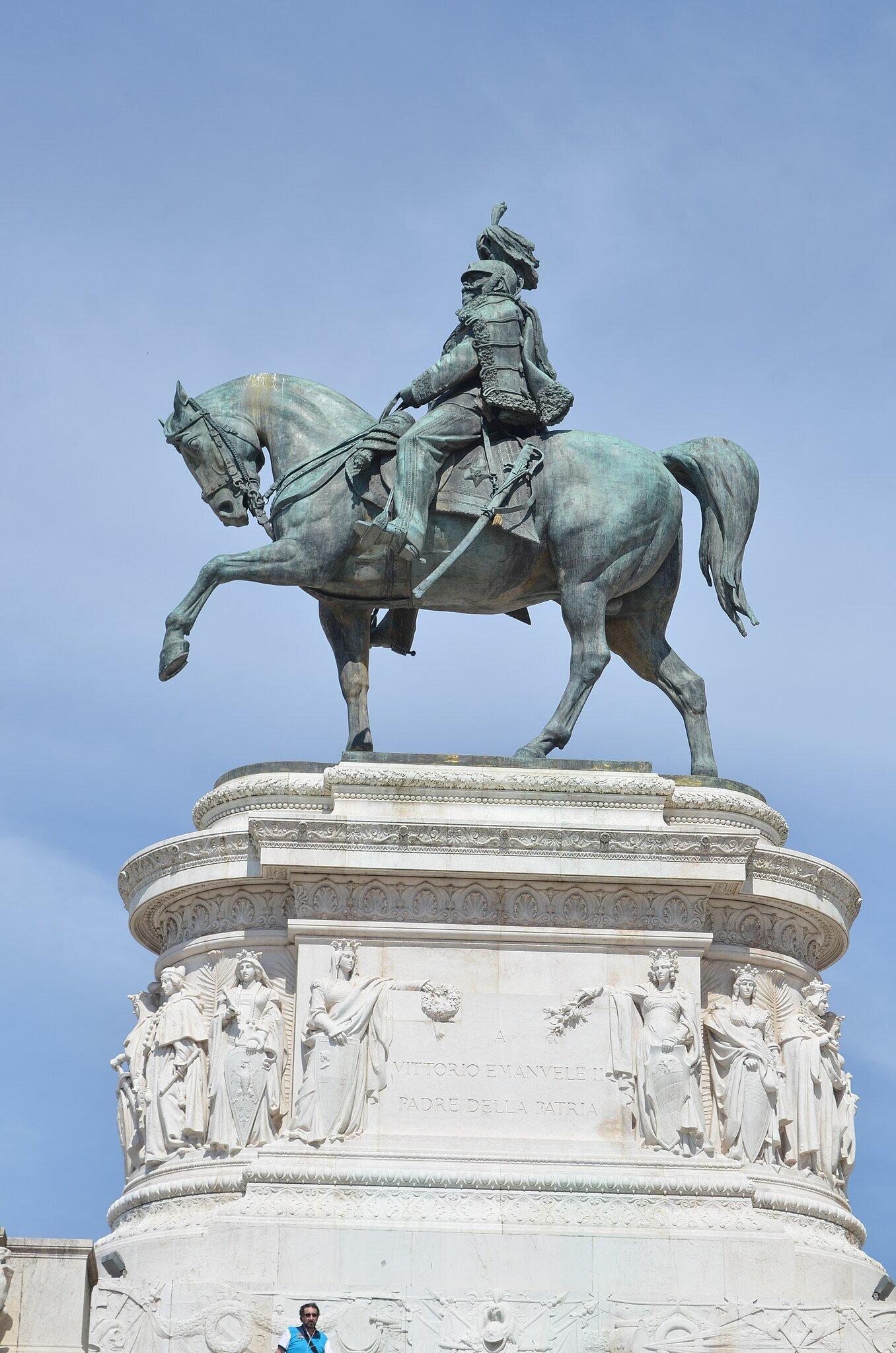
First of all, think about how the sculpture, depicting Vittorio Emanuele II in full uniform on horseback (just like the way the ancient Romans were glorified, of course), is about 12 meters high and long. Size always matters. There was a public competition to decide who would create the work, a competition won by Enrico Chiaradia in 1889. Despite his early death in 1901, the sculpture was finished in time for the forced inauguration of the Vittoriano. A grand work that everyone loved, except for Sacconi himself, who thought it was too large, too imposing, too likely to disrupt the balance and harmony of his architectural creation. No matter, no one listened to him. In fact, the equestrian statue was the star of a truly unique event. On one occasion (but, according to the reports we have, maybe even twice), some men literally ate and toasted inside the horse! After all, its size allowed it. And, as evidence of what was just said, there are even black and white photos to prove it.
It's impressive to think how a single decorative element like this can hide a secret, so to speak, so incredible. According to the official version, more than twenty people took part in a cheerful banquet just a few days before the inauguration, eating and drinking, especially wine. Notable personalities, of course, considering that among the guests was also the Mayor of Rome, Ernesto Nathan. Among them there were probably also some workers who actively helped to create the work. But don't be too impressed. The equestrian statue is so large that it was made in pieces. The legs, the head, and the belly of the animal, as well as the figure of the king, were cast separately at the Bastianelli company’s facilities (which, by the way, apparently also used some old cannons from the royal army). On site, the various pieces were fused together, but not before allowing some to eat inside the huge horse. Even this small detail helps to make the sculpture and the Vittoriano itself important, which, with its symbols, tells us about a moment when Italy, for the first time, could feel like a united and inseparable community. A unity that had and still has its center right here, in Rome, as can be clearly seen at the center of the long row of reliefs visible behind the flame that always burns, in memory of the Tomb of the Unknown Soldier, for decades housed in a building that has often changed its purpose, but always remains a unicum in the Urbe.