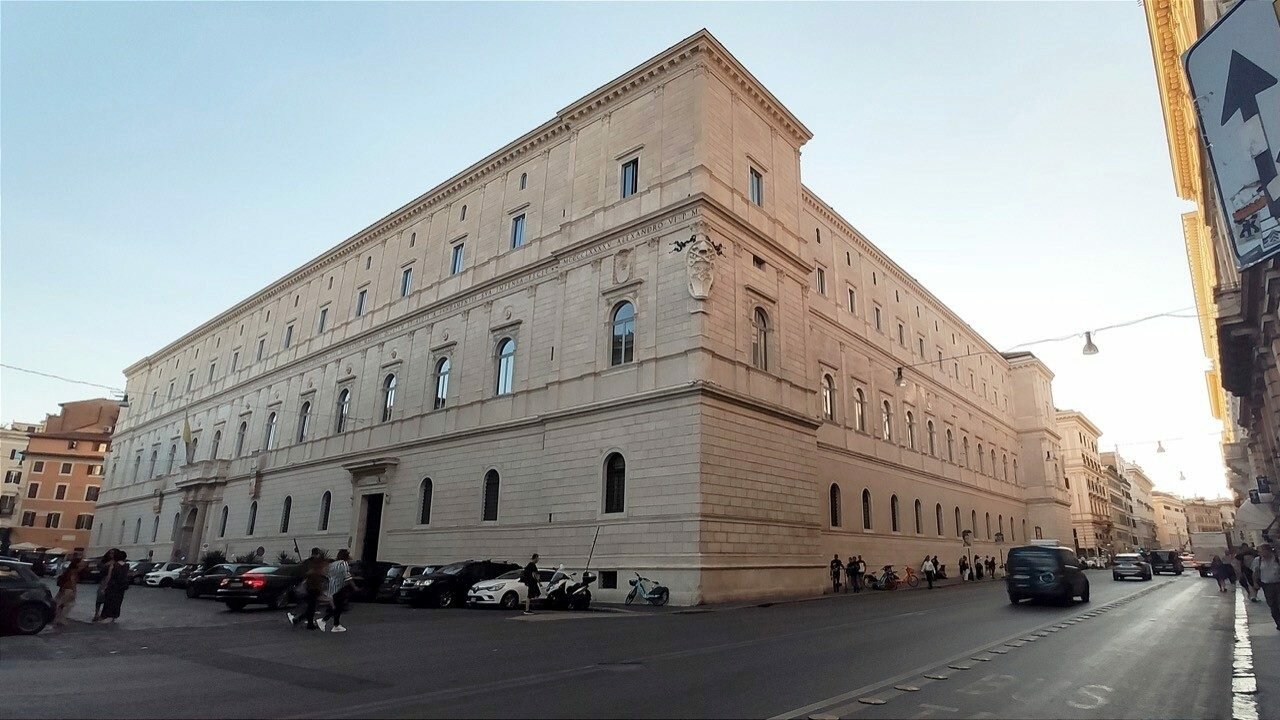
One of the most iconic palaces in all of Rome is certainly the Palazzo della Cancelleria, considered the first strictly Renaissance building in the entire Eternal City. After all, it served as a model for other similar architectural examples, built more or less in the same time period, although at the same time, it also took inspiration from other marvelous buildings in Rome, such as the nearby Palazzo Venezia (click here to learn more). So your local tour guide of the Eternal City wants to take you on a little tour through the history, intricate but interesting, of a palace that holds many surprises. Let's discover them together.
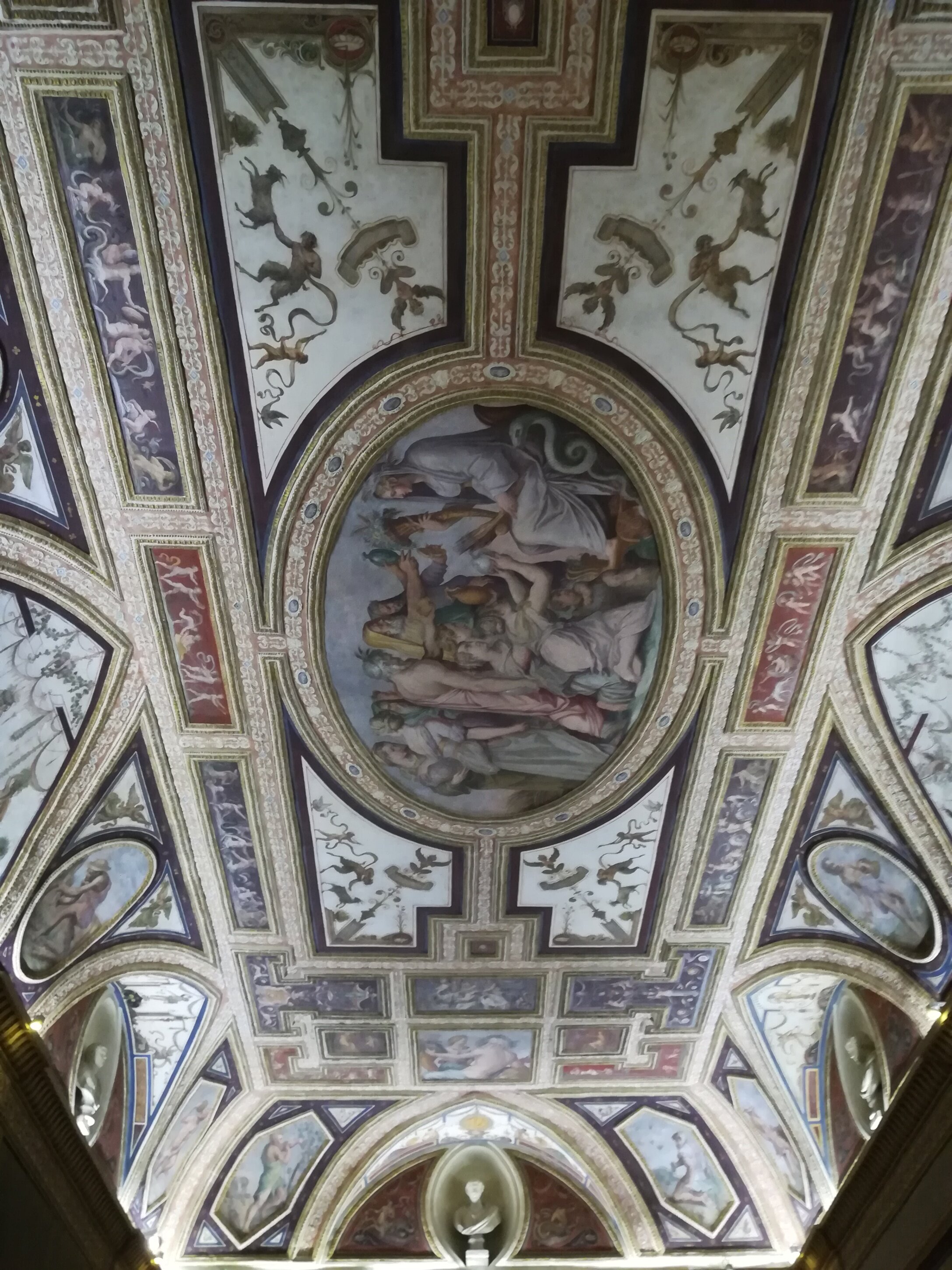
The current forms of the Palazzo della Cancelleria date back to the mid-fifteenth century, when Cardinal Mezzarota purchased a building whose roots go back to the 4th century AD, when the pope Damasus built, near the Basilica of San Lorenzo in Damaso, a palace to host the cardinals. From one prelate to another, in short, and from a building serving the basilica to a place of worship, then, completely merged into it. Yes, because as a true Renaissance prototype, the Palazzo della Cancelleria today has also incorporated within it the Basilica of San Lorenzo in Damaso (another example, for instance, in the nearby Collegio Romano with the Basilica of Sant'Ignazio da Loyola), as if it were all one. Another example, to stay on topic, is Palazzo Venezia and its Basilica of San Marco. But the real turning point for the architectural object in question came at the end of the fifteenth century, when the Palazzo della Cancelleria was purchased by the powerful Riario cardinal, a close relative of Pope Sixtus IV (the one of Ponte Sisto or the first renovation of the Sistine Chapel). According to tradition, probably true, Riario did not buy the palace, but rather won it in a game! The owner at the time was Lorenzo Cybo, illegitimate son of pope Innocent VIII, who did little clerical activity and many much more earthly activities, including gambling, and a lot of it. In a single night, it seems, among the many properties he lost gambling was also the Palazzo della Cancelleria, thus taken by Cardinal Riario. It was 1483 when the embellishment works on this architectural jewel began, works that continued until 1503, during the pontificate of Julius II. Later I will also talk about the architectural and pictorial wonders that the rooms of this beautiful complex host, but first I would like to dwell on how, by entering here, we can truly say we are walking through the history of Rome. Not only because powerful men have walked its floors or decided its fate, but also because the Palazzo della Cancelleria was the scene of numerous acts, tragedies, or events that, in one way or another, changed the face of the Eternal City. It was here, for example, that the peace treaty between the Church and Charles V was signed following the bloody and shameful Sack of the Landsknechts, which lasted in Rome for about a year, in 1527-1528. Also here, in 1538, peace was established again between Charles V and Francis I, King of France, who for years and years bloodied all of Europe in their feud, dragging with them numerous countries and kingdoms. Or again here, at the end of 1848, there was the murder of Pellegrino Rossi, head of the Papal Government under Pope Pius IX. This act would be the culmination of a popular revolt that, as in other realities and cities in Europe and beyond, would lead to the capitulation of the absolute and theocratic kingdom of the pope (who at the time was also King), in favor of a republic inspired by the principles of the French Revolution (then Pius IX would return, but that's another story you can read here).
You see, then, how a simple palace, whose origins actually date back to the 4th century AD, can be a historical symbol? In Rome, you can find even this…