

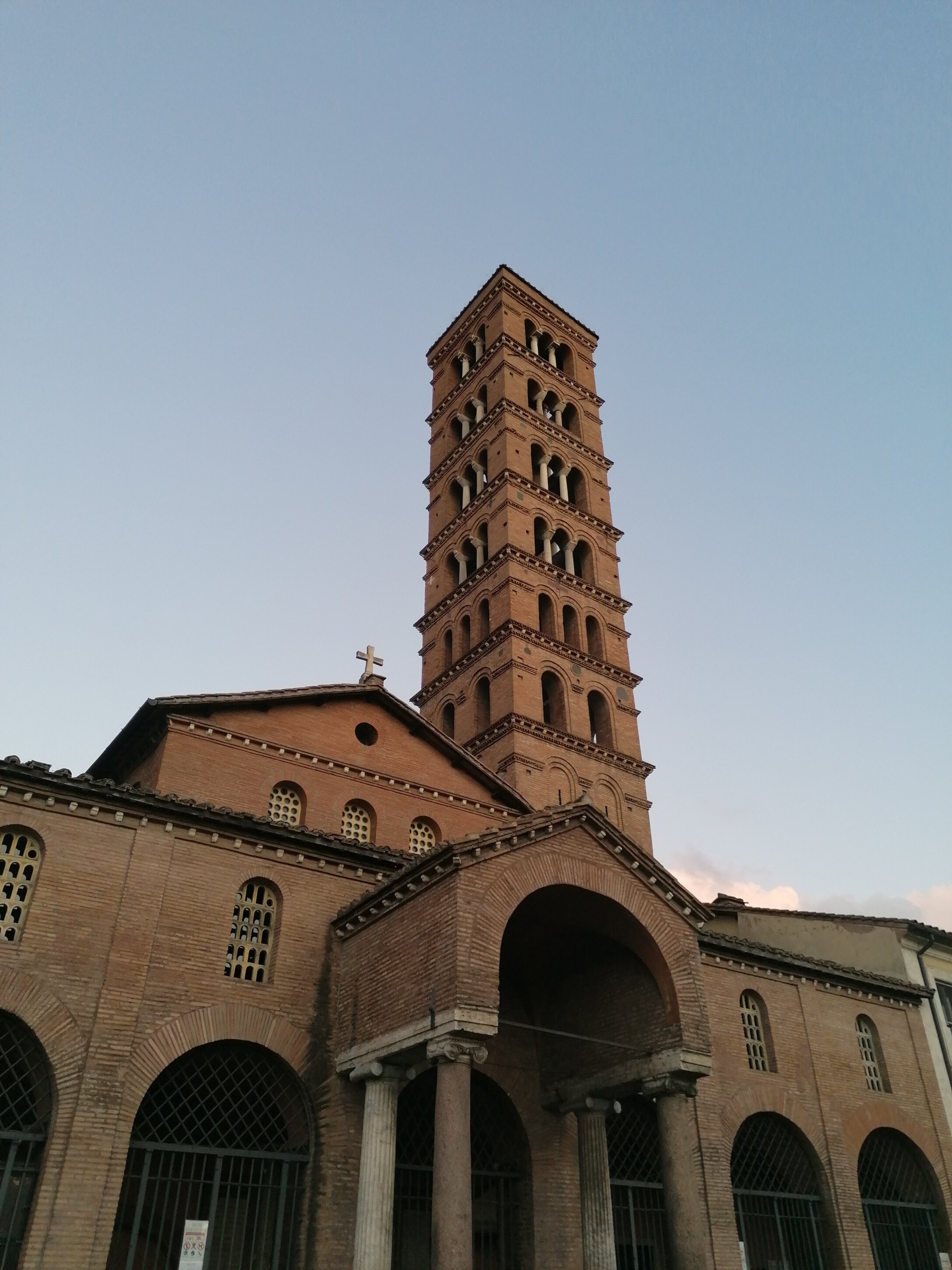
The Basilica of Santa Maria in Cosmedin is famous for the Bocca della Verità, made immortal by films and by the millenary tradition. It is said, in fact, that this enormous Roman-era marble manhole cover had the extraordinary power to snap shut its marble mouth, cutting off the hand of the unfortunate person who put it in, if the daring one was a liar! Even today, thousands of people come here every day for a photo or, who knows, to experience a certain masochistic thrill... but I would like to focus on the actual church, whose extraordinary medieval features are already visible from the outside. So, follow your local tour guide of Rome, to discover one of the most beautiful churches in the entire Eternal City.
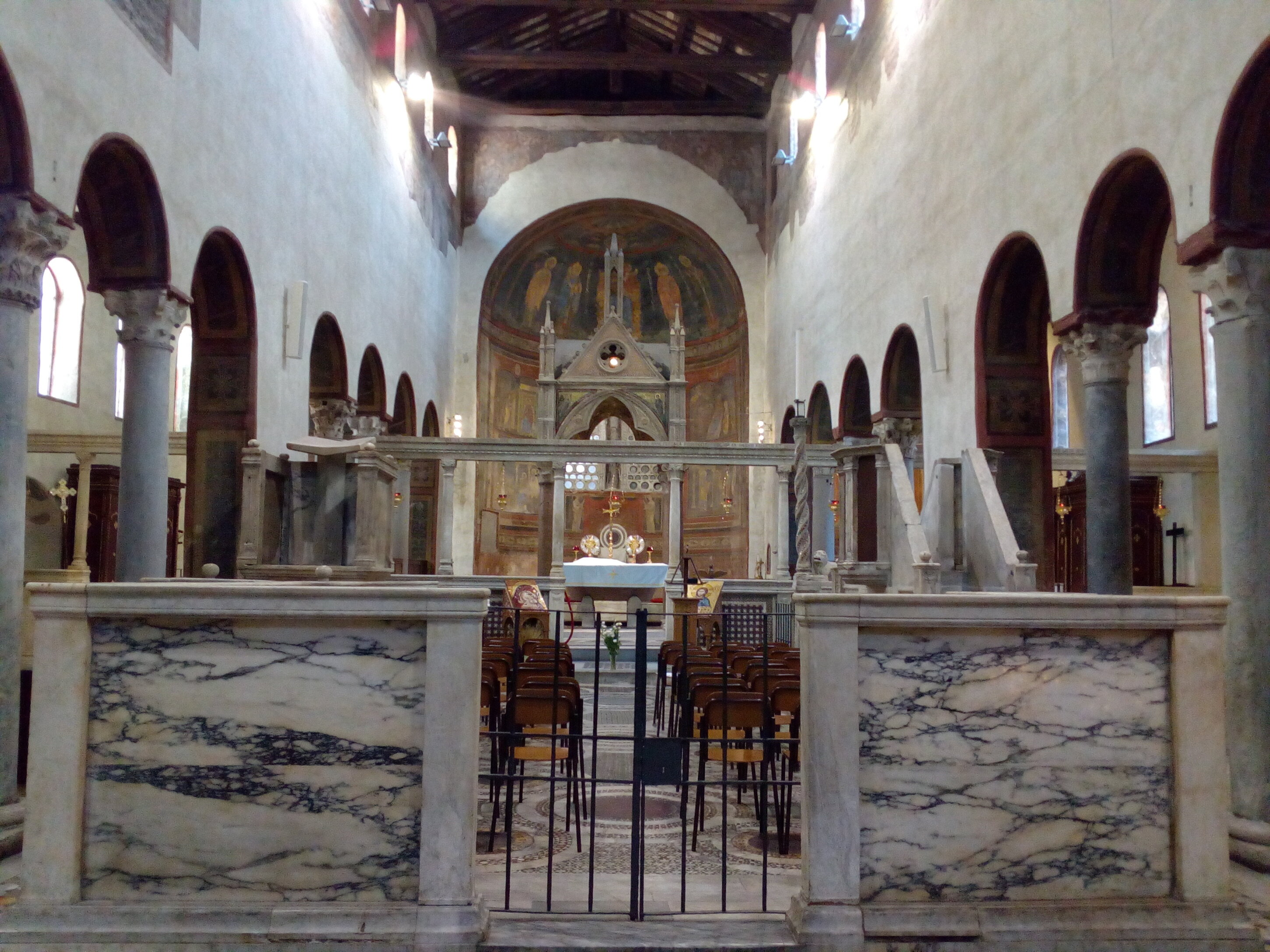
Just cast your eyes on the fantastic bell tower or step inside to be immediately struck by an atmosphere from another time. The marble enclosure, the schola cantorum that separates the area dedicated to the clergy from that of the faithful, the Cosmatesque floor and the reused materials employed in the various reconstruction phases of the church, not to mention the beautiful mosaics that adorn some chapels or the frescoes still visible today. Another world, a world that has many affinities with ancient Greece. In fact, the name Cosmedin derives from Kosmidìon, an ancient monastery in Constantinople used by the Greek guild entrusted with the church. Even today, in fact, the administration is entrusted to the Patriarchal Procuratorate of the Greek Melkite Catholic Church. An Eastern rite, in short, stemming from the fact that the church arose following the hospitality of Greek monks or religious who found themselves embroiled in doctrinal disputes and the iconoclastic struggle. There are records of the basilica since the 6th century AD, whose name was probably Santa Maria in Schola Graeca, built over the remains of an older Roman-era building (perhaps offices related to the annonae, the periodic grain distributions to Roman citizens). It is worth emphasizing, therefore, how this place of worship was established above a civil-use building from the time of the ancient Romans, although other studies indicate that the church stands on a multiple archaeological substrate, an area where several buildings arose (all, in the end, completely razed or reused to build the church). It was pope Adrian I in the 8th century who first enlarged and embellished the church, in a policy aimed precisely at restoring the splendor of Christian places of worship. However, we must reach the 12th century and the architect Camerario for the current façade of the church, with its elegant portico and the bell tower marked by mullioned and triple windows, standing a full 34 meters high. But the interior is entirely medieval in spirit: from the schola cantorum, the internal marble enclosure decorated with 12th-century plutei, to the fine ciborium signed by Deodato, third son of Cosma the Younger (we are in 1294). But the real surprise is under the central nave, where there is an underground crypt commissioned by Adrian I and which follows, in its layout, the basilica above. Small columns frame a three-nave space, adorned with an 8th-century mosaic. The crypt was created at the time by excavating into the base of a very ancient Greek-style temple (how fitting), dedicated to Hercules. Called the Ara Maxima of Hercules, it was a large monument containing the bronze statue of the Greek hero, now kept at the Capitoline Museums. A clear example of how history moves forward, from an ancient pagan temple to a Christian church, even an underground one, built right under, and later above, the much-loved monument dedicated to Hercules. Then moving on to later stages, to buildings that in antiquity changed their use. A famous example of this kind is given by the celebrated Temple of Antoninus and Faustina in the Roman Forum or, also, the underground areas of the Basilica of San Nicola in Carcere.
And finally here we are, in front of this extraordinary place of worship, which also takes its name from its artistic and decorative richness. Cosmedin, in fact, also means ornament. And it is impressive, finally, to realize how here history, even though we are in the heart of Latin Rome, always has an Eastern scent. An history that moves, in the same area, between the ancient time and world (think about the very close round shaped temple of Hercules which stands right in front of the Church of Santa Maria in Cosmedin) and the christian side of Rome. An Eternal City, therefore, that continues to amaze and that is not confined only within its borders, but goes far beyond…





















