

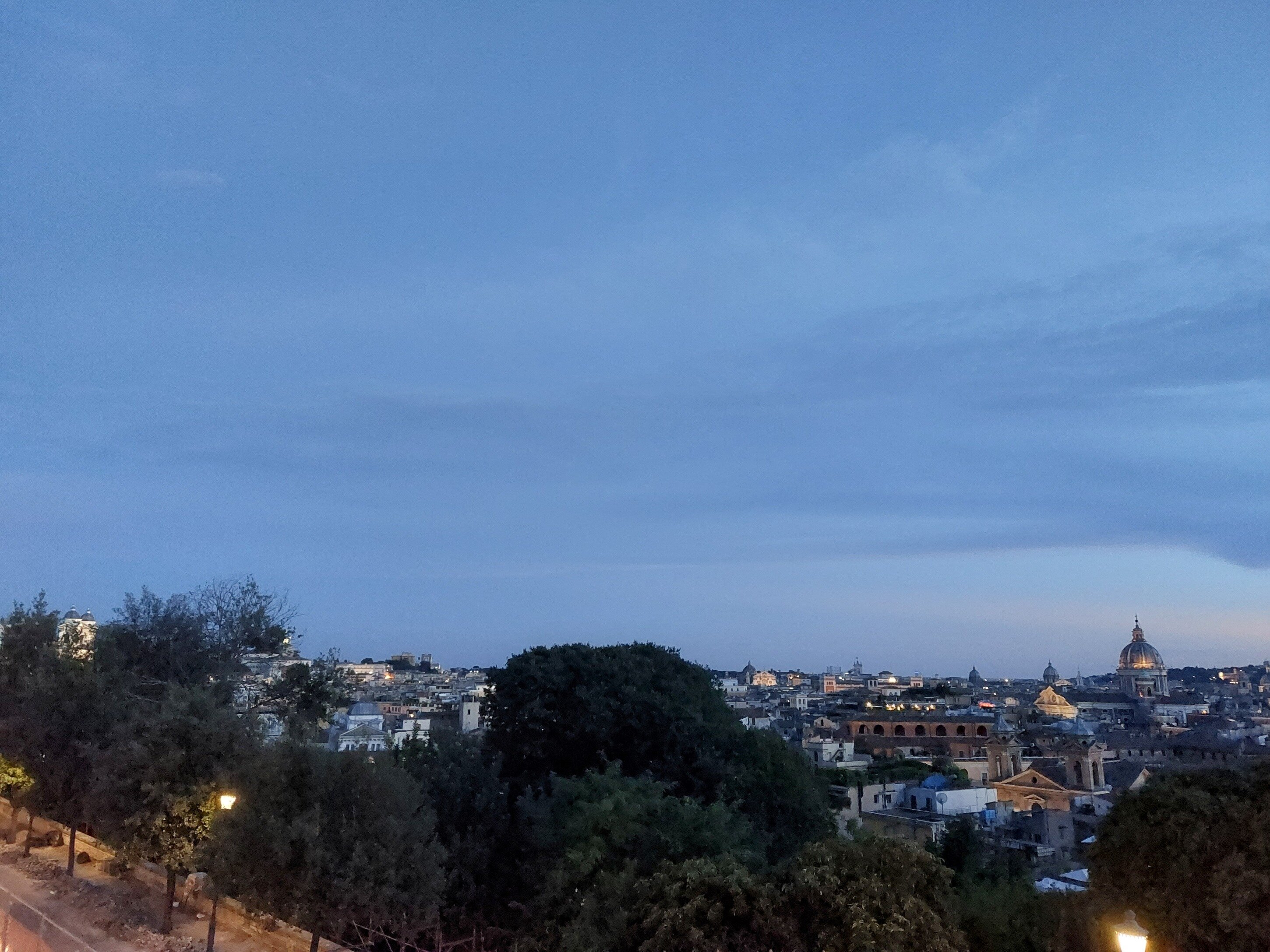
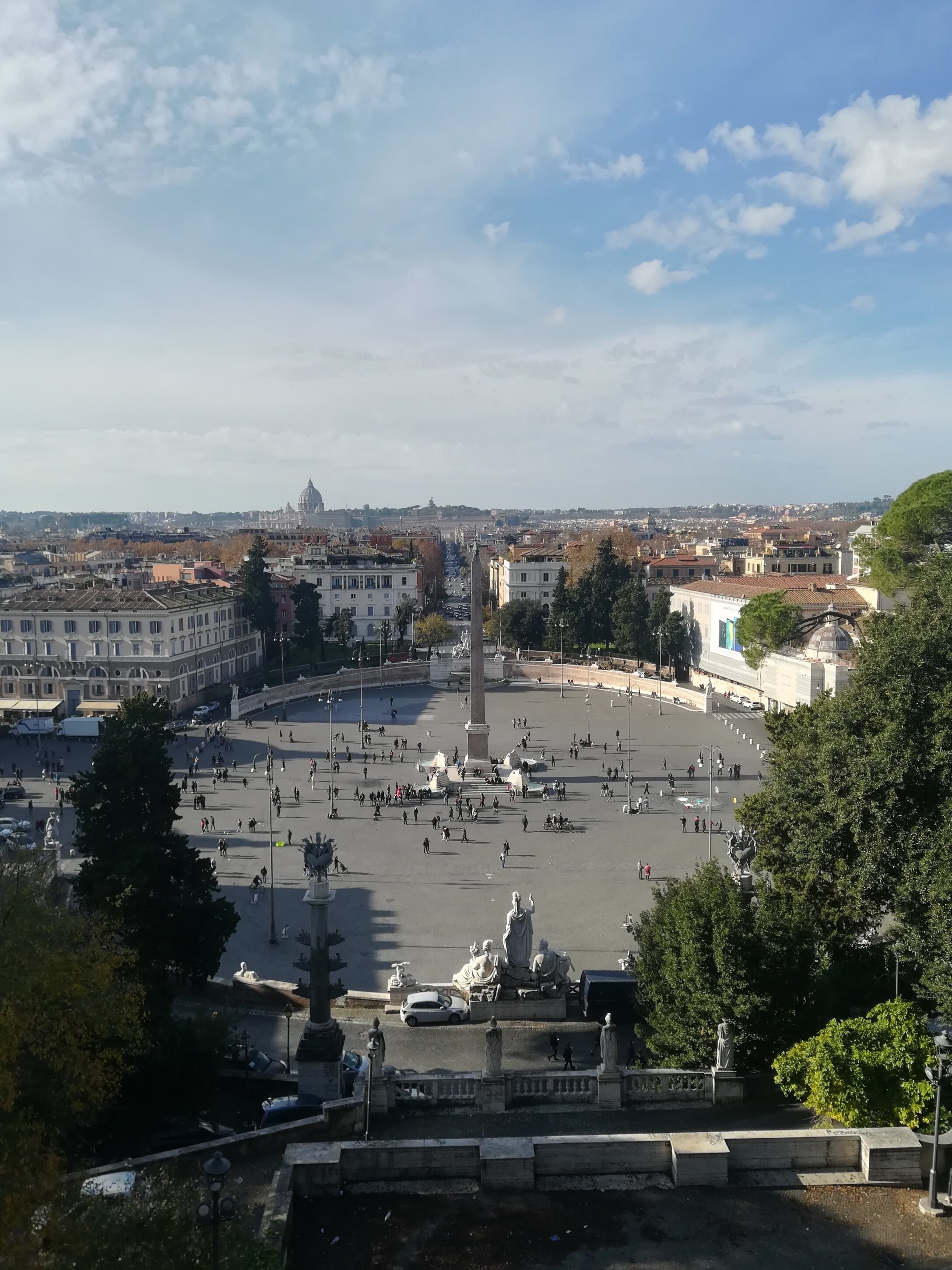
Looking out from the Pincio terrace means enjoying one of the most beautiful panoramas in all of Rome. It is a real emotion to observe the Cupolone in the distance, the great obelisk of Piazza del Popolo a few steps away, and wander over the roofs, churches and historic buildings of the Eternal City. A way like any other, for a local tour guide like me, to appreciate the skyline of the city from a privileged position. Try to think, however, why you can enjoy such beauty. You are, in fact, on the top of a hill!
In Rome there are not only the famous seven hills, since the territory, geologically speaking, is full of hills, valleys and slopes. The Pincio, then, has historically been part of the Urbe, of the city center within the pomerium, since it is right next to the walls. And since the Republican age, when the great men of Rome, magistrates, senators or generals, began to be captivated by the riches deriving from military conquests, the territory was targeted for the construction of pharaonic and very rich villas and complexes. Right here, and also extending to where today there is the Spanish Steps, Lucullus took up residence. A fantastic house, which connected with the valley below (where today we have Piazza del Popolo and Piazza di Spagna), by means of sloping stairways. His villa extended for 20 hectares and, reading a passage from Frontinus (the curator aquarum from 97 AD), it is clear that Lucullus lived in close contact with the Virgin Aqueduct (from which he probably had a private branch to connect directly to it) . Frontinus' words are: "arcus Virginis initium habent sub hortis Lucullanis" ("the arch of the Virgin Aqueduct passes under the gardens of Lucullus"). But it seems that Pompey or Scipio the Emilian also lived in the area. During the early imperial age, the Pincio area passed through various hands. From the Acilii family to, above all, that of the Pinci, which gave their name to the whole hill. From a highly urbanized area, albeit with villas worth a thousand and one nights, a place used for cultivated fields and vegetables gardens. It was the second life of the Pincio which, after the fall of the Roman Empire, was managed by the Augustinians of the nearby Santa Maria del Popolo, the main church of the area. Villa Medici also had its plot of land, suitable for cultivating basic necessities.
Among the symbols of the area, I cannot fail to mention the Casina Valadier, from the name of the architect who completely rearranged Piazza del Popolo and beyond, at the beginning of the 19th century. It seems that he himself wanted to come and live here, in this elegant and luxurious villa. Surely, however, Valadier conceived the cottage, restoring a seventeenth-century building built in turn on a Roman building, as a place of refreshment, taking the French bistros of the time as a model. In the Napoleonic era, when the architect set to work, there were various redevelopment projects of the entire area, a project which envisaged the transformation of the Pincio into a sort of grandiose monumental gardens which were supposed to welcome all those who came to Rome via Porta del Popolo. An elevated area that had to be pendant with the Church of Trinità dei Monti and the prospective staircase, which the French imprint was predominant and important, considering that the church was totally financed by the King of France. However it may still be today, as well as the Romans and tourists of the early nineteenth century, coming to the Pincio means enjoying a magnificent Rome. An overview that embraces the entire history of the city.




















