

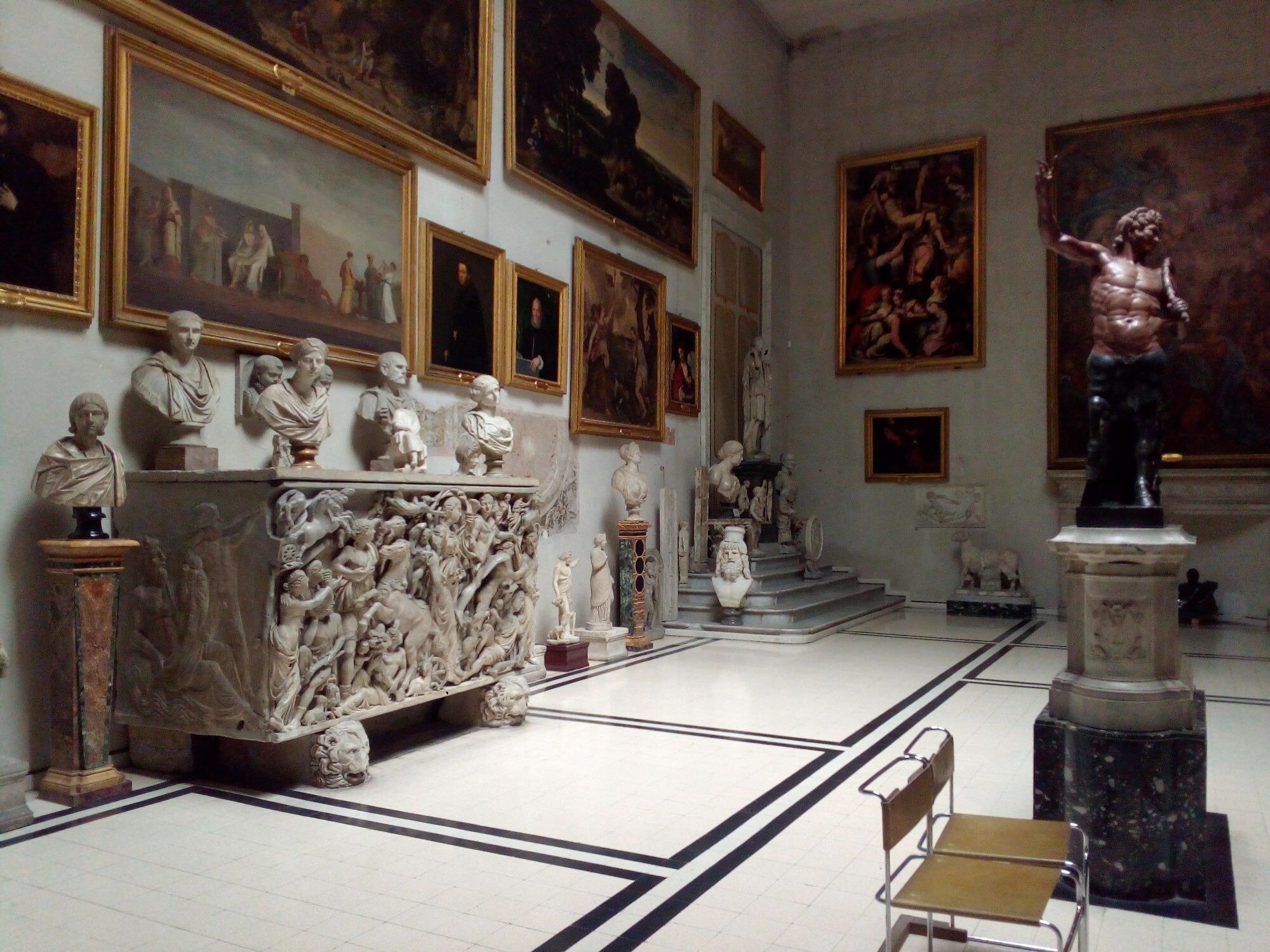
Among the rooms of the Doria-Pamphilj Gallery, in the historic center of Rome, I would like to mention this one that you see in the photo. Not only it is full of artifacts, like the whole gallery and the eighteenth-century noble palace, plenty of works of art of all kinds. Keep in mind that what you can admire today is the private collection of the Doria-Pamphilj family, because you have not to forget how the heirs of this noble clan from the XVII century is still surviving. The heirs of pope Innocent X, cardinals and bishops, still living in a wing reserved for them. Consequently visiting this place of art and culture means immersing yourself in beauty the beauty of an artistic collection that was supposed to amaze the eyes of the guests but also those of those who own this collection. After all the dozens of paintings exhibited in the marvelous galleries of the Doria-Pamphilj palace, from Carracci to Reni, from Guercino to Lanfranco, attest the prestige of the entire space.
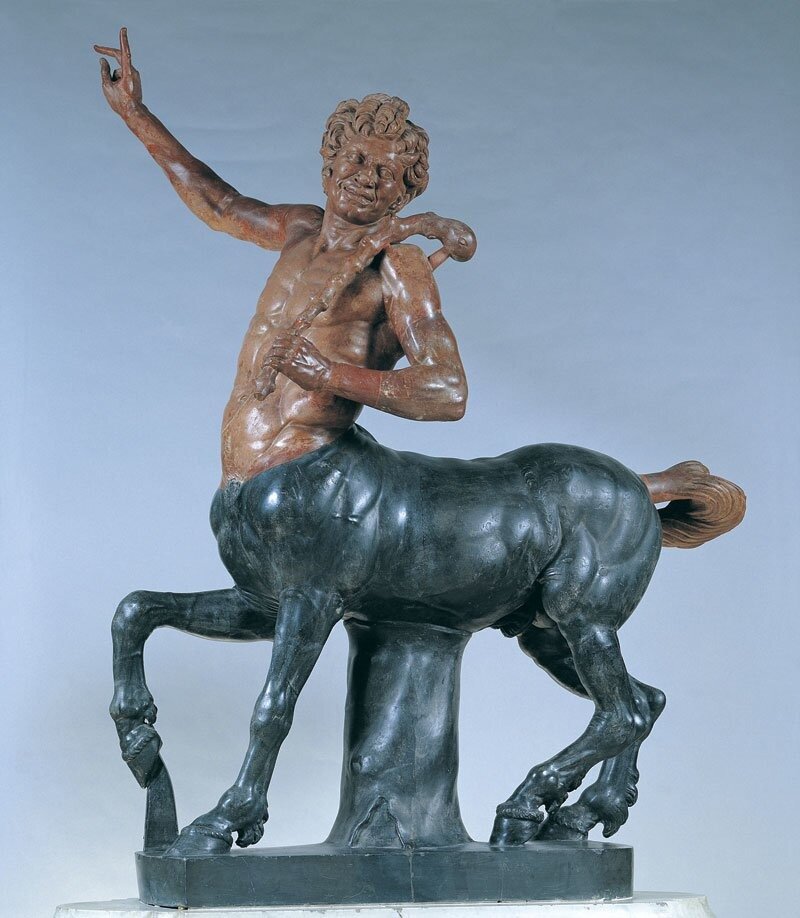
But in a particular room, in addition to the three paintings by Caravaggio which are recently moved in another area, there is also a curious statue which you see on the right that represents a centaur. A common subject in the Greek-Roman mythology, because the centaur symbolized what we all have: our dual nature. Sometimes instinctive, almost animal (the equine part), and our rationality, our reason (the human). For this reason the centaurs themselves were sometimes represented as barbarians, other times as creatures worthy of note and capable of understanding the true meaning of civilization. The so-called Young Centaur, exhibited at the Doria-Pamphilj Gallery of Rome, comes probably from the Antonine age (mid-second century a.D.), a copy of the much more famous one exhibited in the Capitoline Museums. This Young Centaur was found in a private property of the noble family in the nineteenth century. But the centaur hides some small surprises: what was originally made using gray morato marble and green marble especially on the base, today has a greater polychromy! Why? Due to an event that could turn into tragedy...
At the beginning of the last century, due to a heavy snowfall (an unusual event in Rome), the ceiling of the hall collapsed suddenly. This work of art was literally destroyed, fragmented into 25 pieces. Once again, however, the Italians demonstrate how good we are in restoring works of art of a certain value, and more. Despite some new fragments added, fortunately we have the possibility, thanks to a painstaking restoration, to see something that, due to a trivial snowfall, could no longer exist.