

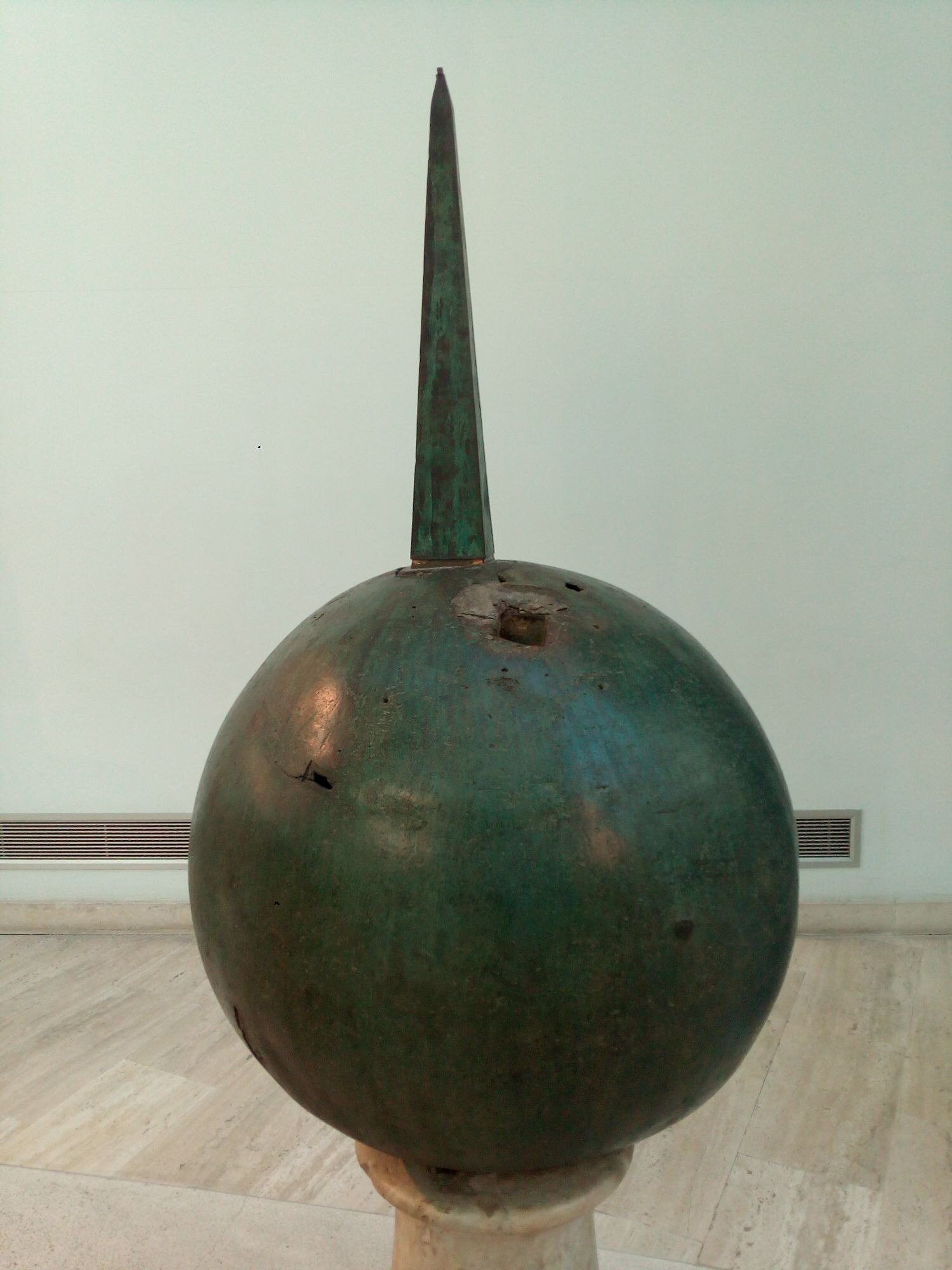
Apparently this bronze globe could seem anonymous, especially because it is in the same room of the famous Equestrian Statue of Marcus Aurelius, inside the Capitoline Museums of Rome. But this bronze artifact is something more, simply because it is related to Julius Caesar. Let's discover more about it, with a local tour guide like me who rellay loves to visit the amazing Capitoline Museums, which is always full of masterpieces, like this one!
This element was a part of a big colossus (big statue) depicting Constantine the Great, Roman emperor of the IV century a.D.. Don't be confused by another famous colossus depicting the same emperor: its huge marble remains are located at the courtyard of the Capitoline Museums. Here we have pieces of another giant statue that was dedicated to Constantine, and especially this bronze globe has a strange history. Imagine how, and who know in what way, over the centuries we find it at the St Peter's Basilica, and in a certain moment it was put just above the big obelisk that was located in that area. The obelisk stood here because of an ancient Roman circus, that was embellished with this egyptian work of art. But there is a mystery or, better, a legend that says that inside this bronze globe (who know why) there were the Julius Caesar's ashes!
This story was famous mainly during the Middle Ages, when there were people who believed that Virgil, the famous Latin poet, one day went to Jerusalem, after the Caesar's death. He asked to some wise old Jews where could be located the perfect place to bury what remained about Caesar. At a certain moment Virgil noticed the obelisk, asking them what was it. The wise Jews answered him affirming that inside the bronze globe that was above it there were the Salomon's bones. So with his magic (because during the Middle Ages several people believe that Virgil was a sorcerer) the poet switch the Salomon's bones with the Caesar's ashes, moving the obelisk to Rome! So it happened that when the obelisk was moved where we can see it today, at the centre of the square (because originally it was located at the right of the St Peter's Basilica), the pope Sixtus V, who commissioned this change, asked to his architect, Domenico Fontana, to see if the legend was true or not. Maybe was the Pope curious? Maybe would he like to use the ashes? What we know is that the architect made a hole on the surface of the globe, digging a little bit. And when he saw inside he didn't find anything...