Rome's Ostiense Station is a city landmark, although it was originally built hastily for a (by the standards of the time) special guest.
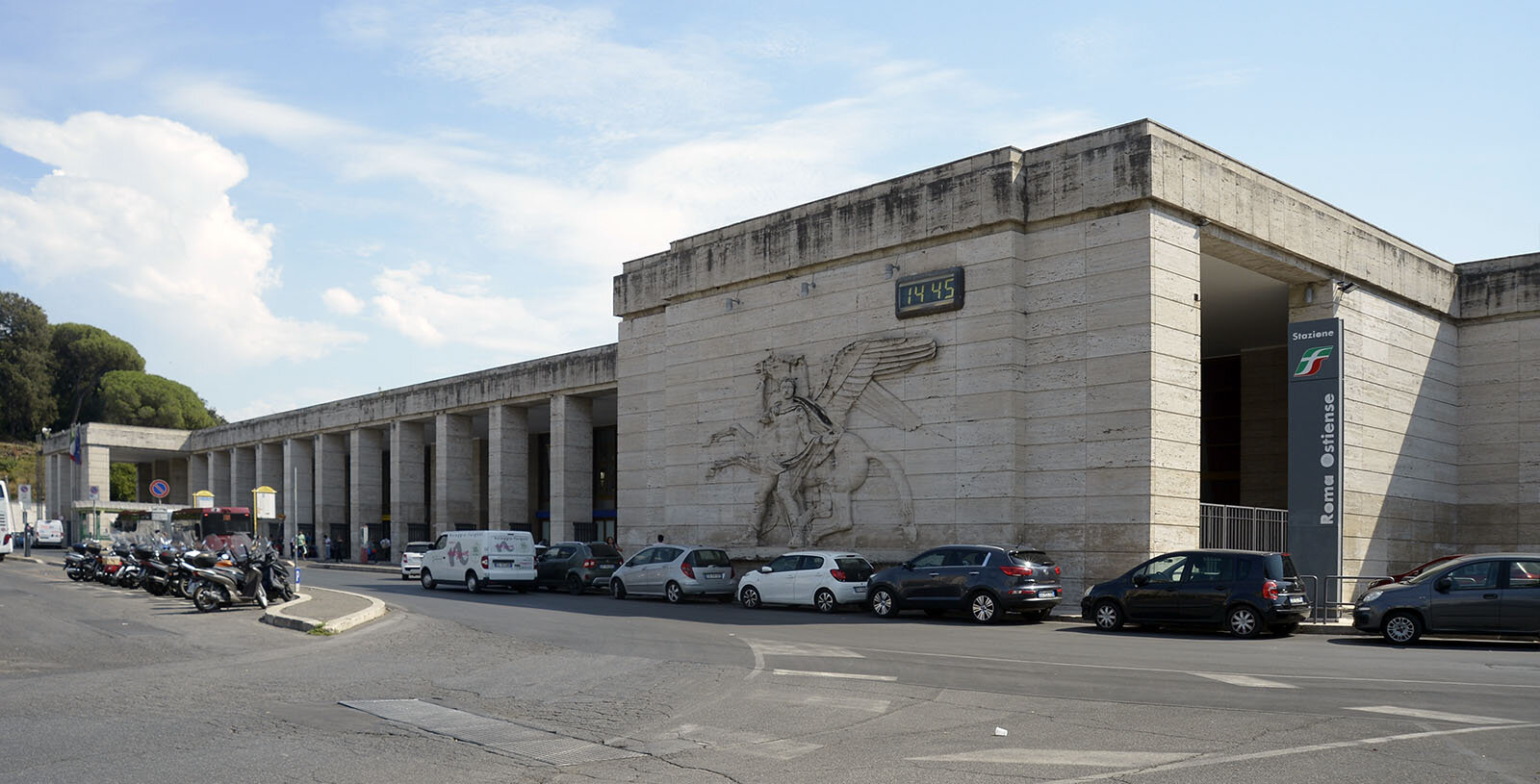
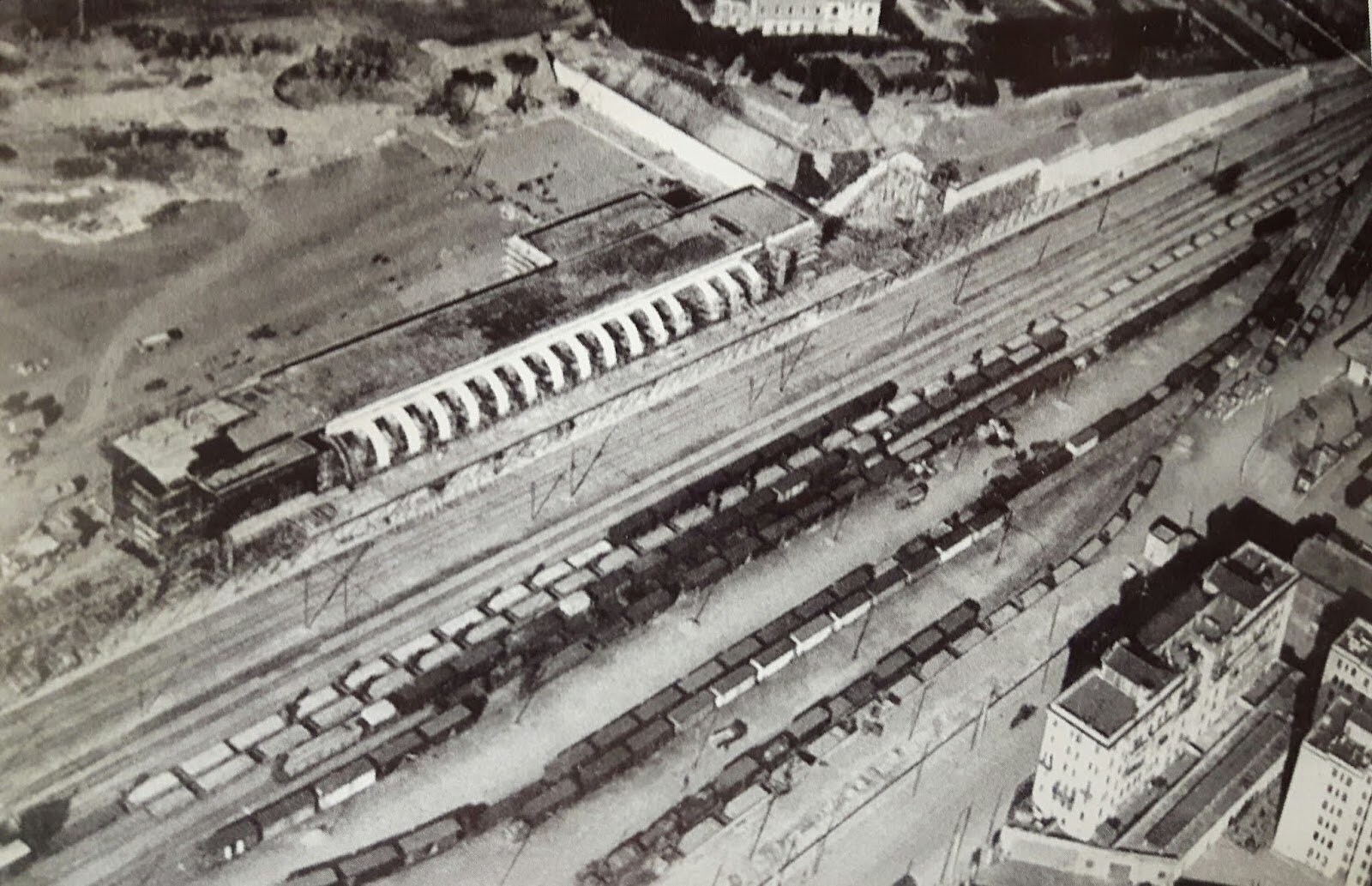
Your tour guide in Rome takes you to discover a civil building created initially for the citizens but, later, mainly to please a man. Today, Ostiense Station is Rome's third train hub, both in size and in the number of passengers who pass through here every day. This engineering work is also a small symbol of the new Rome, Capital of Italy, since the very first, very small, core of the station was inaugurated in 1911, during the celebrations for the fiftieth anniversary of Italy's Unification (by clicking here you can read about another monument inaugurated in the same year for the same reasons). Imagine that, at the time, it was nothing more than a small track and a building for passenger service. Just a way to connect Rome Termini station to Magliana, nothing more. But something changed dramatically in 1938, for the special visit of Hitler here in the Urbe. Of course, the host of the time, Mussolini, did not want to leave anything to chance. He had to impress the German leader, he wanted to show him how his Rome could at least be compared to Berlin at that time. He also had a lot of space at his disposal, since the whole area around the original station allowed for various expansions. They wanted to create a truly monumental station, as the chronicles of the time tell us. But not everything that glitters is gold…
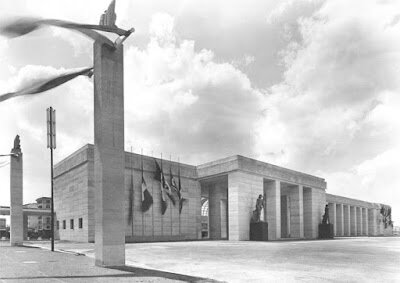
Hitler arrived in Rome, on board his special train, on May 3, 1938. He disembarked here, at the “renewed” Ostiense Station, with a great display of fascist and Nazi symbols. Too bad that, as often happens, they wanted to make a better impression than anything else. Given the lack of time, much of the area was decorated with fake marble, lots of papier-mâché, and wooden elements. Where there should have been travertine slabs, the typical material loved by the ancient Romans and so reminiscent of the imperial city, there were only fake elements. Famous is the pasquinade, created by the popular chronicler of the time, the Pasquino, which said “Poor Rome of travertine. They dressed you all in cardboard just to show you off to a house painter”. Wise words! Again, to please the Nazi leader, the square in front of the station, now Piazza dei Partigiani, was named after Hitler. And the chronicles of the time also tell us how Mussolini tried to charm the Fuhrer. For example, along the walls of the main portico of the station at the time, panels (not in travertine, of course) honored the history of fascism and that of nazism. Not to mention the statue, depicting the Goddess Roma and placed at the end of the track where the guest of honor arrived, which welcomed Hitler in its warm embrace.
All this for a man who, despite his and our will, made the history of Germany and beyond. Consider that the station was actually completed only in 1940, by the architect Roberto Narducci (the same who designed the set of the fake Ostiense station two years earlier). The complete decorative apparatus was impressive. Mosaics in black and white tiles depicting mythological scenes or iconic buildings of Rome (from the stories of Aeneas to St. Peter's), not to mention the sculptural groups or fountains, always with mythological themes. A constant reference to ancient Rome that Mussolini used to launch his propaganda and inspire the crowds to believe that the Urbe had to be reborn under fascism and under the enlightened guidance of the Duce. A political propaganda that touched every aspect of social life. Just think of the entire Foro Italico complex, for example (as you can read here). In the end, in any case, even the Ostiense Station, renovated and cleaned up again recently, is a small testimony of a time when, for strictly political reasons, the city of Rome went through a period in which modernity, always looking to the past, was almost an obsession for the leaders of that era.