


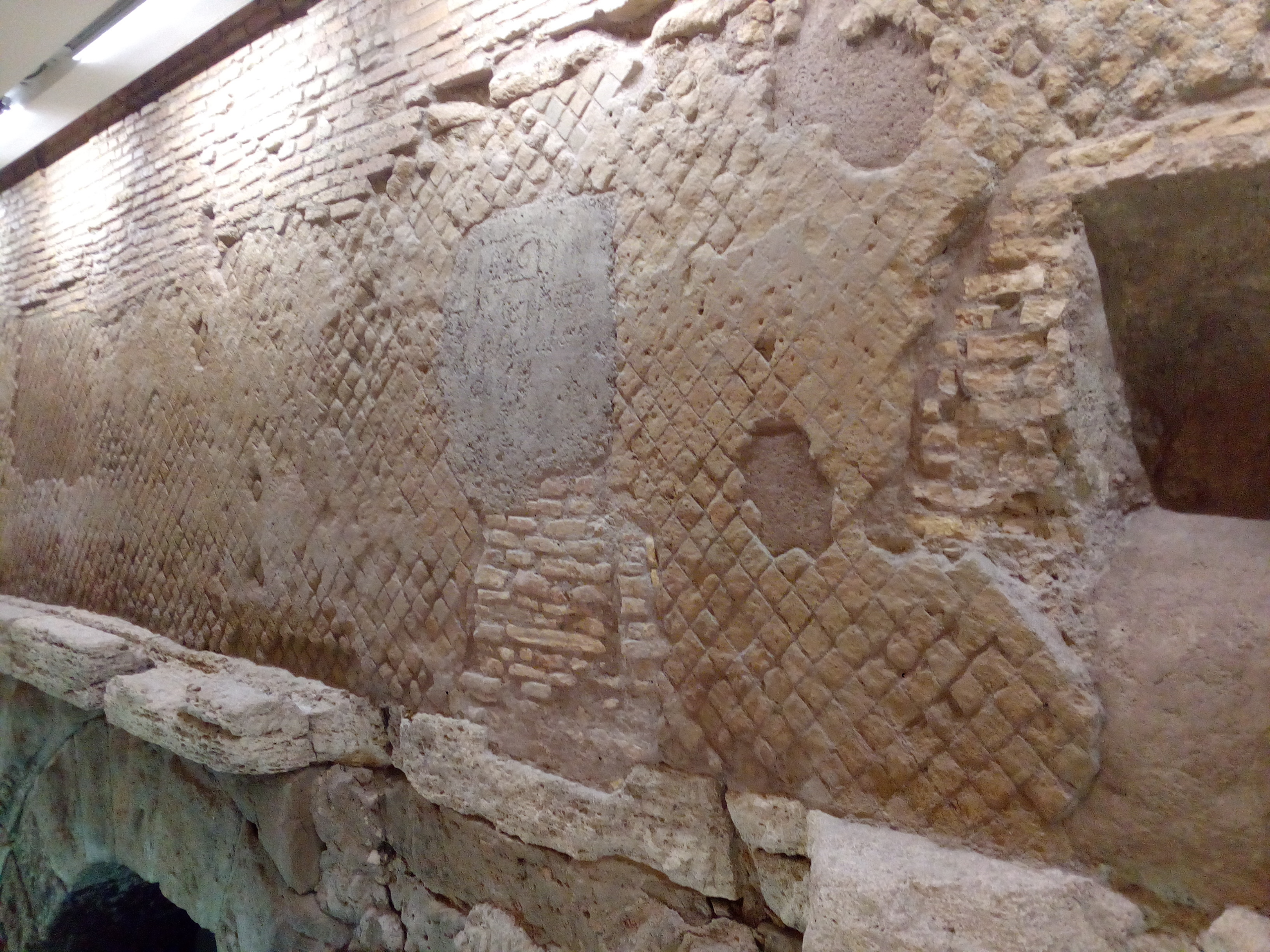

If you go to the new Rinascente in Rome, but you’d like to do anything except enjoy a bit of wholesome shopping, then I suggest you head down to the lower floor to admire something that, following the excavations for the renovation of the building, emerged from the ground: an about 100-metre-long stretch of the Aqua Virgo, the only true Roman-era aqueduct still in operation (though mainly for monuments and fountains such as the world-famous Trevi Fountain). Here is a magnificent example of what Rome’s underground can give us.
The aqueduct was inaugurated by Augustus in 19 BC, but in fact the engineering work should be attributed solely to Agrippa, his friend and trusted general (as well as his son-in-law). But not only that, since Agrippa held numerous public offices, and many of them could ensure the right visibility for Augustus, making him, in the eyes of the Romans, a man able to guarantee the well-being of the people, especially the most disadvantaged classes. In full Roman style, and in this particular political context, Agrippa first and foremost wanted to celebrate himself, while also giving a strong propaganda boost to Augustus himself. And what better way than to build a new aqueduct, able to bring fresh water to the ever-thirsty city of Rome? The Aqua Virgo’s aquifers and springs originate in the Salone area, south-east of Rome. Running for about 20 kilometres, much of it through underground tunnels (a way to prevent enemies from destroying it), the aqueduct reached as far as the Campus Martius area, where the Pantheon is now located. The famous Roman monument was built precisely at Agrippa’s behest, who, among other things, also had other extraordinary buildings erected nearby, such as a basilica and a bath complex, both dedicated to Neptune. Precisely to supply what are considered the first real, large public baths in Rome, Agrippa wanted to channel the water coming from an area named Salone.
A winding route, that of this aqueduct, which passes beneath and alongside the Roman hills. An underground route still today partly accessible, for what remains, in every respect, one of the symbols of ancient Rome, a monument to Roman engineering which, let us remember, can be admired by entering a modern building, recently restored, whose core business would be shopping. In Rome, even miracles like this can happen...