

Today your local tour guide in Rome returns to talk about the historic Ospedale di Santo Spirito in Sassia, a centuries-old building that, unexpectedly, preserves real treasures inside (as you can read here), but also curious museums (as you can learn more by clicking here). But there is more, in a city as big as Rome, something that is not found only here but that, inevitably, is part of the culture of the Eternal City. I am talking about the local foundling wheel which has its own peculiar history.
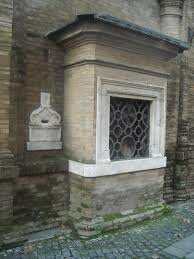
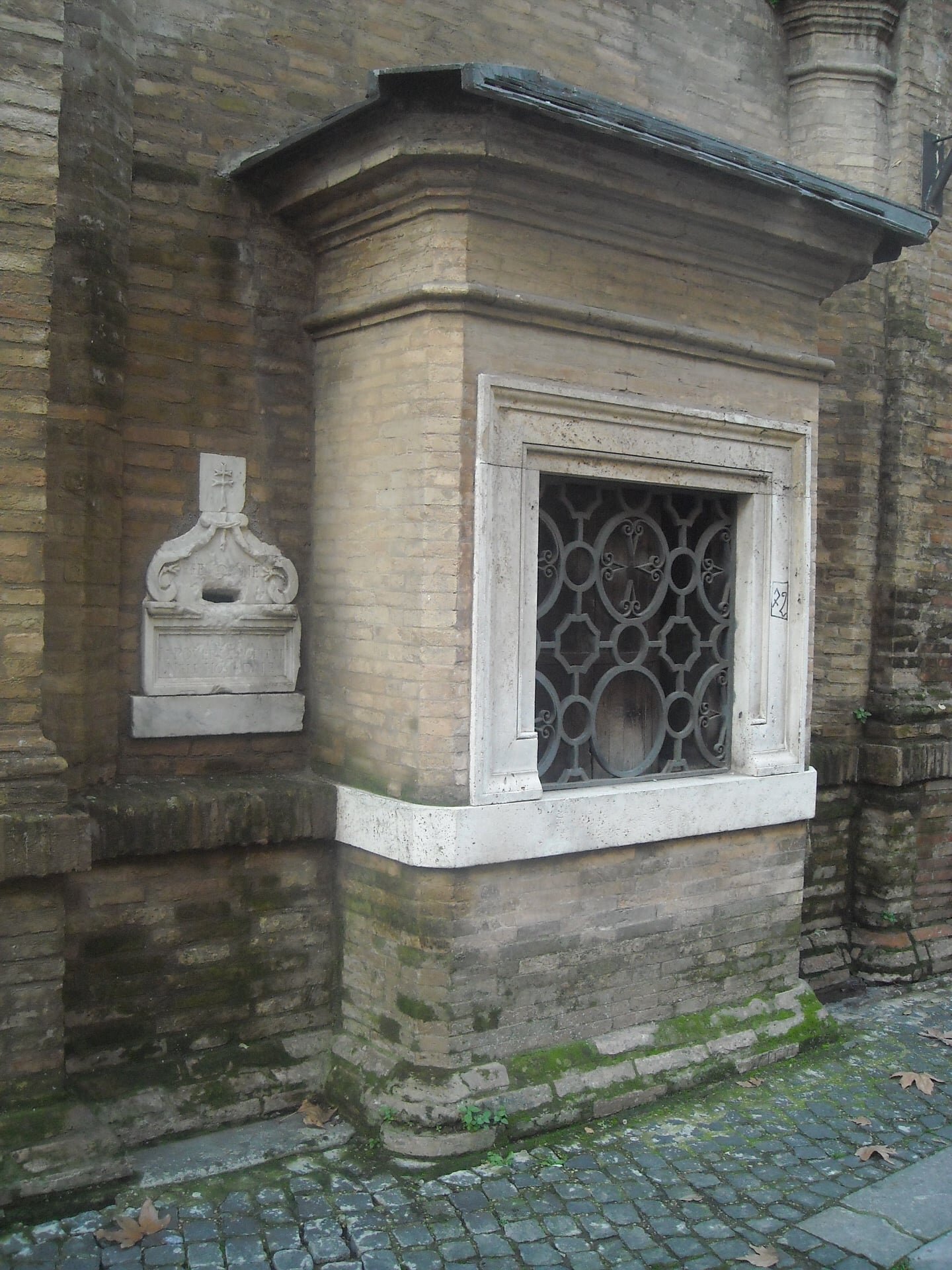
The foundling wheel or "wheel of the exposed" as an institution dates back to pope Innocent III, who introduced it in Rome at the end of the 12th century for the maintenance of the poor and the "proietti" (that is, abandoned children). Legend says that the pontiff witnessed the recovery from the Tiber of the bodies of three drowned infants and, horrified by this event, established that a special ward of the Ospedale di Santo Spirito should be dedicated to abandoned children. We do not know if this story is true or was just artfully constructed to show the mercy of the pope towards a real social scourge, but unfortunately the abandonment of newborns was a very widespread practice, especially among prostitutes who faced an unwanted pregnancy. Considering that there certainly were no modern contraceptives and, above all, perhaps there was also less respect for oneself and others, disposing of newborn children by throwing them into the Tiber was a real rule. Today it seems a practice that is horrible and absolutely to be avoided, but unfortunately when in Rome people barely feared the gendarmes and guards, everything was practically allowed. And let us never forget how prostitution was a sort of very flourishing, common, and profitable work activity in the Urbe. To give you just one idea, it seems that in the sixteenth century in Rome there were about 7,000 prostitutes out of 50,000 inhabitants! The wheel or "turnstile" was usually positioned on the walls of hospitals and orphanages and worked thanks to a round, rotating mechanism. The children were left in the cylinder which was turned with a small push, while a bell alerted the staff to the presence of the newborn. In short, anonymity was guaranteed. And this was also true for those poor families who perhaps had no possibility of supporting more children. The foundling wheel can also be found there, at the entrance to the Ospedale di Santo Spirito in Sassia. The inscription placed nearby, on a marble slab, still strikes today: "Elemosine per li poveri proietti dell'hospidale" ("Alms for the poor foundlings of the hospital"). It is also striking how sometimes not only the newborn was left in the wheel. For a possible later recognition by those who had abandoned the child, and in order to test their legitimacy later, jewelry, letters, or other distinctive signs were also inserted, which were marked and kept by those who received the abandoned child. It was a way, in short, to give a possible future to that newborn who had the "misfortune" to be born.
A small final curiosity, which makes us understand how, sometimes, even the harshest practices can leave us something; we must know, in fact, that abandoned children were registered as "filius matris ignotae", that is, "child of unknown mother" or, abbreviated, "filius m.ignotae". From these last words comes an expression (let's say more of an insult), typically local, used to refer to a person who, certainly, is not very dear to one's heart...