

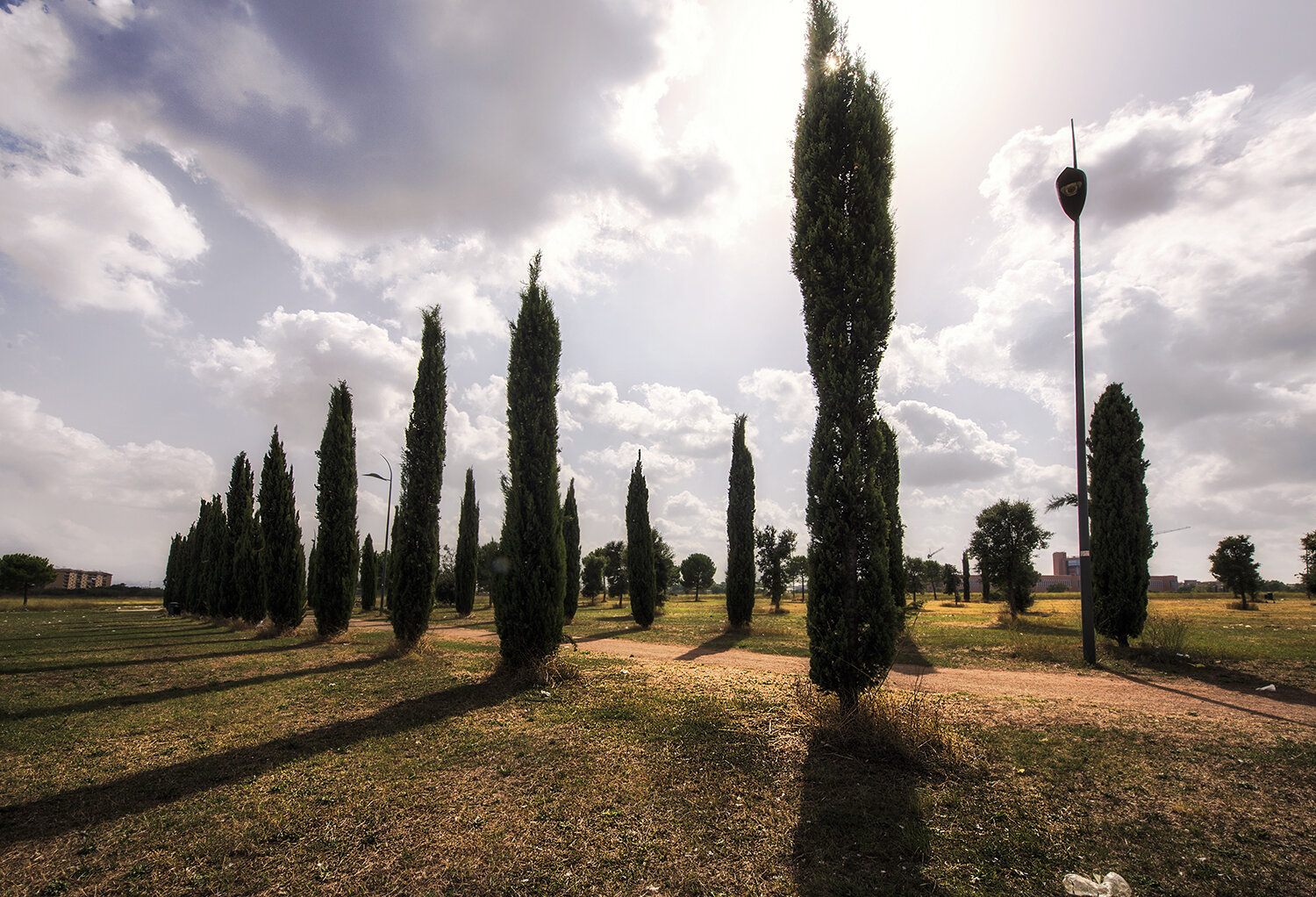
Rome is also rich in parks and green areas, many of which are historic in every sense. Think, for example, of the area of Villa Gordiani (which you can read about in detail here), with its majestic archaeological remains of a Rome of the past. So, even today, follow your local tourist guide to discover another park that will surprise you: the archaeological park of Centocelle, a historic district of the Eternal City.
The Centocelle Archaeological Park is a green area of 120 hectares on the eastern outskirts of Rome, in the territory of the Fifth Municipality, south of the district of the same name. It is one of the many green parks in Rome that, besides being great for spending days under the spring sun, also amazes us with the numerous archaeological finds discovered on site. Over the years, especially in the last century but also more recently, much has been found. The park stands on a plateau that contains numerous archaeological remains, attesting to the area's occupation since the 6th century BC. We are talking about two thousand six hundred years ago, just to give you an idea. In addition to two depots, one republican and one cultic, the excavations at the end of the 20th century rediscovered the three Roman-era villas: the Piscina, the Baths, and the ad Duas Lauros (in Latin, at the Two Laurels). It is important to understand how, therefore, the area of the current Centocelle Park has always been, in one way or another, urbanized and inhabited. In particular, it was the last great architectural complex, the Villa ad Duas Lauros, that left much in archaeological terms. The latter is particularly significant as it was part of a large imperial estate, identified as the residence of the Second Flavians, home of Empress Helena, and due to its size was called Centum Cellae, from which the current toponym derives. A house with, therefore, more than a hundred rooms? Likely and possible, for the standards of the time. Especially if, as in this case, we are talking about the residence of an important and influential member of the imperial family, such as Helena. But that's not all, because even in recent times the area of Centocelle Park continues to offer us surprises and curiosities. For example, at the end of the 19th century, the Forte Casilino was built, and at the beginning of the 20th century the remaining area was used as the first Italian airport, which officially began operation on April 15, 1909, when Wilbur Wright came to give a series of demonstrations of the Flyer, and was named after the aviator Francesco Baracca. Attention, I repeat: the first Italian airport! You understand the importance of the matter and the event, especially when you are in the presence, among others, of Wilbur Wright.
I complete the overview of the park's beauties by adding that, underground, there is an abandoned artificial tunnel about a kilometer long, which was part of a sort of metropolitan railway started during fascism; the project remained unfinished with the outbreak of the Second World War. From the archaic age to the imperial era, from Rome as the capital of Italy to fascist Rome: history was made here too...