

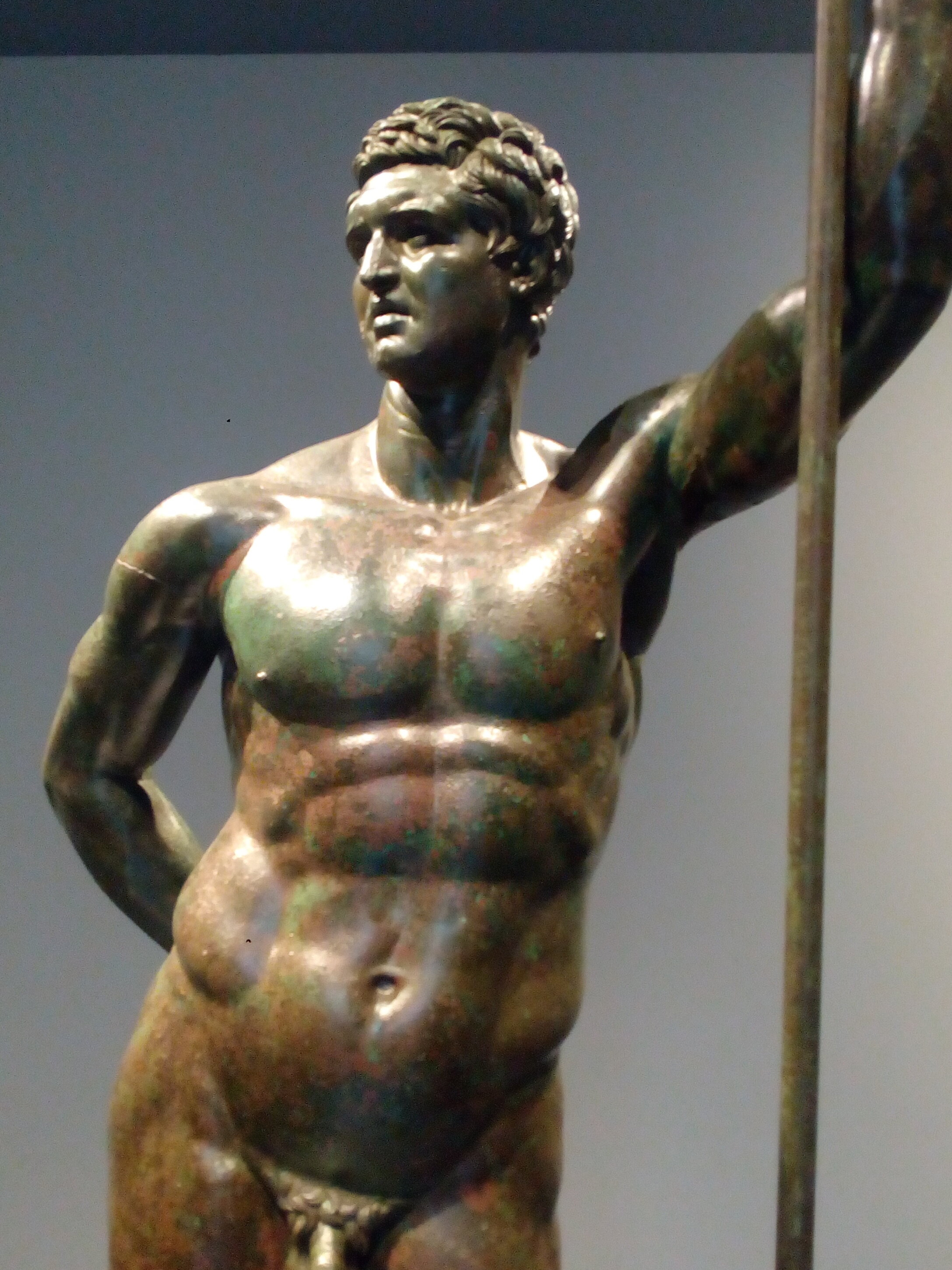
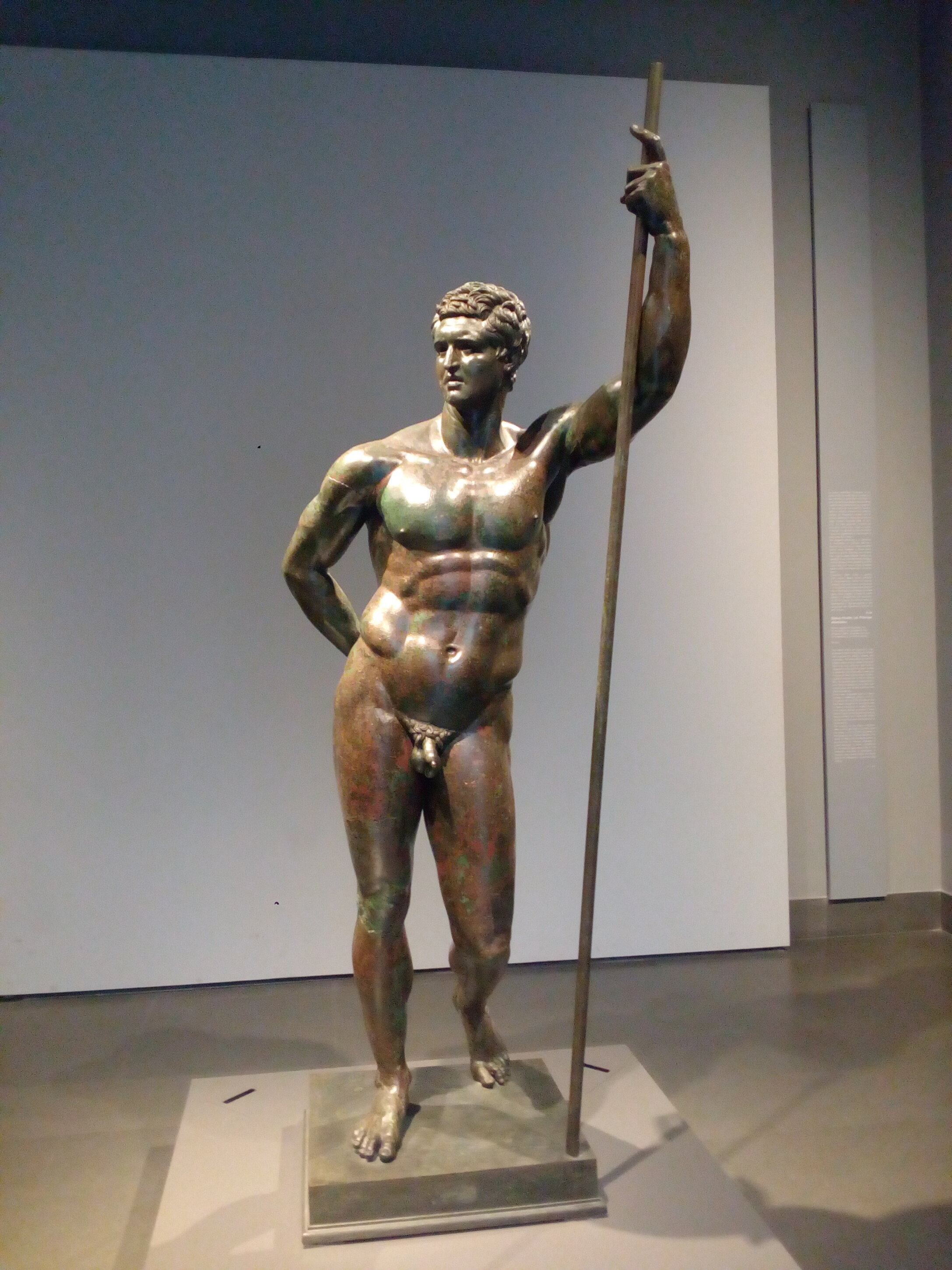
Among the works of art that crowd the Museum of Palazzo Massimo alle Terme, the so-called Hellenistic Prince has a place of honor, a bronze work of the 2nd century b.C. It is a masterpiece of classical art that strongly attests why you should visit this museum. Would you like to get to know classical art and culture more closely? Follow the advice of a local tour guide in Rome and come here, to Palazzo Massimo alle Terme. Stop here, in front of this bronze sculpture.
Even today, in many ways, it represents a real mystery, since there are many questions that experts still ask themselves. Let's start with certainties: it was found at the end of the nineteenth century on a side of the Quirinale, together with the other bronze masterpiece of the museum, the famous Boxer. Both statues were cast with the lost wax technique, whereby the silhouette was given through the emission of cast bronze in a mold, with the previously used wax that was lost at the time of casting. For the rest, the certainties end here! There are those who suggest that the two masterpieces were part of a single sculptural group with a mythological background, but it seems weak as a theory. After all, we still don't know who it really represents. Many names have been made, others really imaginative while others supported by some archaeological comparison. There are those who see Silla, who Agrippa or who Attalus II, but what is certain is the largely heroic pose of the subject. A pose like so many can be seen in archaeological museums, a pose that refers exclusively to triumphal and victorious messages, typical of Roman art.
With one hand twisting behind his back, the weight of the body in heroic nakedness resting on a rod, the head turned away in a quiet and thoughtful attitude, but from which self confidence and power shines... All elements that lead us to think of two things: either it is the bronze portrait of a Greek monarch, often depicted almost as a divinity or an otherworldly warrior, or it is a statue of the Roman Republican era, whose client wanted to use all the wisdom of Greek art and classicism to emphasize its virtues and strength. In support of the first hypothesis, an important element is missing: a crown , a symbol of royalty and of the basileus, the Greek king. In short, despite the beauty and strength that transpires from this bronze body, from its perfection and dynamic position, still today we do not know who was immortalized in these remains. Our fortune , that we can admire the work here in Rome, having a veil of mystery that covers it.