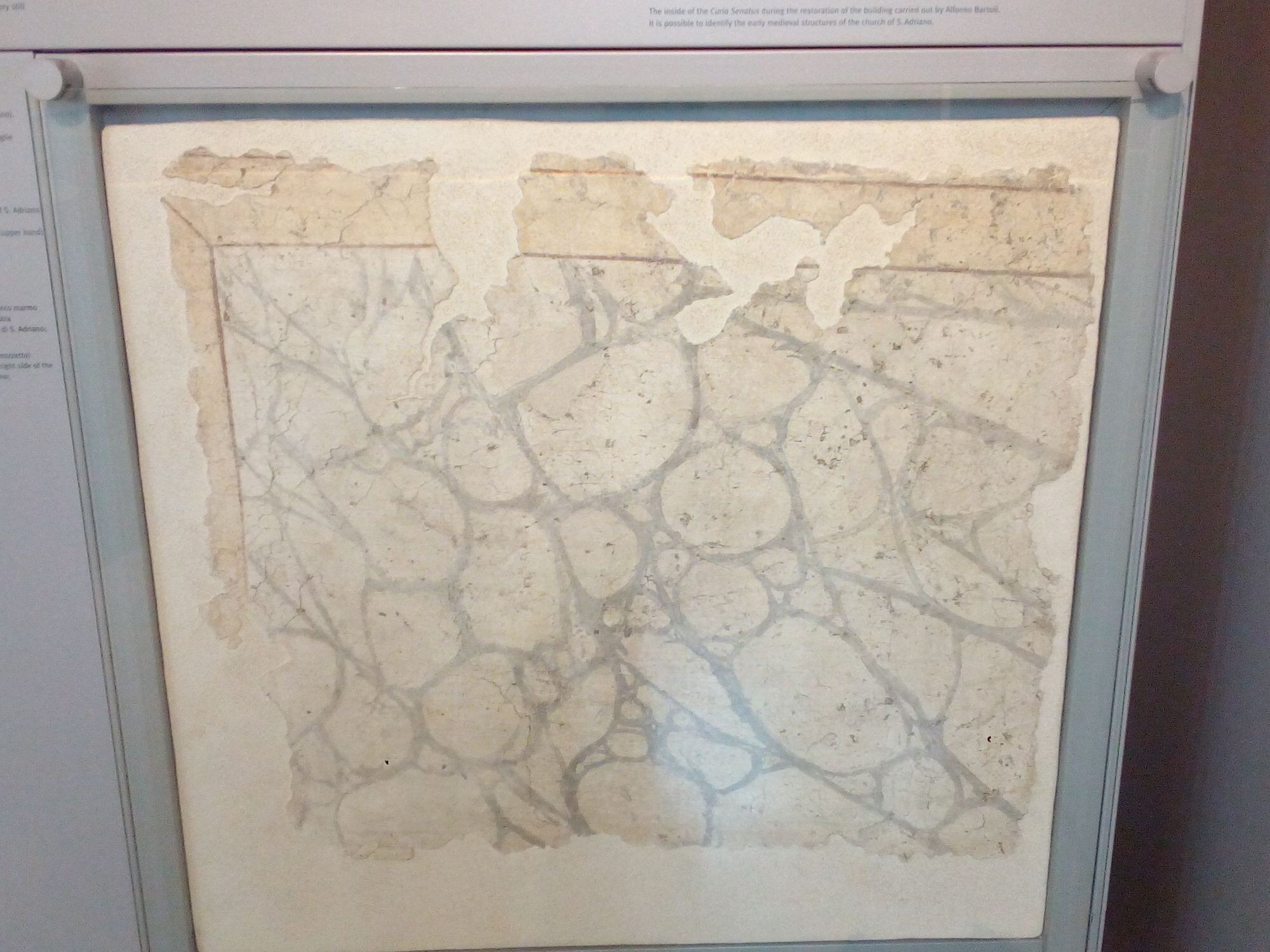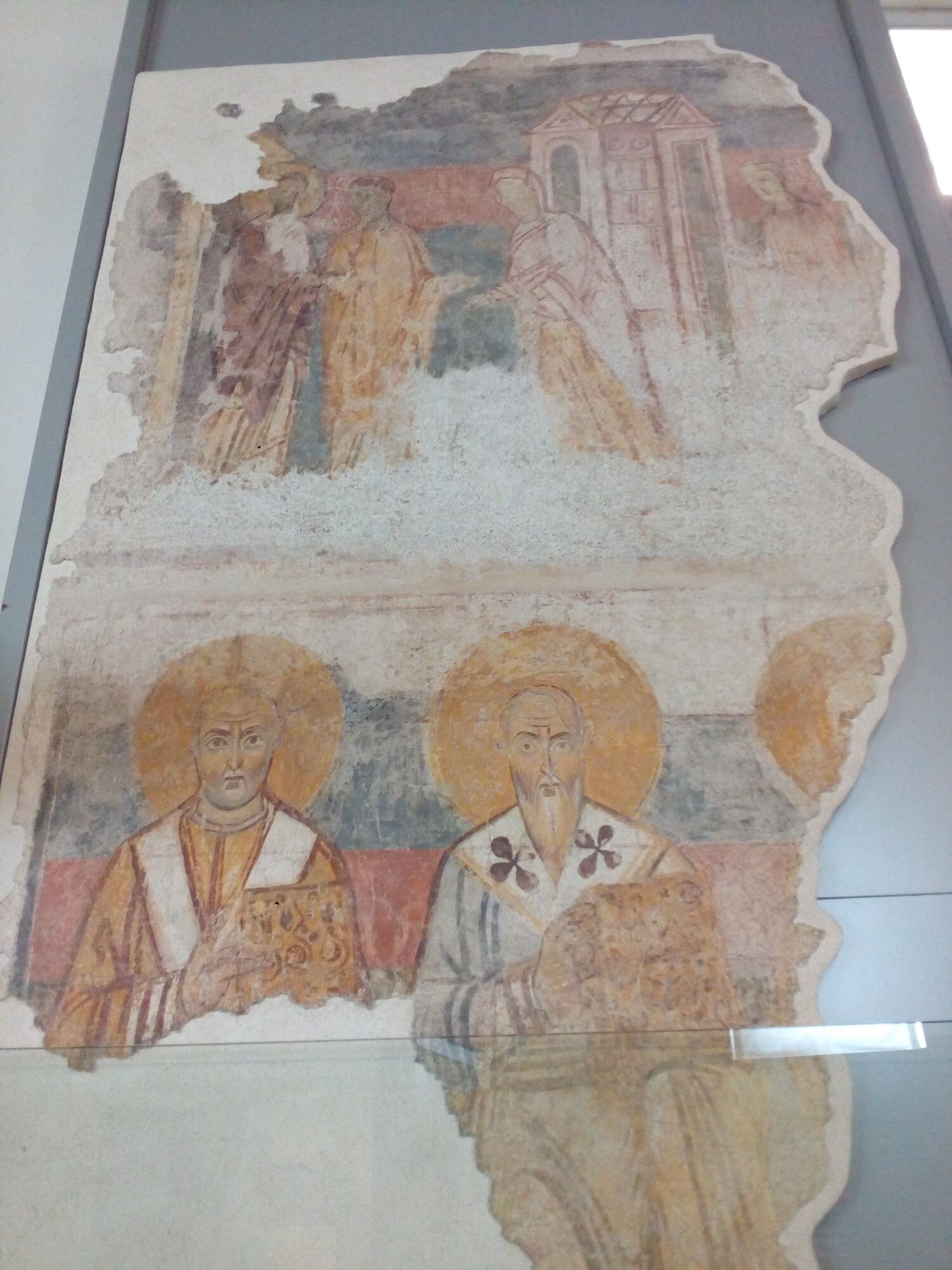
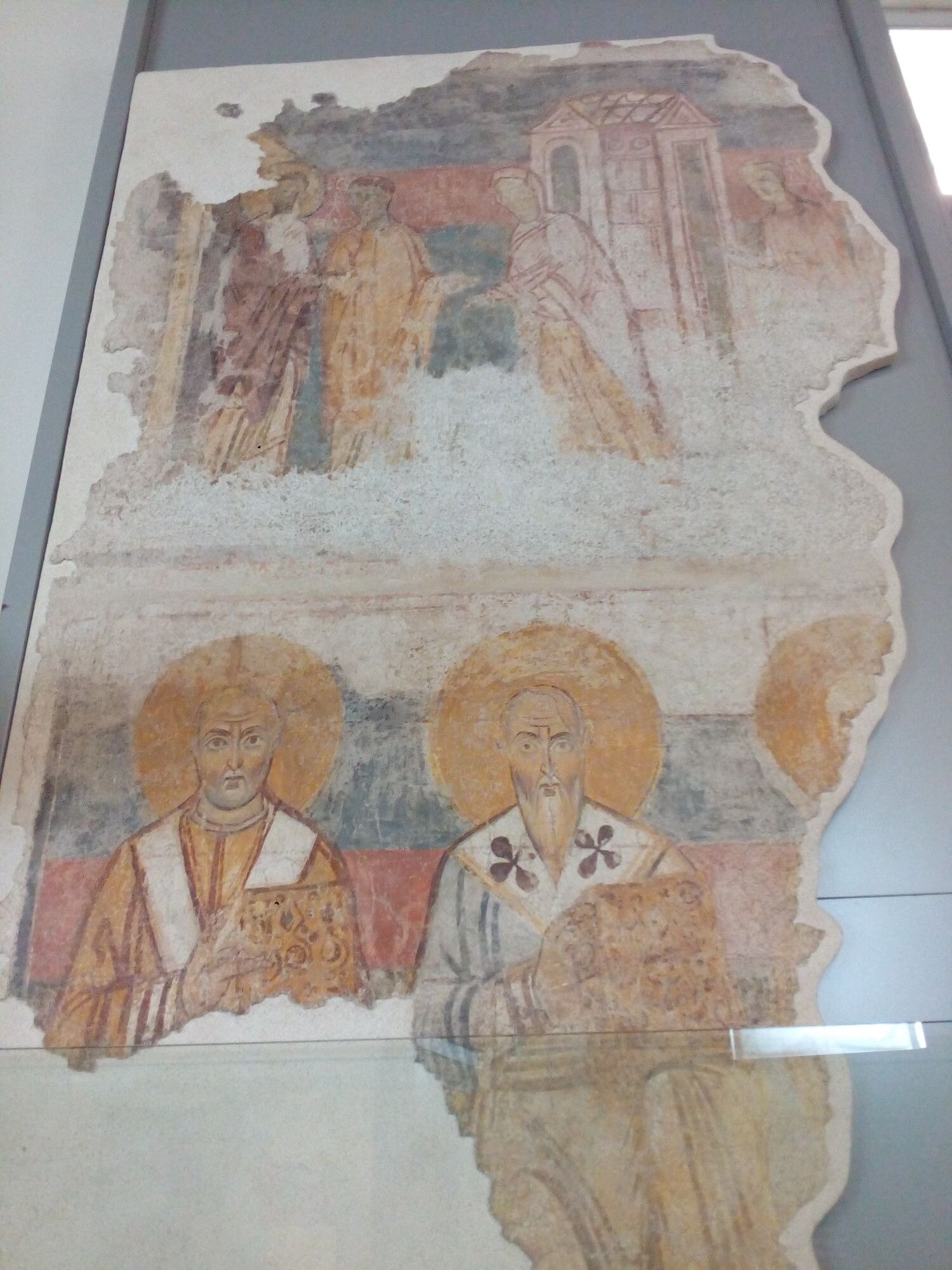
Among the many surprises that we can find in the Crypta Balbi Museum in Rome there are also some beautiful polychrome frescoes, layers of color and plaster detached from one of the buildings that made the history of Rome: the Curia! What was it? Simply the famous Senate of the ancient Rome...
The Curia, the beating heart of republican Rome, was in an architectonical way the building located in the Roman Forum that for centuries laid the foundations for the universal power of the city. Today the building that housed the vast majority of the meetings between the patres, the building that on more than one occasion it has seen moments of great political tension, is clearly visible in its almost total modern reconstruction. Only inside we have elements of antiquity, without considering po i the fact that, historically, the Curia as we see it today is the replica of the one rebuilt by Julius Caesar (so as to make it clear, even architecturally, that he was almost above the institutions). But then the history changes course, culture and politics too, and since the 6th century a.D.. the figure of the Christian pontiff began to be central and essential, taking shape as the political and administrative leader to whom the population could refer, especially in emergency cases. Thus the famous Curia, seat of civil, political and pagan power (from a Christian point of view) of the ancient city, was transformed and converted into a church.
A place of worship dedicated to Christ which stood where, day after day, the public and civil life of that Rome of the past which had, at times, persecuted the Christian community, took place. You can understand the political significance of this architectural and symbolic reconversion. The church was dedicated to Sant'Adriano and, as always, it was also decorated with sacred frescoes, like the one you see in the photo. Figures of saints that stand out, with a strong two-dimensionality, on a flat and monochrome background, colors that remind us of a period in which even figurative art had changed, in which the very message that art had to send was changed. Not only the message changed, but even the observers, the people who should capture this message through art and frescos changed. They were believers at first, then citizens.
Therefore here at the Crypta Balbi Museum we have an artistic example of a moment of great fervor in Rome, a moment of transformation and change. To these frescoed figures, for a sort of artistic assimilation, a fake opus sectile was also added, a painting that simulated the classic decoration with fake marble fragments typical of classical Roman culture. Let's not forget that purely Christian art often resumed, sometimes changing its context, typical decorative or artistic elements belonging to the non-Christian Roman culture. In short, a real world that opens up behind simple paintings, shown in that beautiful museum that is the Crypta Balbi of Rome.