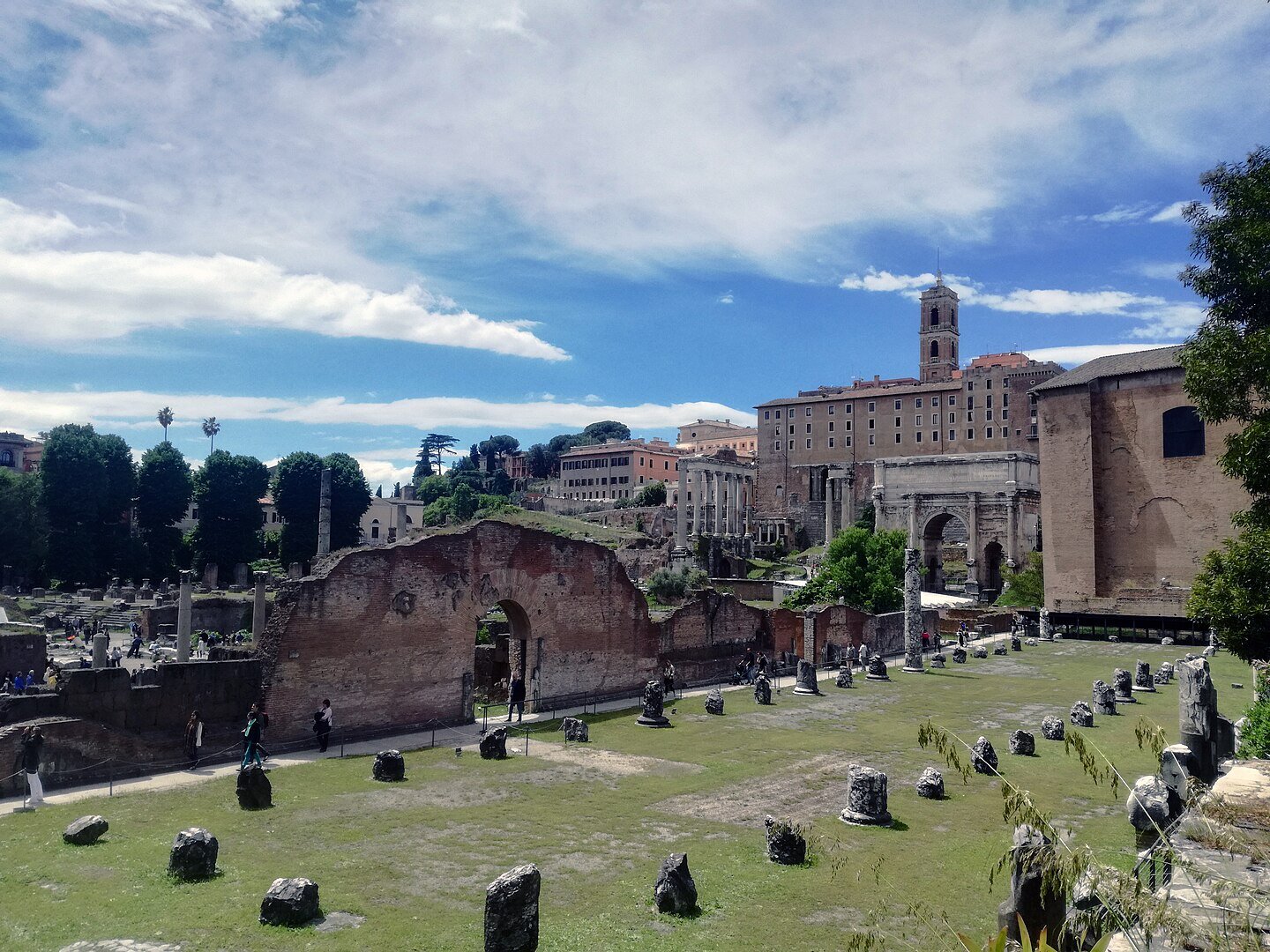
The so-called Basilica Fulvia - Aemilia is another of the buildings that adorned the Roman Forum, a basilica for civic use that tells us much about the city life of ancient Rome.
The Roman Forum was the political and social center of ancient Rome (as you can read here), and its is a millennia-old history. Many are the buildings that have now disappeared and of which very few traces remain, like the Temple of Concord for example. But one of the elements that, more than anything, made the Roman Forum the hub of the activities of politics and civic life of the Urbe was the basilica. Not a church, mind you, but a building for civil use, a court where trials took place and where there was also room for financial activities and more. The most famous basilica is the one commissioned by Julius Caesar (as you can read here), but there was also, exactly on the other side of the square, the Fulvia - Aemilia Basilica. Built in 179 BC by the censors Fulvius Nobilior and Aemilius Lepidus, it was rebuilt several times. Probably abandoned in the 5th century AD following a fire (traces of which have been found), perhaps due to the various sackings suffered by the city in that turbulent historical period. But let’s see, together with your local tour guide, what the Fulvia - Aemilia Basilica really was at its greatest splendor.
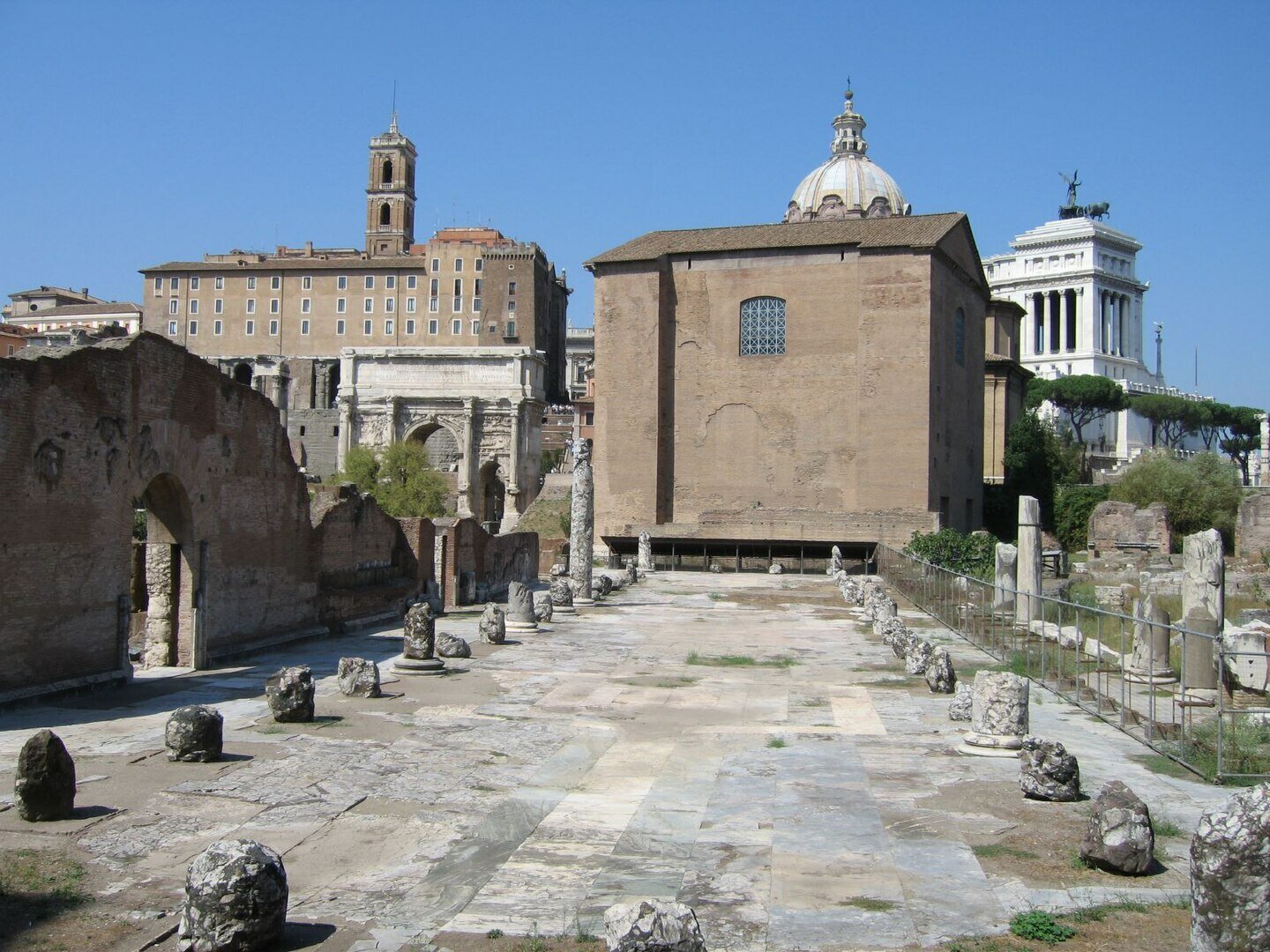
Despite the various reconstructions, the building has always followed the classic plan of a basilica, with a central nave flanked by columns and two side aisles. One curiosity, however, is that on the north side (the one toward Via dei Fori Imperiali), there were as many as two naves, to make use of the available space. It is nice to see the remains, dating back to when the basilica was inaugurated in the 2nd century BC, clearly visible on the side facing the Curia, ancient Rome’s Senate. Today very little remains, unfortunately. The marble fragments, especially of columns and a few friezes, as well as the level of the paving, date to the Augustan rebuilding, when Rome’s first emperor left his mark here too. Right in the current paved floor it is still possible today to make out the traces of the fire that devastated the Fulvia - Aemilia basilica in the 5th century AD, bringing activities to an end. A common fate throughout Rome, a fate that marked, in some way, the beginning of the end of the whole area of the Roman Forum. Not only that, though, because this basilica, like the others, also hosted commercial activities. The side facing the Forum, in fact, had a portico where shops of various kinds opened, in particular focused on financial business. Today we still have some remains from the 1st century AD, probably the offspring of the so-called Tabernae Novae that arose precisely alongside the basilica.
There are also a few curiosities to take into account. From the start of the article I have always used a double name: Fulvia - Aemilia. At first, in fact, the building had only the title Fulvia, from the censor who first funded it. Then the powerful gens Aemilia promoted new works, enough to add its own name. But, according to some archaeologists, the Basilica Fulvia and the Basilica Aemilia would actually be two distinct buildings! Beneath the remains of the Temple of the Divine Julius, which looks out right there onto the Forum square and which was built under the principate of Augustus, evidence has been found of a building that, according to the sources, was commissioned by the censor Aemilius Paullus in 159 BC, twenty years after the construction of the first basilica. Could this have been the true Basilica Aemilia? Let us not forget, moreover, that this type of building would have been seen in Rome for the first time in the 2nd century BC (but perhaps even a century earlier), following the model of what the Greeks, in part, had in their poleis. This archaeological and architectural treasure, however, was also destined to an end. And it is interesting to note how archaeologists can date with absolute certainty the end of the basilica through the remains of coins burned by the fire of a(n) fire (evidence still visible today), which without a shadow of a doubt were issued in the 5th century AD. A message from the past, here in the Roman Forum, center of the Urbs of the time and of the whole world, according to the Romans. A world that was about to change.