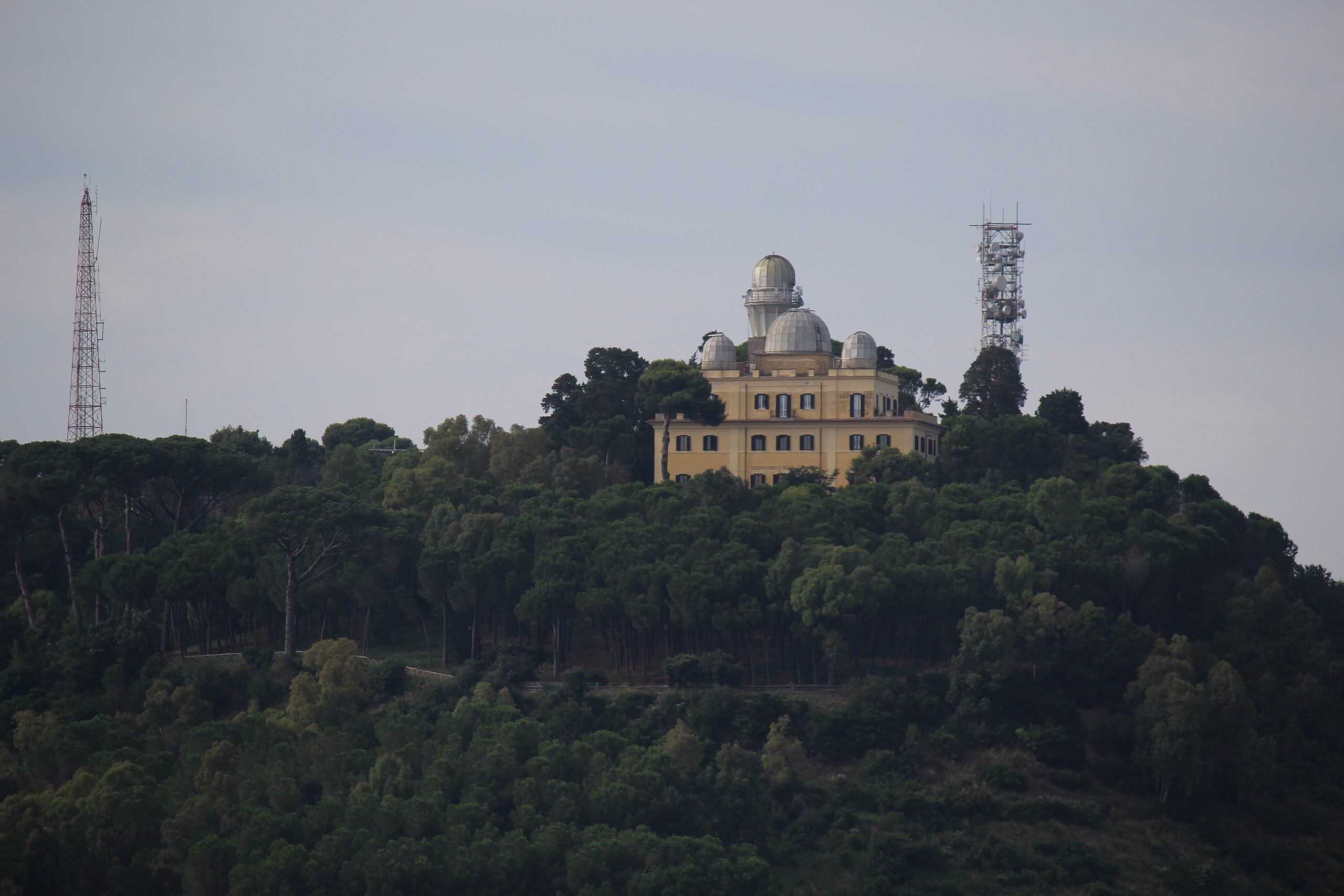
Villa Mellini is a building that rises above the 139 meters of Monte Mario, a small yet elegant villa that has seen a lot. From a Renaissance villa to the headquarters of INAF, and much more.
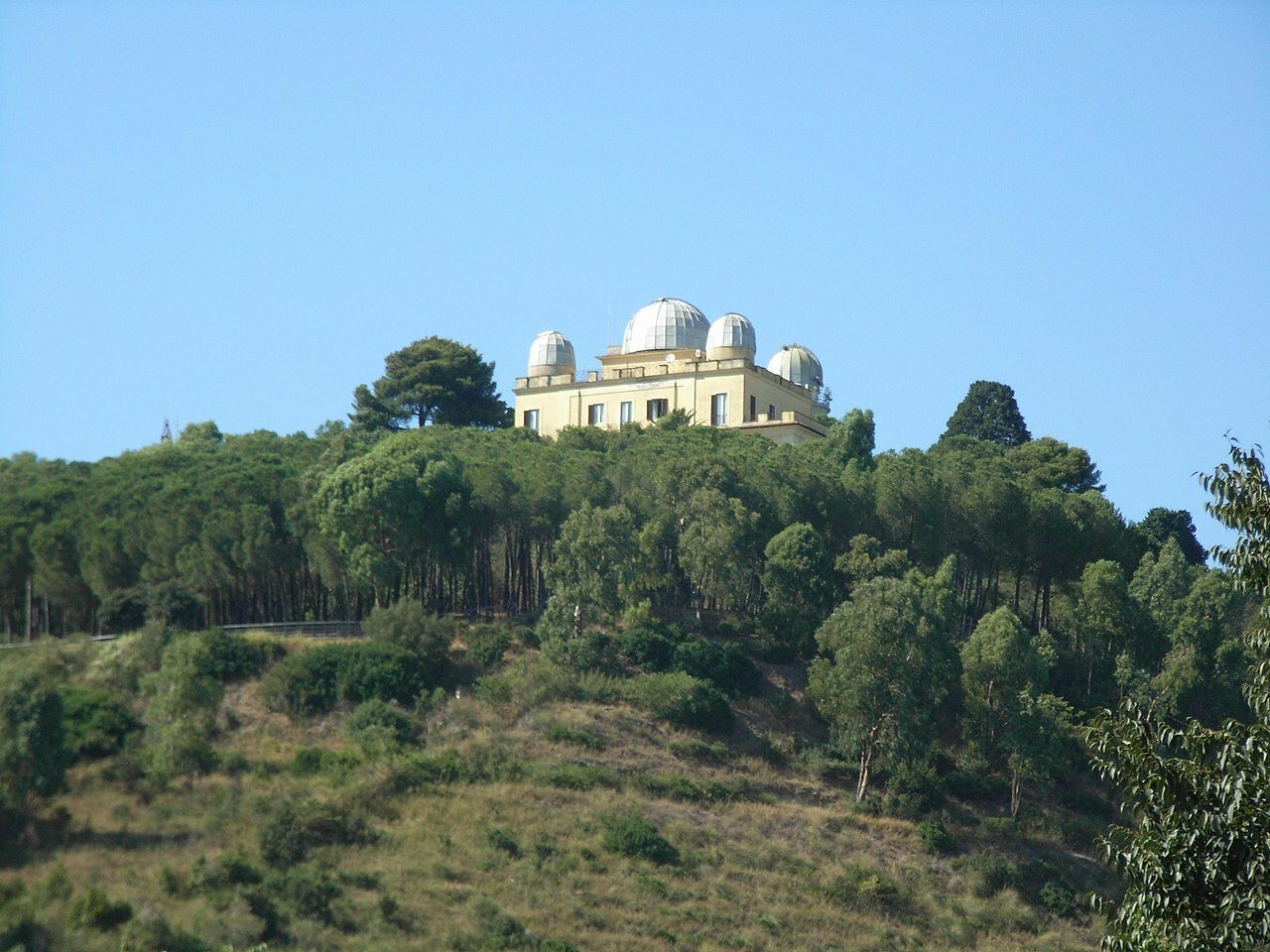
Monte Mario is one of the main symbols of Rome. It's hard not to notice its imposing presence in the landscape dotted with hills and valleys that make the Eternal City a geologically interesting area. And up there, right on the top of the hill, stands the unmistakable silhouette of Villa Mellini. The astronomical dome immediately catches the eye, as the villa hosted an astronomical observatory for about 70 years, until 2000. Its astronomical character continues even today, since it is the official headquarters of the administration of INAF (National Institute for Astrophysics). This is what is visible to everyone, under the light of the Sun (or the stars). But Villa Mellini, in fact, has another story to tell, which begins at the end of the fifteenth century when Mario Mellini, a prominent figure at the court of the pope Sixtus IV (who did many things, as you can read here), had a beautiful villa built with a view over Rome. It then changed hands in the eighteenth century, when it became one of the residences of the famous Falconieri family, who made some small changes. These changes became a bit more significant during the nineteenth century, when the astronomical tower was built, from which all the latitudes of the Italian territory are calculated. Despite this, the fifteenth-century charm of the villa, with the park around it, remains unchanged. But there is much more to discover…
Let's take another small leap in time and land directly at the end of the eighteenth century. A moment certainly dark for Rome and, above all, for the papacy, as this was the moment when the temporal power of the pope, for a few years, ceased. All in favor of the Napoleonic French, who in Rome carried out a real political revolution inaugurating what went down in history as the Roman Republic, a republic founded on the ideals that arose from the ashes of the French Revolution. Ideals in which the pope, in that case Pius VI (who was forced to leave Rome), could not find space. The transition was fairly peaceful, all things considered. In 1797, the atmosphere in Rome was unbearable due to the conflict between Napoleon and the papacy. At the end of that year, in front of Porta Settimiana in Trastevere, General Duphot (a close relative of Napoleon), in full uniform, appeared as the leader of some insurgents who wanted to overthrow the papacy. Everything was fairly peaceful until, perhaps by mistake, the man was killed by papal soldiers. Here is the casus belli, which in 1798 led to the arrival of a French army, which entered without resistance through Porta Angelica. The commander-in-chief of the French army was Alexandre Berthier, who set up his headquarters right at Villa Mellini. It was there that, with all due caution, papal envoys presented themselves to him, begging him not to sack the city. There, over a nice coffee, the papal Secretary of State, as well as nephew of Pius VI, negotiated the peaceful surrender of the city. The pontiff himself had the good sense to send the French general a fine basket of quality wines—just in case!
So, this is how a small villa from the fifteenth century, now best known for its scientific and astronomical vocation, became one of the symbolic places of an important historical moment for a city like Rome, which for over a thousand years had been used to having the pope as its only true leader. And it was there, over a bottle of wine and a good coffee, that a page of the Urbe's history was written—a page, fortunately, not particularly bloody, considering that Berthier, who knows, may have become accommodating thanks to papal gifts. Just think about it for a moment. Eight thousand French soldiers were massed at the gates of Rome, ready to fight. But after this meeting at Villa Mellini, these soldiers entered the city in small groups right near the Vatican, probably under the still suspicious gazes of the citizens. For this reason, too, it is nice to look up at the sky and see, above Monte Mario, Villa Mellini watching over us, perhaps kindly, from up there.