

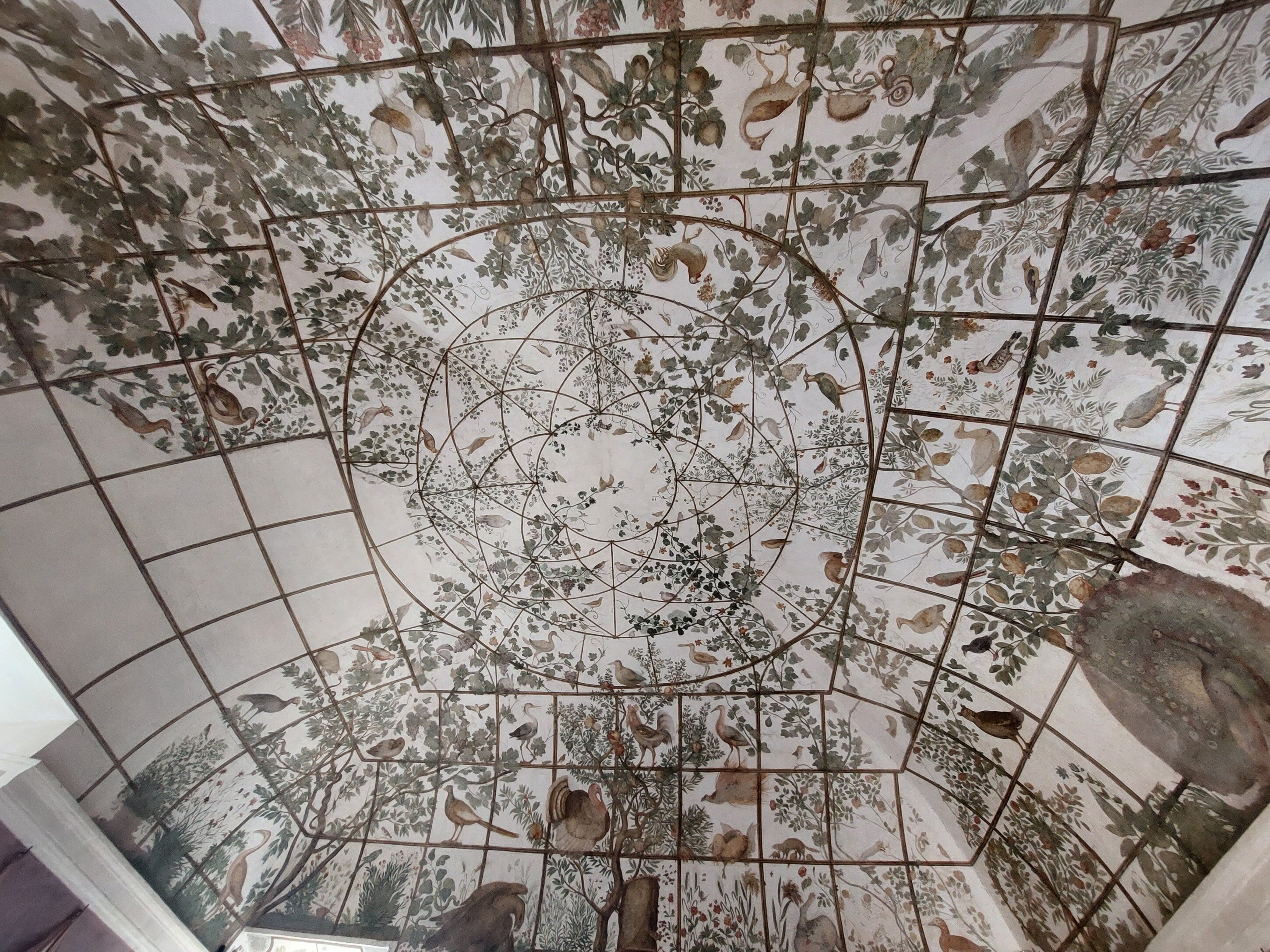
When we talk about Villa Medici in Rome you should focus not only on the main building, the grand villa where even Galileo Galilei stayed (as you can also read here), which dominates the Eternal City from the Pincio, offering a breathtaking view. Villa Medici, in fact, also has an interesting garden, a gypsotheca and even a small study, created from an observation tower on the Aurelian Walls, completely transformed into a pictorial treasure chest worth seeing. So today, your local tour guide presents to you the so-called Room of the Birds, frescoed by Jacopo Zucchi in 1566.
Let's start from the assumption that this small quadrangular space, with a rectangular appendix, was probably a study used by Ferdinando de Medici, the one to whom we owe the villa. Fifth son of Cosimo I and Grand Duke of Tuscany, he was the one who commissioned what we see here from Jacopo Zucchi. And what do we see specifically? Frescoed on the walls is a true naturalistic compendium, both plant and animal. Various species of birds or terrestrial animals, all set in a fake pergola from which, however, something is particularly missing: the sky. In fact, the background is white, with an absence of realism that we explain by the fact that here, Zucchi simply wanted to create a miscellany typical of Renaissance art, to include as much human knowledge as possible, in this markedly naturalistic sense, in a single space. Reality and art blend together, in every sense. There is a cat cleaning itself, a hedgehog confronting a snake, but also elements newly introduced to Europe from the New World, such as corn or a turkey (the first pictorial example in Rome). In a corner on the left, there is also a curious bowl over which butterflies flutter, as if to say that beauty is born from nothing, albeit in a rather ephemeral way. This square room, however, serves as an anteroom to an absolute marvel: a small rectangular corridor completely frescoed.
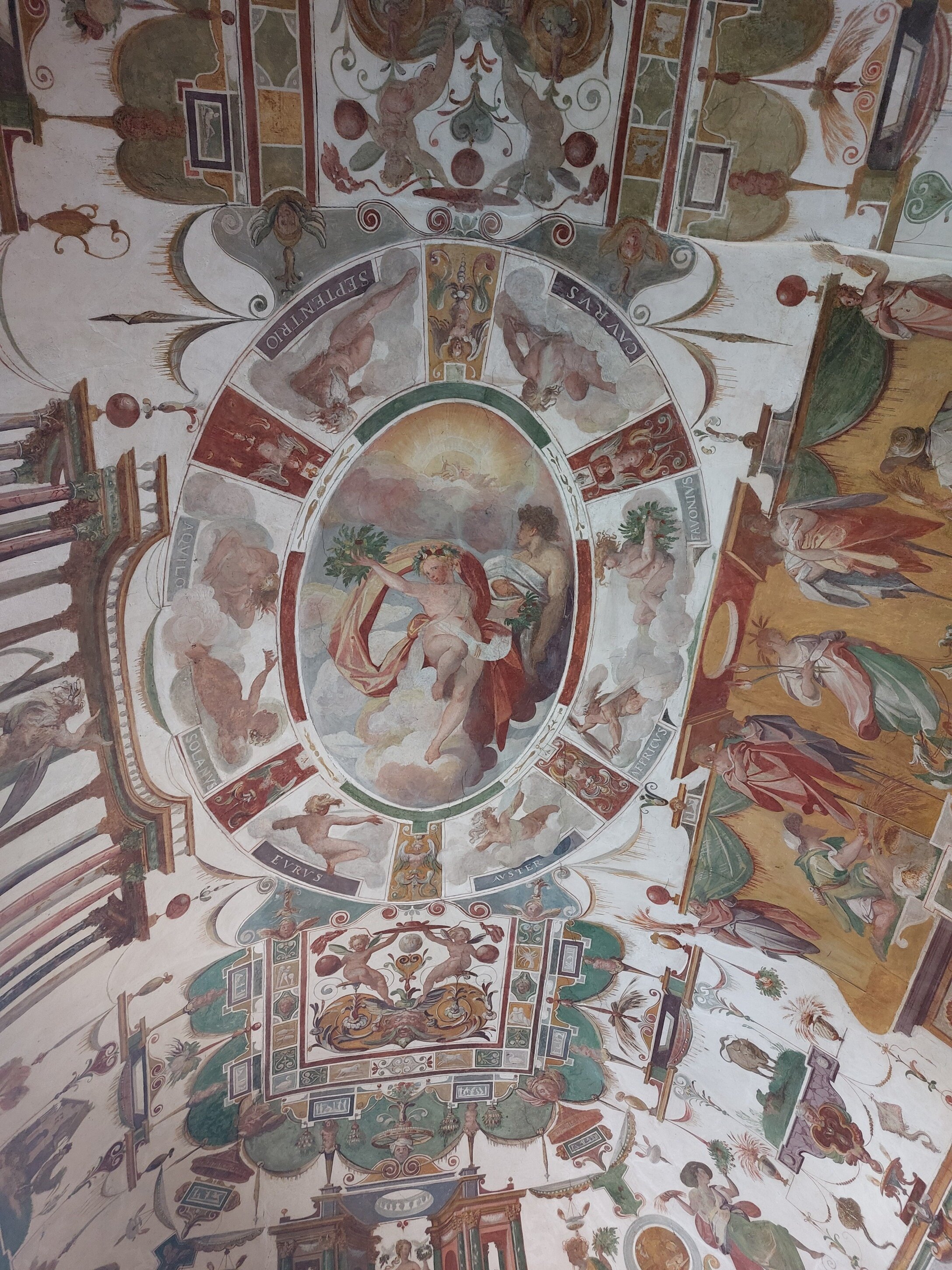
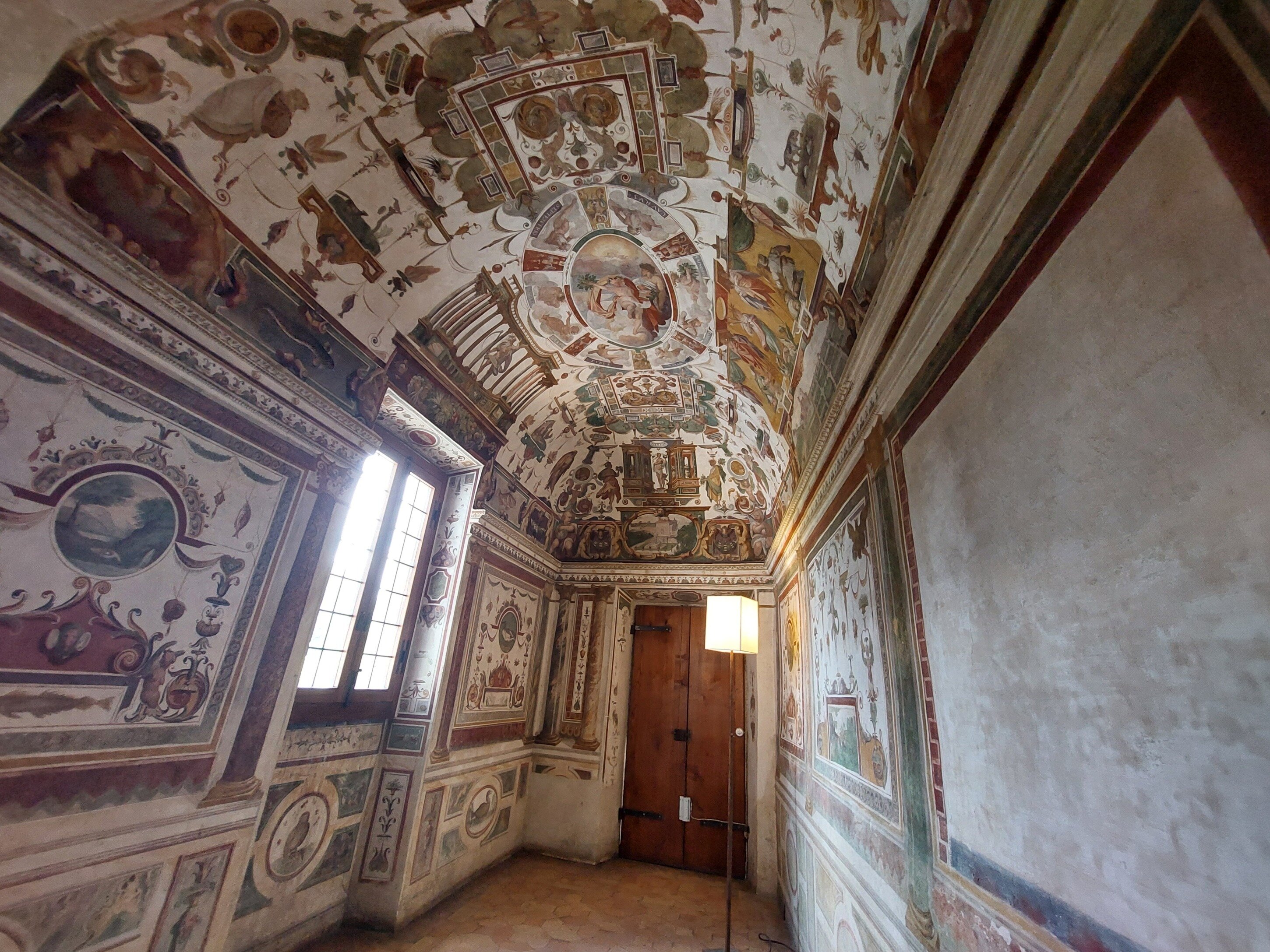
We immediately notice some grotesques, with the figure of Apollo on the vault. A deliberate choice, since it seems that Ferdinando de Medici wanted to name a small artificial hillock here Parnassus, precisely in honor of the Greco-Roman deity. On the walls, instead, there are three very interesting views of Villa Medici, a real vintage photo. Just think that one fresco depicts the original building, later modified to create the current Villa Medici. Another shows the villa with a boundary wall that no longer exists and with other parts removed over the centuries. Yet another image is somewhat enigmatic, as it is not clear whether it represents an original project later discarded or a sort of idealization of a villa. One way or another, here at the Villa Medici in Rome, art is at home, in every sense!