

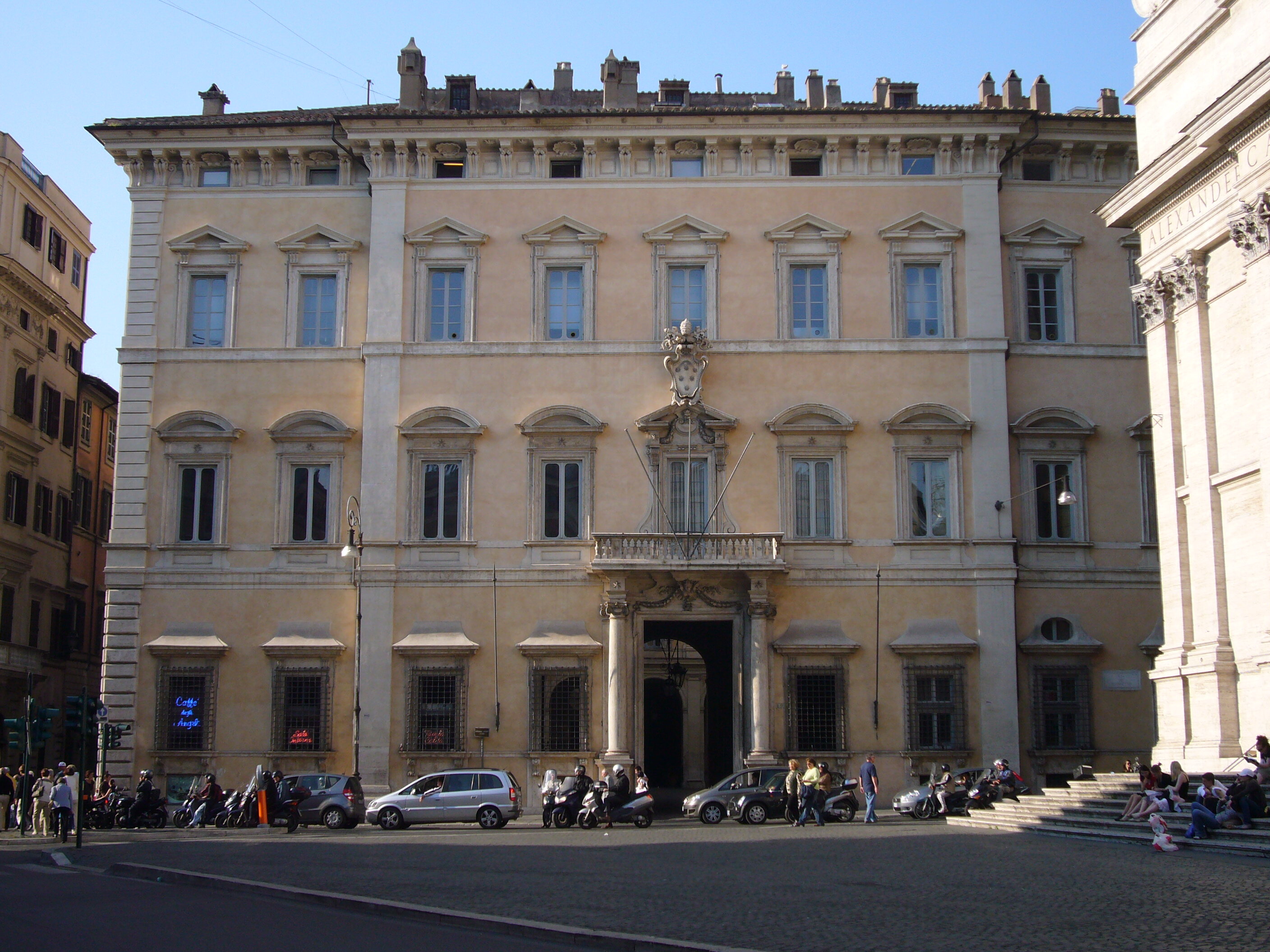
In the photo, here is the main facade of Palazzo Altieri, built in the second half of the seventeenth century at the behest of this powerful family who, luckily for them, had the great fortune of seeing one of their members become pope, in this case with the name Clement X. Thus, as was customary, upon the election of a member of their family to the throne of Peter, the family increased its prestige and power, enough to afford such residences. This too characterizes the Eternal City, and today your local tour guide takes you to discover one of the best examples of how power, especially at the time, could bring countless advantages.
As often happened, therefore, immediately after the election, the Altieri family took advantage of the new power, and the mountain of money, deriving from having one of their members as pontiff. Sparing no expense, the Altieri called one of the best architects of the time: Giovanni Antonio De Rossi. His aim was not only to build the new residence but also, if possible, to find a suitable area that could give further prestige to the family. As you can see in the photo, the architect and the family agreed to build the new palace here, near the sixteenth-century Church of the Gesù. We are in the rione Pigna which, then as now, is in a very central position in the Urbe. Again sparing no expense, Prince Altieri, to carry out the project, had the land leveled, buying and demolishing all the pre-existing houses and shacks that were in the way of the construction, and he succeeded with all except one. But here something, or rather someone, unexpected comes into play. I am talking about a poor old woman, named Assunta or Berta, depending on the versions we have of this episode. In the most classic case of David versus Goliath, the lady was the widow of a cobbler and absolutely refused to sell her little house and leave; she had been offered a sum immensely greater than the value of her shack, but all in vain. The house was too full of memories of her husband and their marriage, too full of emotions to abandon it like that, even in the face of an exorbitant offer for her finances. Interestingly, it seems that not even threats could move her from her house, where her husband and ancestors had lived, and died, for generations. Then Prince Altieri had an idea: to turn to the one who ruled Rome in every way, the pope. The pontiff who, among other things, was a member of the Altieri family. There would have been no obstacles, because if even the pope got involved for the old woman, there would have been nothing to be done. Clement X, however, incredibly sided with the elderly lady and imposed on the architect of the palace a brilliant compromise solution: the illustrious palace of the Altieri princes would be built only by "including" and preserving the little house of the tenacious old woman!
It is for this reason that the facade you see here in the photo, as well as the side walls, are perfectly aligned and symmetrical, with their windows and pediments. However, turning into Via Stefano del Cacco (where there is a nice church), on the side of the palace, you notice a portion of wall in total disharmony with the rest. It was here, in fact, that the lady lived, so tough and determined. Architecturally speaking, at this point you can clearly see the distinction between the two buildings, so different from each other but for more than three centuries united in an almost forced embrace...