

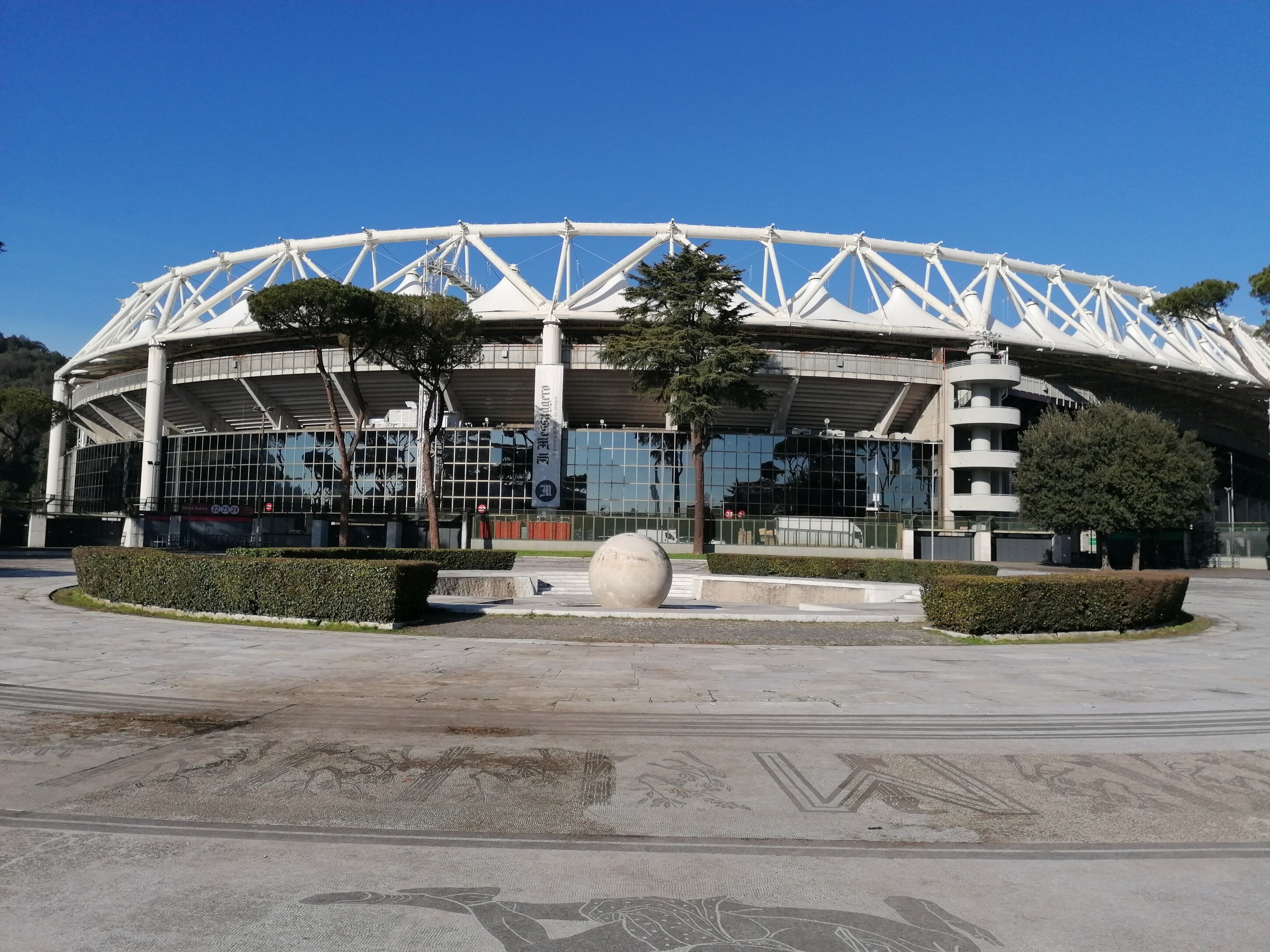
Among the modern symbols of Rome, the Stadio Olimpico must certainly be counted, thanks to the constant and passionate support it receives. It might not seem so given its current use, but after all, even this stadium has a somewhat vintage feel, like many things in modern Rome. Think also of other buildings that, after just a few decades, have become symbols of the Eternal City, always looking to the future, such as the Teatro dell'Opera (as you can read here). The Stadio Olimpico, in some ways, is also a modern theater where people more or less have fun. No more and no less, if you think about it, than what the ancient Romans did at the Colosseum. So, with your local tour guide in Rome, let's get to know this truly Roman symbol.
Imagine how, for example, the design of the building dates back to 1927, right in the midst of the urban planning projects wanted for the Urbe by Benito Mussolini, who was determined to equip the city with new, modern, and multifunctional facilities for the time. This stadium, originally called the Stadio dei Cipressi, was also part of a large Mussolini-era project dedicated to sport and physical activity, both of which were also used for propaganda purposes. After all, even today around the stadium there are other facilities for sporting activities, in what is now called the Foro Italico (while in the 1920s and 1930s it was known as the Foro Mussolini). Many others are the symbols of this area, like an unusual obelisk… The stadium was inaugurated in 1932, designed by architect Enrico Del Debbio, who initially planned only one ring of seats surrounding the football field. It's worth noting that, from the beginning, the stadium was supposed to have three rings. But to speed things up, it was better to inaugurate it with what was already available! The completion works resumed in 1937, only to be completely halted due to the Second World War. Work resumed only in 1950, and was completed in 1953, when the new stadium was inaugurated with the football match Italy - Hungary (at the time a powerhouse in world football). Then we come to the fateful 1960, when the stadium began to be called Olimpico because of the XVII Olympic Games held right in Rome. The structure hosted the opening and closing ceremonies, as well as the athletics competitions. The capacity reached up to 65,000 spectators. Another major restyling took place starting in 1989 for the 1990 Football World Cup, when the old stadium was essentially demolished to build a new and modern one, with extensive use of reinforced concrete.
There's no denying it, this sports facility also has its roots in the last century, spanning all the greatest events and cultural and social changes that Rome experienced: from the fascist period, which was determined to equip the Urbe with great buildings, to the boom of the '50s and '60s, up to the present day. A stadium that became a privileged location for many events, obviously and above all of a sporting nature. A facility that, despite everything, is a true symbol of Rome!