

Thinking of Rome, the great buildings of the past come to mind, such as the Colosseum, or the vast museums such as the Vatican Museums. In reality, the Eternal City is also the place where the little things, the smallest details, can make the difference. Just think that, not even 400 meters from the Trevi Fountain, a small sacred area is almost hidden that a local tour guide like me recommends you to see, even though the times are prohibitive. It is a real sanctuary, a place of prayer and recollection which, however, will amaze you with its beauty and history.
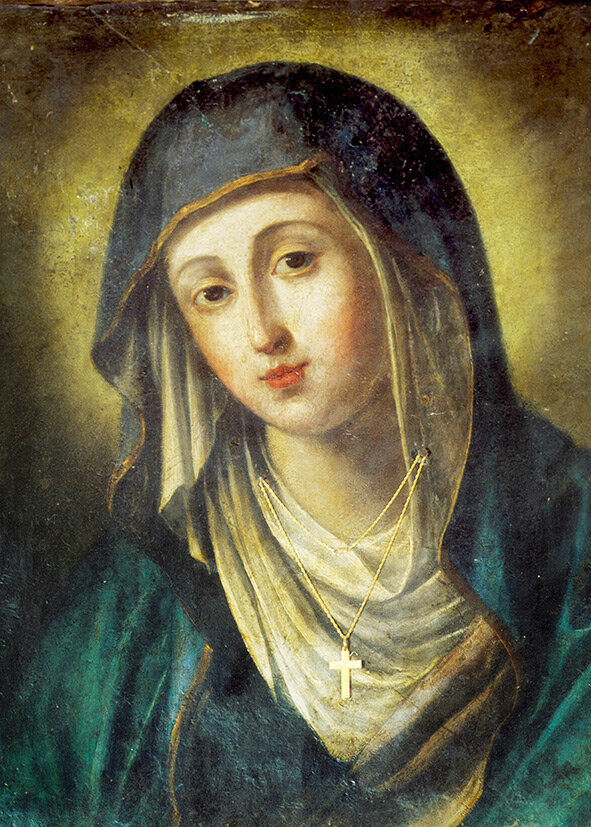
I'm talking about the smallest sanctuary dedicated to the Madonna in Rome, called dell'Archetto, located after a narrow passage that is very difficult to see if you don't know where to look. Imagine you are in front of the Basilica of Santi XII Apostoli, and you want to go towards Galleria Sciarra. You will pass along Via San Marcello and right there, about halfway and on your right, you will see an alley ending in a black gate. Enter and you will be completely enveloped in a mystical and above all intimate atmosphere, given by the small but very rich space that surrounds you. The chapel of the Madonna dell'Archetto was designed and designated by Virginio Vespignani in 1851, following a neo-Renaissance style rich in decorations and colors. The focal point of the whole chapel is the small altar surmounted by this image of the Virgin, painted on stone by Domenico Muratori in 1690. It is not only the material on which the Virgin appears that is uncommon but, above all, the repeated miracles became the protagonist! The image was owned by the Marchesa Savorelli Papazzurri, who claimed, in 1696, that she had seen the Madonna move her eyes. For this reason, he decided to affix the image under an arch of his house, so that everyone could see it. According to the chronicles, the miracle was repeated in 1796, when the Virgin moved her eyes, from which tears also flowed. There were many eyewitnesses, who thought that the Madonna was crying because of the French occupation of Rome. A miracle that led the Church to investigate, while the sacred image was given a new security system which consisted of two gates which, in fact, prevented the faithful from touching it. Reason? The numerous votive offerings, many of great value, which began to be left here.
This is just one of the examples of Marian images associated with miracles of various kinds. Think of one of the chapels of the church of Sant'Andrea delle Fratte, where the Madonna would appear to a man, or the small chapel of Santa Maria in Via with its icon and miraculous water. As for the sanctuary in this one, however, it took almost fifty years to see the miracle official and recognized, and to start the works for the construction of the Chapel of the Madonna dell'Archetto. This is Rome too: a melting pot of miracles, chronicles, faith and art.