

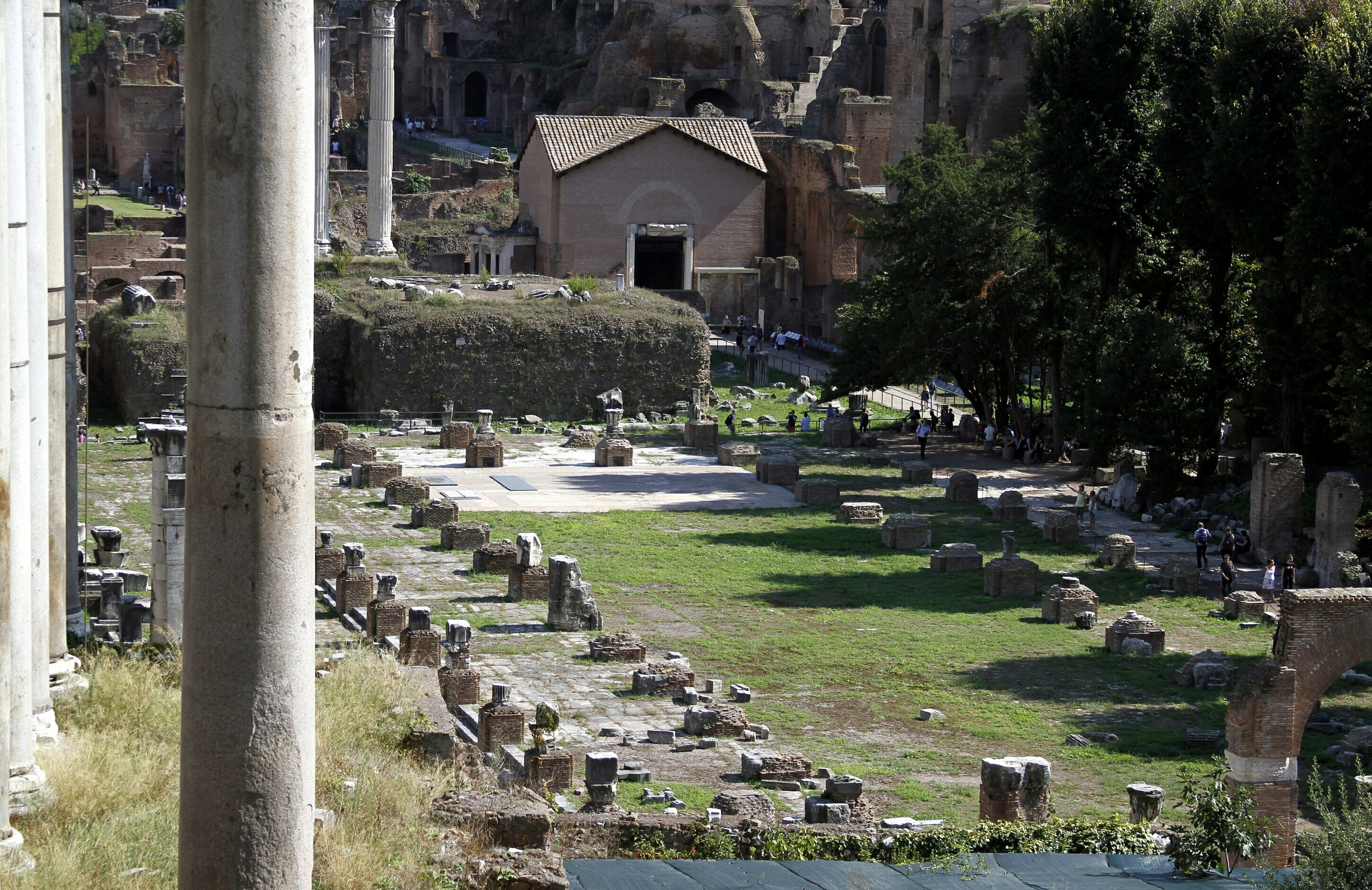
Among the architectural symbols bequeathed by Julius Caesar and visible, at least as a historical memory, in the Roman Forum in Rome, mention must necessarily be made of the Basilica Iulia, so named in honor of the one who, personally and through funding of friends and clientes, ordered the construction of the work: Julius Caesar. As always, walking in the Roman Forum, with its many monuments (such as this triumphal arch, just to name one), really means walking through history. And for a tour guide like me it's always a pleasure to tour here. And now, admiring the remains of this ancient Roman civil basilica, I will give you another reason to come here to the Roman Forum.
In fact, Julius Caesar did not choose the well-known dictator by chance, since this basilica, of which unfortunately today nothing remains but the staircase, a few plinths and a few capitals, was built directly above an older basilica, the Sempronia one (commissioned in the 2nd century BC by Tiberius Sempronius Gracchus). Imagine that, according to some written sources, Tiberius Sempronius Gracchus (father of the famous Gracchi brothers), would have built this new building just above the house of the famous Scipio Africanus. And, thanks to some modern excavations, it has been seen that beneath the pavement from the Caesarian era there are not only traces of the oldest basilica from the 2nd century BC but also, deeper down, the remains of an impluvium which, at this point, it could belong to the home of the famous Scipio. A stratified history made up of famous people, who really made the history of Rome, noble families who passed the baton on the basis of their alternating fortunes! Really incredible. In all of this, what was this basilica for? Like all the others in Rome, it had no religious function but, on the contrary, was one of the civil and political symbols of the Urbe . A basilica, in fact, was nothing more than a multifunctional center in which there were various activities that enlivened the days (especially in the morning, the time of negotium and business for the Romans). Here the trials took place, with lawyers, witnesses and judges who decided the fate of all Roman citizens. On this occasion the nobles and the scions of noble families had the opportunity to demonstrate the value of their oratorical art, as always here the money changers and merchants used to do business, closing and concluding contracts. Since this basilica was an area that developed longitudinally, also having the entrance on the long side of the building (and not on the short side as is the case today), and being mostly covered, many took advantage of the shade simply to laze, stroll, follow the processes or find the right deal.
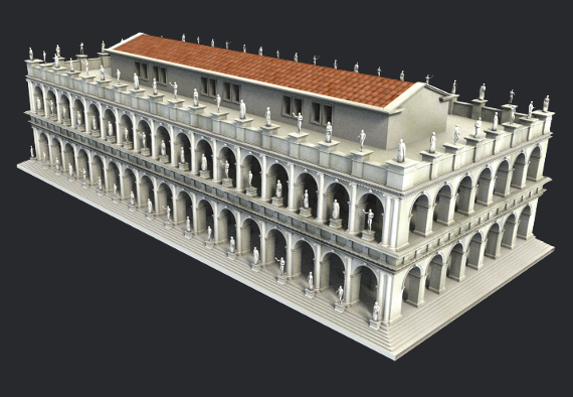
In short, this basilica, among other things never seen by Caesar who died assassinated years before the construction and inauguration of the building, wanted and completed by Augustus, denoted the typical character of the ancient Romans: ready to do business, to find new customers and friends, just walking around refreshing your mind, following the political life of the city. The Basilica Iulia, eternal symbol of the magnanimity of Caesar who, as a good Roman, spared no expense to give citizens something useful and free to use, tells us how much the Romans loved coming to the Forum to manage and follow various activities. After all, his glorious propaganda project had its natural conclusion and demonstration with his monumental Forum (as you can read here), which from an urban point of view gave an exceptional boost to Rome. A winning mix, considering what the very civilized Romans managed to do. What you see is a 3D reconstruction , but it is easy to see the magnificence of a building built for the use and consumption of the average Roman. A building that is also a symbol of the personal promotion of a man with an active political life. A man who, like the others, wanted to climb the social pyramid...