

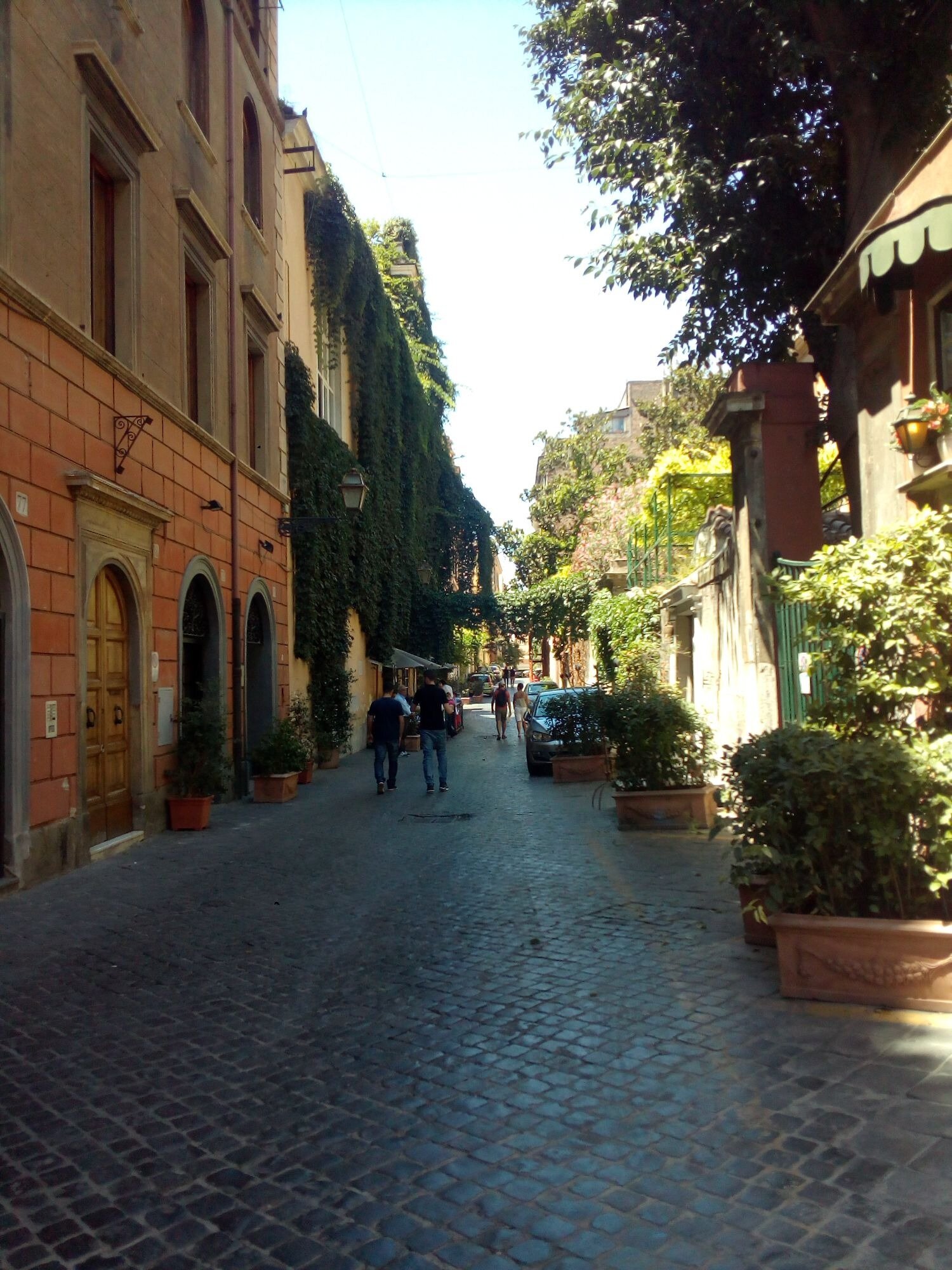
Sometimes walking in Rome you can find yourself in lanes almost out of time: quiet, calm... Features loved for centuries by various artists, sculptors or painters, craftsmen and masons. I am speaking in this case about Via Margutta, parallel to Via del Babuino, close to Piazza di Spagna, a street that fits perfectly with the description made above. And imagine how a simple street, like Via Margutta in Rome, is capable of giving us numerous ideas, of all kinds. Let's see which ones, without ever forgetting how today Via Margutta is rightly associated with the artistic and inspiring soul of Rome.
First of all even today we do not really know the origins of the toponym. On the one hand we are talking about a man from the Marguti family of whom there is traces in some documents of the sixteenth century. But according to others, Margutta derives from "Marisgutia", which means "Drop of the Sea". Why? It was a kind way to indicate that large drainage channel, almost an open-air sewer, which descended from the slopes of the Pincio to the Tiber. After all, Via Margutta has always been a little mistreated, having been treated for centuries as a sort of warehouse. Hidden from the eyes of most people, here workers and masons who worked in the nearby noble villas piled up their stuff, also building grates, railings, bricks... Just at the seventeenth century the first studios and art galleries were opened. Perhaps attracted by the quiet, the fragrant flowers and the vineyards that surrounded it, many artists settled here, giving to Via Margutta that artistic air for which it is still known today.
In reality, however, other sources and rumors tell us how Via Margutta of Rome is inextricably linked to a barber, named Giovanni, famous, unfortunately for him, for his lack of attractiveness and lack of acumen. For this reason the simple barber earned the nickname "Margutte", basically a derogatory. More prosaically Margutta would derive from Margut, the surname of the barber who, perhaps, did not have all those bad qualities. This closely resembles the story of the Fontana del Babuino, located just a short distance from Via Margutta, one of the talking statues of Rome. However, the real transformation of the street took place at the end of the nineteenth century when Monsignor De Merode, in one of his countless urban planning initiatives (such as the one from which the Teatro dell'Opera of Rome was born), reclaimed the area, thus giving It is an impulse to that artistic vein which still today makes Via Margutta so special. A relationship with art legitimized by the Fontana degli Artisti which, since the 1927, with that basket of marble brushes decorating the top, recalls the true vocation of the street. A street almost from other times, therefore, in the heart of the Eternal City but at the same time full of an atmosphere that invites relaxation and contemplation, especially for art lovers who can visit numerous galleries exhibiting works by emerging artists.