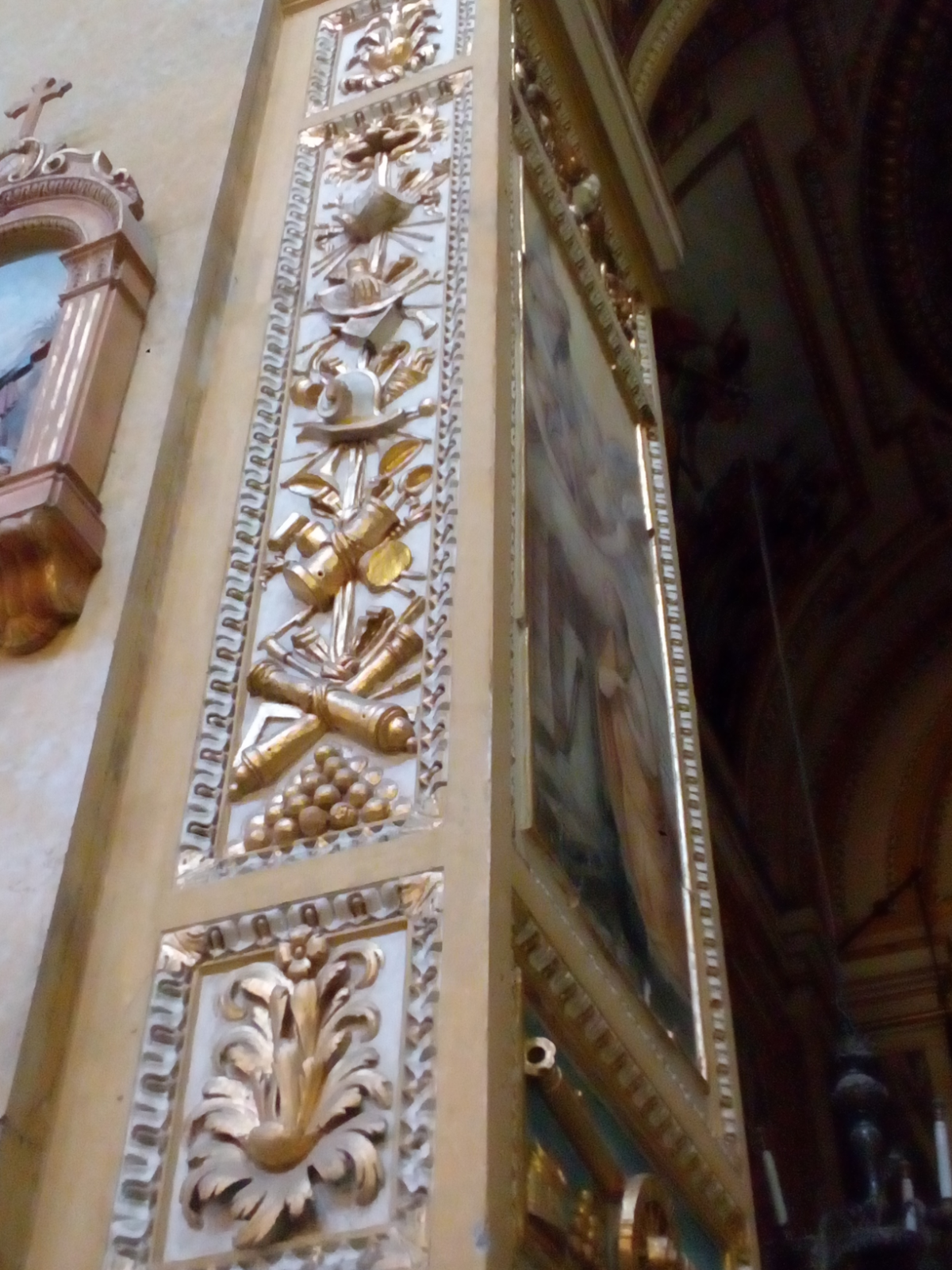
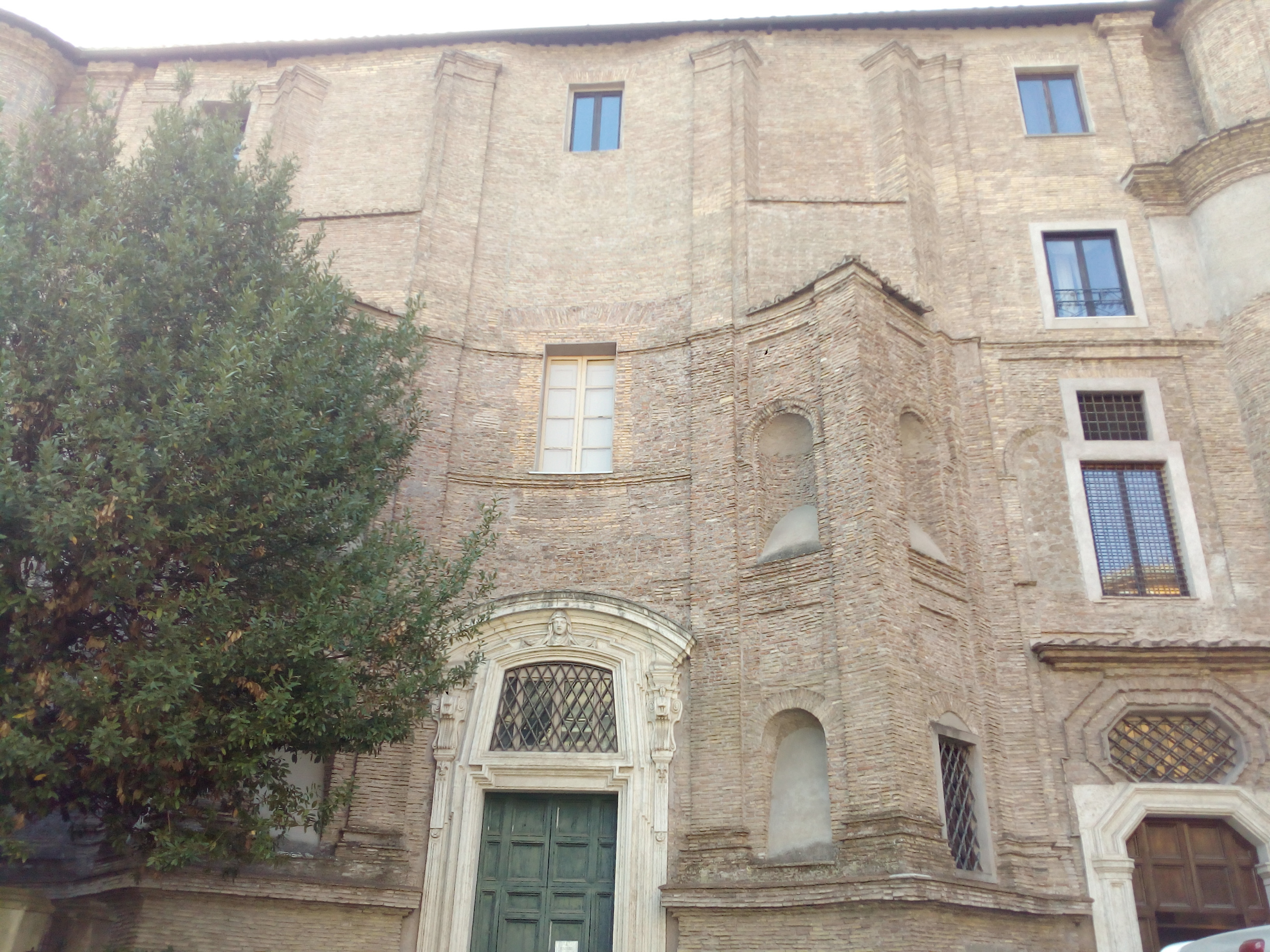
Here is the façade of the extraordinary Church of Sant’Agnese in Agone, one of Borromini’s finest works. This architectural marvel is not only one of the symbols of Piazza Navona in Rome, but also a majestic yet at the same time elegant church. Its curved lines and gentle dynamism are unmistakable, but beyond that, what strikes you about the basilica is its history. As a local tour guide I have to tell you: visit, savour and enjoy the wonderful Basilica of Sant'Agnese in Agone in Rome.
At first, the idea of building a church overlooking Piazza Navona came to pope Innocent X Pamphilj, who also had the adjoining palace built as a residence for himself and his family. We are in the mid-1600s. The architects entrusted with the project were Girolamo and Carlo Rainaldi, two relatives who represented an artistic school still tied to the Renaissance. Their plan, in fact, called for massive walls, with few decorations, and with the central part of the façade strongly projecting onto the square. Before long, the pope no longer liked this project, so he reassigned the work midstream to Borromini. He, however, never saw the end of the works either, because of his bad temper! It was well known in Rome that the architect had quite a temper, so much so that every day you could see him quarrelling with the workers, his assistants or the patrons, as happened on this occasion. So much so that one day, out of the blue, Borromini left the site and never returned. In truth, it must also be said that the famous architect from Ticino was also very meticulous and attentive to every detail, a bit like Michelangelo in this sense. An extraordinary man, praised by his patrons for "l'arte, ingenio et modo", who would not let himself be lured by the sirens of fame.
The works were completed by the Rainaldis, in particular Carlo, who by then could no longer make heavy changes, since the works were in a very advanced state. What Borromini conceived is there for all to see: a concave façade, made specifically to better highlight the extraordinary dome. It is also striking how one can almost be fooled by the bulk of the church façade, in any case softened and made more slender by the presence of the two small bell towers. Stepping inside, in fact, one is almost stunned to observe the intimacy of the church, with its octagonal plan and spaces that almost invite you to raise your eyes to the sky, to admire the splendid fresco by Ciro Ferri and Corbellini depicting the Glory of Saint Agnes. This is another example, here in Rome, of a pictorial style that took hold especially in the 17th century, a bold, painterly message that originated from the Counter-Reformation. Looking up, inside the dome it does not feel like there is a wall, because you get the clear sensation, in seeing the figures, the clouds and the light, of glimpsing straight into the infinite. A grand perspective illusionism, a sense of architectural rupture that seems to project us into another dimension typical of Roman Baroque. A triumph of colours and bodies in motion that almost disorient yet fascinate at the same time, a depiction centred, among other things, on the figure of a saint that can be seen in another famous Roman basilica: Sant'Ignazio da Loyola (to read the article click here).
Another curiosity about the Church of Sant'Agnese in Agone in Rome is the following: the church had an opening in an internal side wall, which looked directly onto the pontiff’s bedroom, located in the adjoining palace. In this way, Innocent X could attend public services straight from...bed!