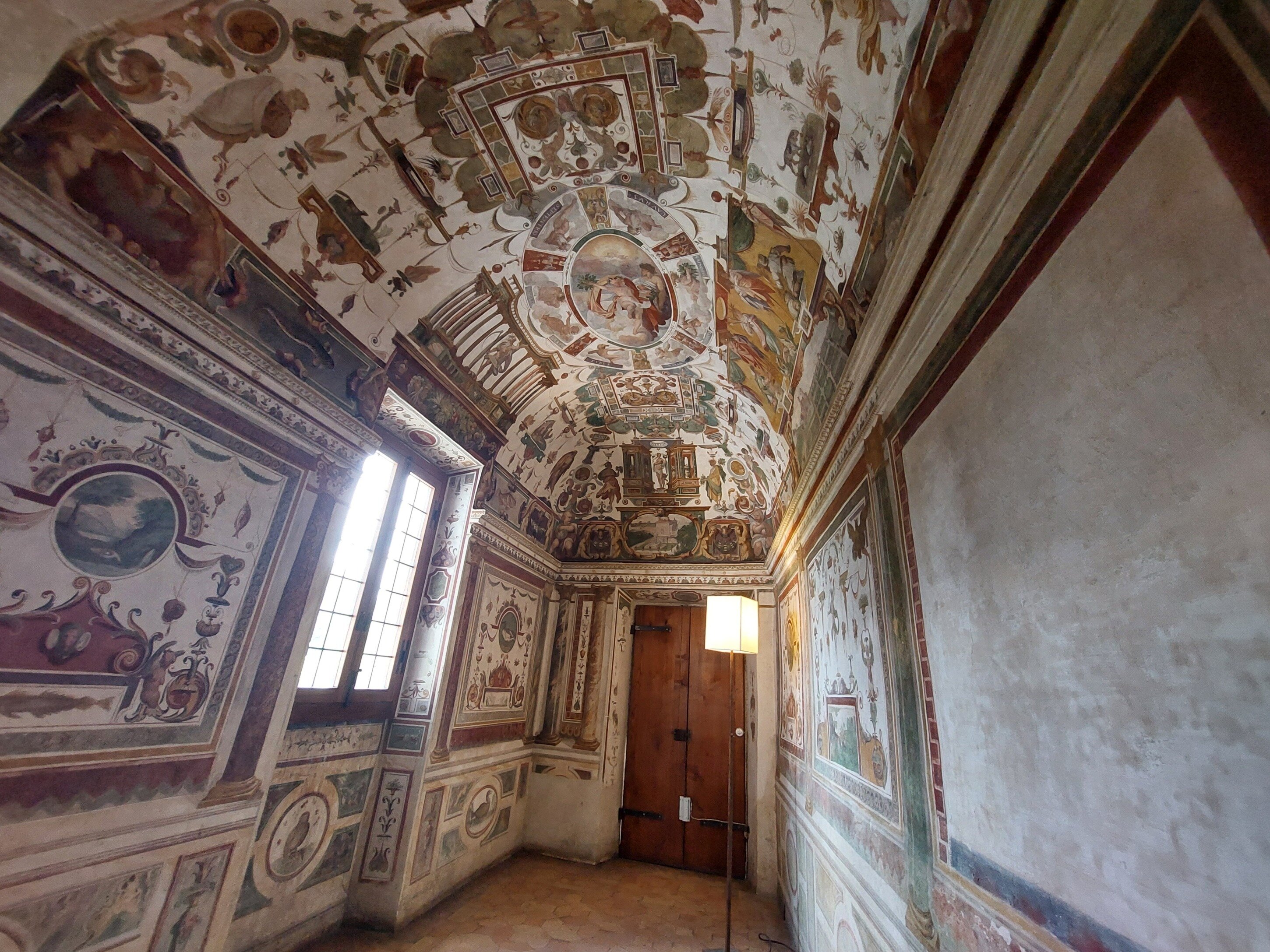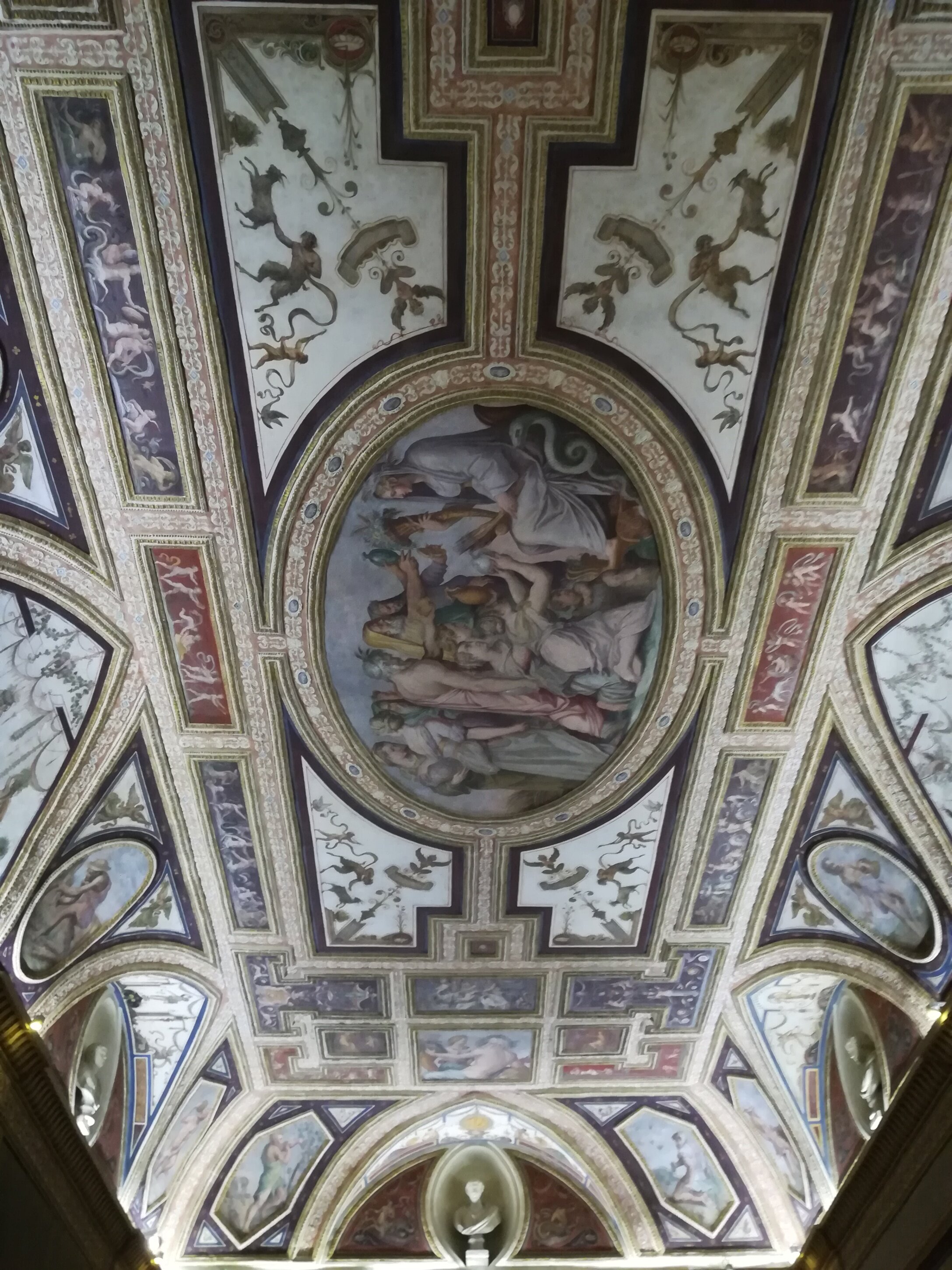
In the past, I had the opportunity to write something about Palazzo Venezia. Without a doubt, one of the symbolic buildings of Rome and its architectural and artistic evolution. Today, then, your local tour guide takes you inside, discovering more about a museum whose collection ranges from ancient to Renaissance art, showcasing artifacts of various kinds. And, inside the Palazzo Venezia museum, one cannot help but be amazed by the so-called Sala Altoviti, a room whose vault is completely frescoed with grotesques (to learn more about grotesques click here), personifications of the Months, allegories that refer to Greco-Roman mythology but also to the patron of the room: Bindo Altoviti. Let's get to know this story better.
He was a banker and merchant who was born in Rome and pursued an anti-Medici policy. His family owned a beautiful villa along the banks of the Tiber, precisely near the Church of San Giovanni dei Fiorentini. Due to the construction of the Muraglioni, at the end of the nineteenth century, the villa (as happened in other cases), was demolished. Fortunately, however, the decoration of the vault of Bindo Altoviti's study was saved and moved here, where we still see it today. The creator and artist of this extraordinary painted beauty was Vasari who, with help, in the mid-sixteenth century created the frescoes we see. At the center stands out the Triumph of Ceres, goddess of the harvest, agriculture and abundance. According to a persistent tradition, one of the male figures in this scene would have the face of Michelangelo! A tribute to a master, an artist but also, probably, a true friend of Vasari. On the short sides, instead, we have two scenes that refer directly to the Altoviti family who, through these frescoes, wanted to show their opulence and origins. On one side we have the Arno crowned with jasmines, in which we clearly see a red lily (symbol of Florence, the city of origin of the Altoviti). On the other side, instead, here is the allegory of Rome, understood as the city where the Altoviti developed all their business. A beautiful way to remember the past and the present of the family, don't you think? But that's not all, because among the wonderful grotesques of typical Renaissance style, along all the walls, there are the fantastic personifications of the Months. The curiosity is that only March and April are represented as Greco-Roman deities. All the other Months, instead, are personified by figures seen at work, jobs that are closely linked to the months in question. They are also figures that, however, clearly refer to a specific time of year: and so for February we have an old man warming himself in front of a fire, while for July we have a man working the wheat. Here, even, Vasari is said to have portrayed himself, as a sort of small personal tribute. We also have a grape harvester, representing September.
A room that truly takes your breath away, and that deserves to be admired here, in the museum of Palazzo Venezia in Rome. Don't forget, too, that the building also houses libraries and, above all, exudes history. If only because here was the seat of the Grand Council of Fascism. And don't forget, even more, that we are in the beating heart of Rome, a few steps from the Colosseum and right in front of the great construction site that, one day, will bring to light one of the best metro stations in the world.