

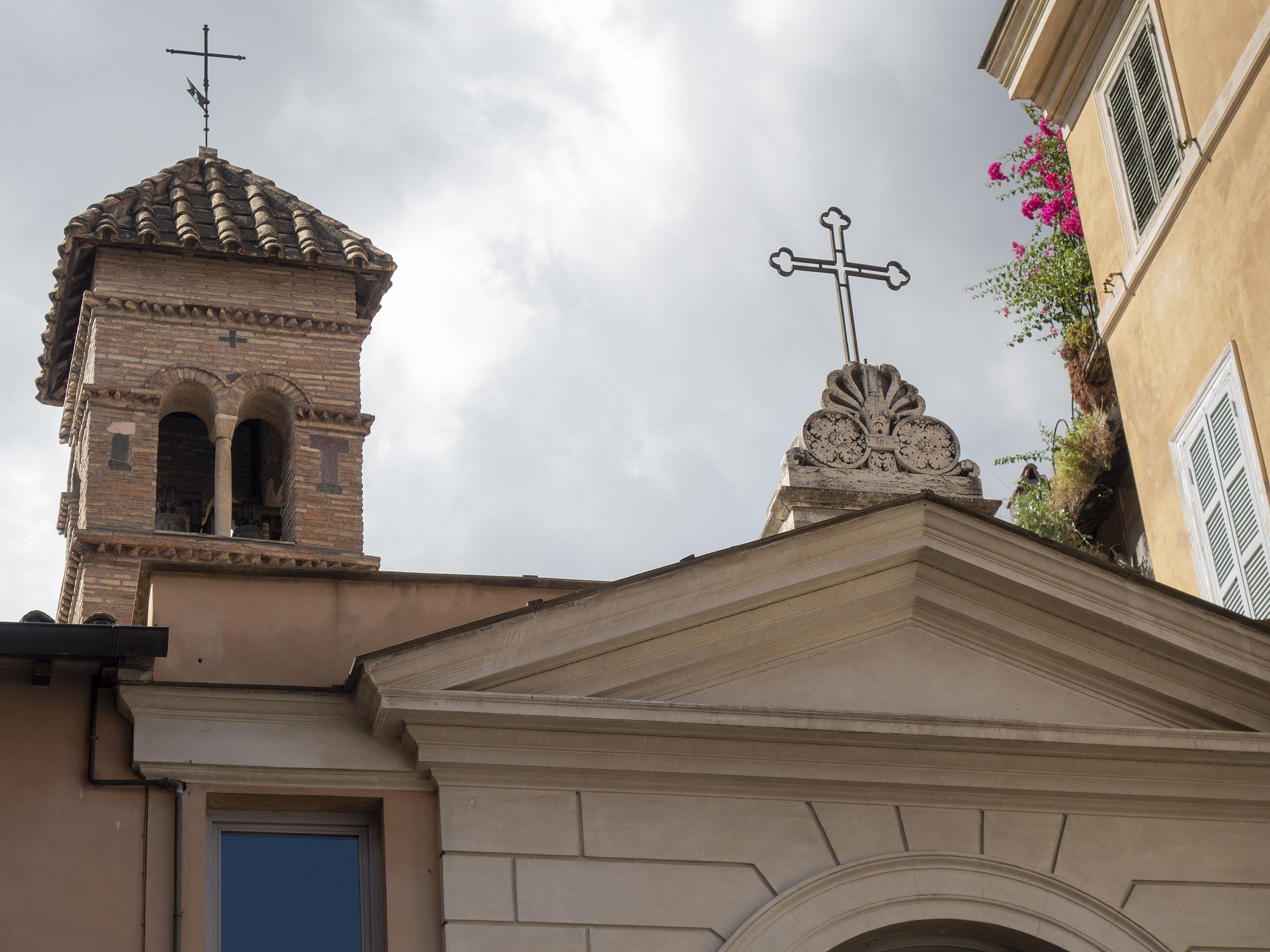
Rome is not only large churches or basilicas, as it also encompasses the tranquility of the narrow streets of historic districts, such as Trastevere. Walking in the early morning or in the afternoon, when maybe there aren't too many people around, really makes you stop and look, just look. And, why not, if you are near Piazza in Piscinula (diminutive of the pools or pools of water with which an ancient thermal plant from the Roman era was supplied in the area), try to enter the Church of San Benedetto in Piscinula. A local tour guide recommends it to you, and there's a reason!
Actually no, thinking about it before crossing the entrance, I invite you to notice the bell tower. It is small, much lower than the others that stand out in the city. Well, know that you are looking at the lowest bell tower in Rome and, not only, which has the oldest bell in the city inside, dating back to 1069! And now, after realizing that you are in the presence of an almost intimate place of worship, away from the classic tourist circuits, know that you are about to visit a place rich in history, since the foundation of the church, according to documents, took place in the tenth century ( then rebuilt following the sack of the Normans in 1084) above the so-called Domus Aniciorium ì. The Anici were an ancient Roman gens which, among other things, would have given birth to San Benedetto da Norcia. The first place of Christian worship, according to other testimonies, would have been organized here as early as the end of the 6th century, but even more antecedent would be the arrival of Saint Benedict himself here, at the end of the 5th century. And, continuing with this historical prospectus, it will be nice to know that when visiting the church, the first thing I recommend you see with your own eyes is a small square cell on the left. It would be there that the saint retired in prayer centuries ago, having the first inspirations from God, which will guide him throughout his existence. A church full of holiness, one might say, is automatically correlated to its small size. Before entering the cell I'm talking about, stop in the previous Chapel of the Madonna, so called for the 12th-century Marian icon that is particularly venerated. This small chapel is said to be what remains of the ancient oratory from the 6th century AD which, over time, was transformed into a real church.
Despite this, everything smells of antiquity, like the beautiful Cosmatesque floor which, it seems, has not undergone any type of alteration from the Middle Ages to today. If this were the case, it would be truly extraordinary, because here in San Benedetto in Piscinula time seems to have stopped in the 12th - 13th century, that medieval period which is commonly considered poor from a cultural, artistic and social point of view. This is not the case, because even a small church like this, in the heart of the Trastevere district, shows us how much the Middle Ages was a harbinger of novelty, curiosities and beauties. In short, as I wrote at the beginning, Rome doesn't just have huge basilicas. Beauty, as you may have understood by now, is also found in the small details.





















