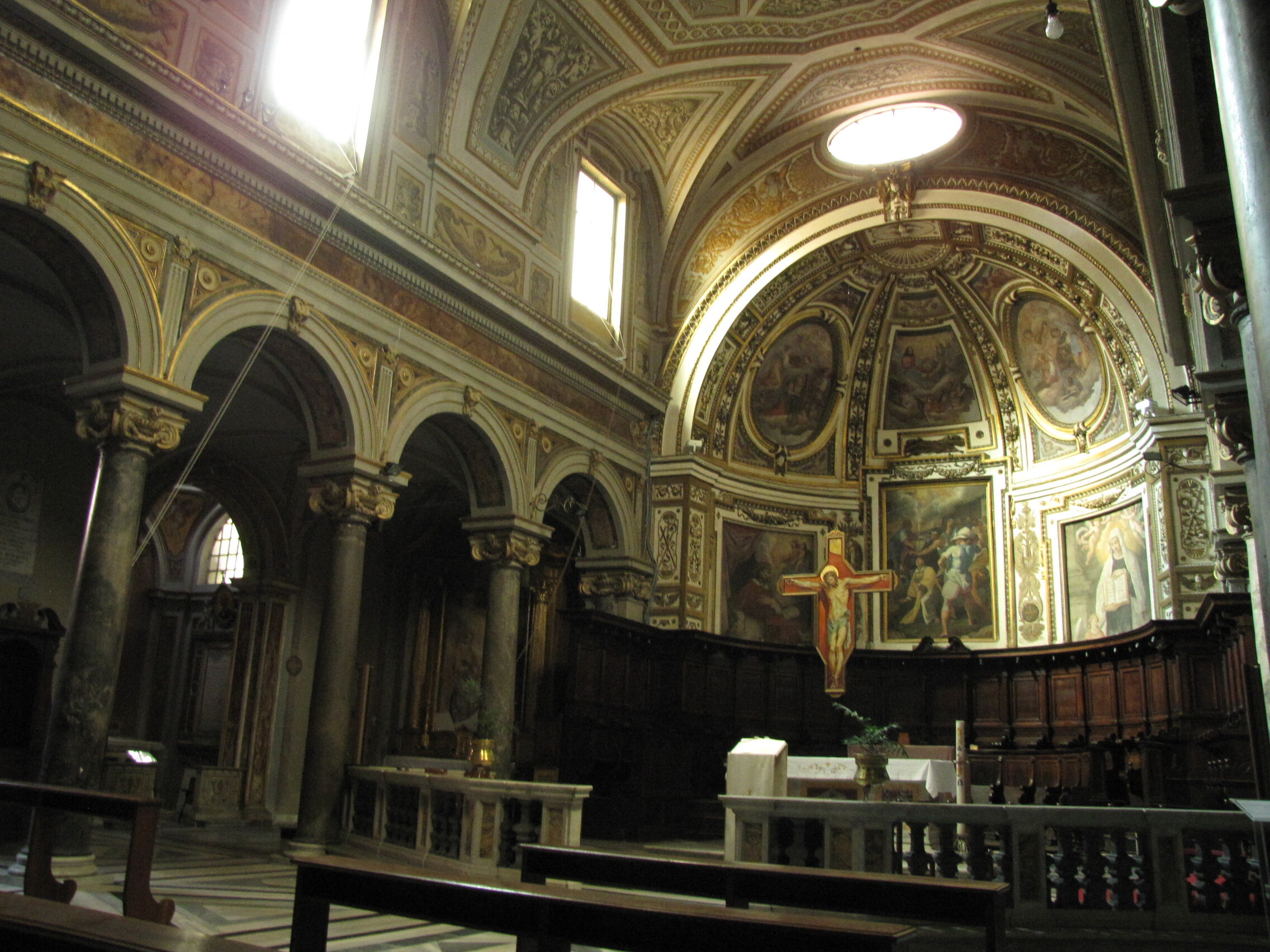
According to legend, in the ossuary of the church of Santo Stefano del Cacco rest the bones of a young girl who, not even after death, found peace.
We are just a few steps away from the church of Santa Maria sopra Minerva, a splendid place of worship that houses a sculpture by Michelangelo, papal tombs and wonderful Renaissance chapels. Out front stands the monument, erected by Bernini, known as Minerva’s Chick. The small obelisk above it is a direct witness to the ancient building that once stood here nearby in the days of the first Roman imperial dynasty. I mean the Iseo Campense, the great temple dedicated to Isis, the mythical Egyptian goddess. For this reason, after the destruction of the sanctuary and the fall of the empire, countless Egyptian-style artifacts were found in this area, such as the already mentioned obelisk. It was here, too, that a portion of a granite sculpture depicting the god Thoth came back to light. As is known, Egyptian deities had animal form, and in this case Thoth was linked to a monkey, a macaque to be precise. Here in Rome the macaque, by locals, was called “cacco”. Hence the odd name of the little church of Santo Stefano del Cacco, which stands almost hidden in the narrow lanes between Santa Maria sopra Minerva and the Palazzo Doria-Pamphilj complex. A church, however, also tied to a sad story, full of pain and ghosts. As there are many others in Rome (click here for another example).

According to some accounts, in the early 1600s a wealthy family of booksellers lived here. The jewel of the house was Orsola Castellano, daughter of the family dean, the bookseller, who had greatly contributed to the family wealth. Orsola, it was said, was very beautiful and therefore was promised in marriage to an equally rich nobleman. One of the many marriages of convenience, as was customary at the time, that spared no one, least of all the spouses’ feelings. As in true, proper romantic love stories, and as it should be, Orsola did not want to follow her father’s orders, because her heart already belonged to another. A young man who, unfortunately for him, did not belong to any noble family. It’s easy to see how, especially back then, Orsola could never have imposed her own will, and thus had to accept, unwillingly, the arranged marriage. But the two lovers devised a plan. The day before the wedding they would meet, at night, to make love. In this way Orsola would lose her virginity, ruining the marriage. You can imagine that, sadly, it did not end well, because the two were discovered. Here things grow frantic and the accounts partly diverge, but because of a fight, perhaps between the young man and some city guards, Orsola was wounded to death. She died there, that night. Her bones were buried in the church ossuary of Santo Stefano del Cacco, where the funeral was held, among many others. But the story, your tour guide in Rome tells you, doesn’t end here.
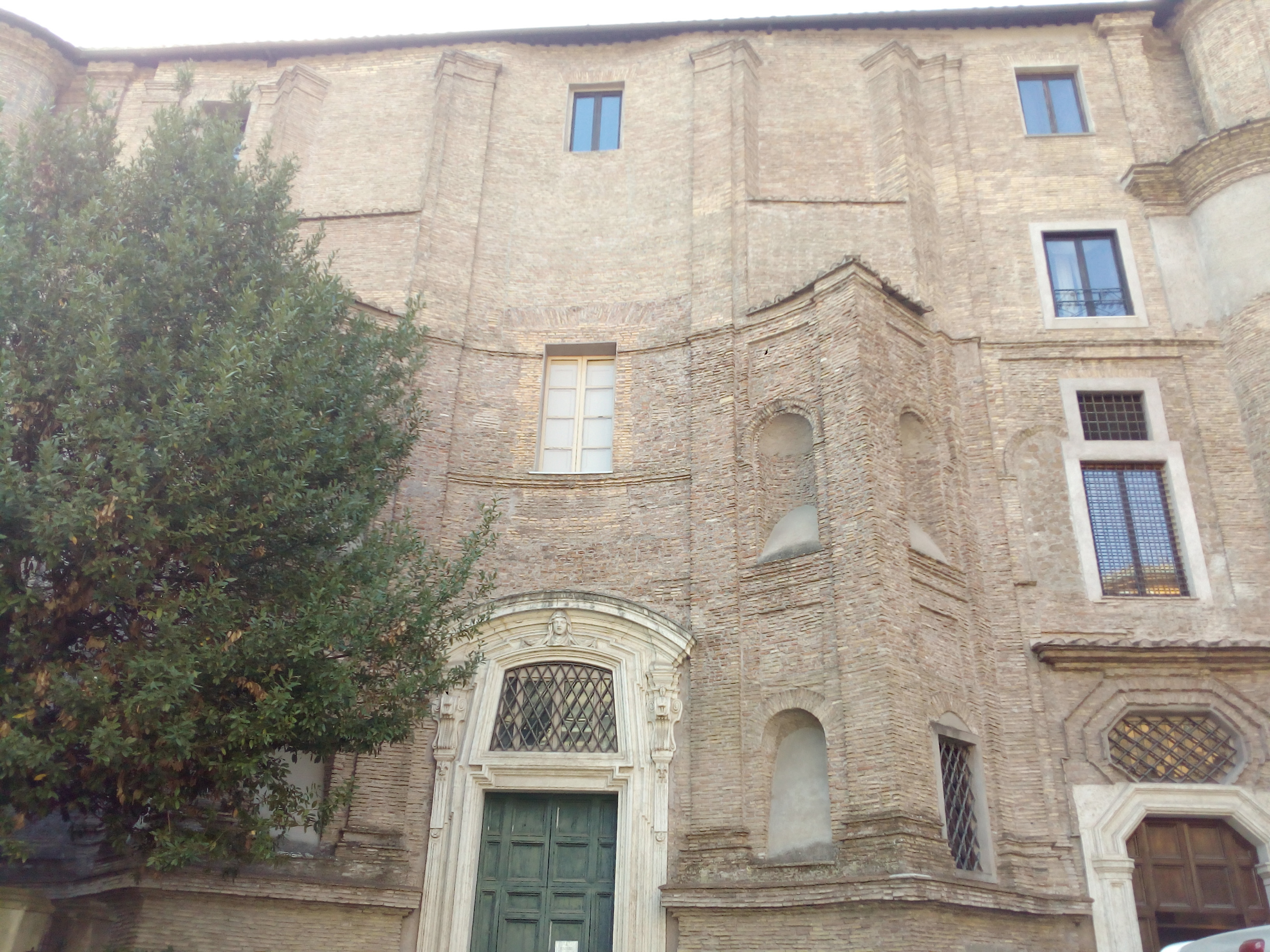
In fact, there remained a problem of no small importance. The marriage, previously agreed upon, had been annulled, moreover because of a misfortune and a betrayal, from the point of view of the future groom's family. Both he and her father wanted, at least to safeguard their supposed honor, to verify with certainty that Orsola was at least still chaste, intact. Therefore, not once but twice the poor girl was exhumed from her tomb. And twice it was certified that she died a virgin. A meager consolation, since she certainly could not enjoy any eternal rest. So much so that, according to legend, her spirit still wanders, in a white dress soaked in blood, through the halls and naves of the church of Santo Stefano del Cacco. A place of worship built already at the behest of Paschal II in the 9th century, and then enlarged especially in the 17th century. The façade dates to that era, while the interiors are nineteenth-century. The curiosity was that, to restore the church, especially the floor, in the 19th century they reused the marbles destroyed by the fire that struck the Basilica of Saint Paul Outside the Walls. A wonderful example of recycling and reuse here, in the lovely church of Santo Stefano del Cacco in Rome. Home, perhaps, to a ghost…