Many think that Rome is an expensive city, where the attractions cannot be for everybody due to tickets and something more. Well, apart from the fact that the churches of the Eternal City are free, and that almost all those in the historic center offer unparalleled wonders, it is true that there are also many museums in Rome where you don't need to pay. And as a local tour guide I am here today to tell you about one of these free museums: the Museo delle Mura, at the extraordinary Porta San Sebastiano.
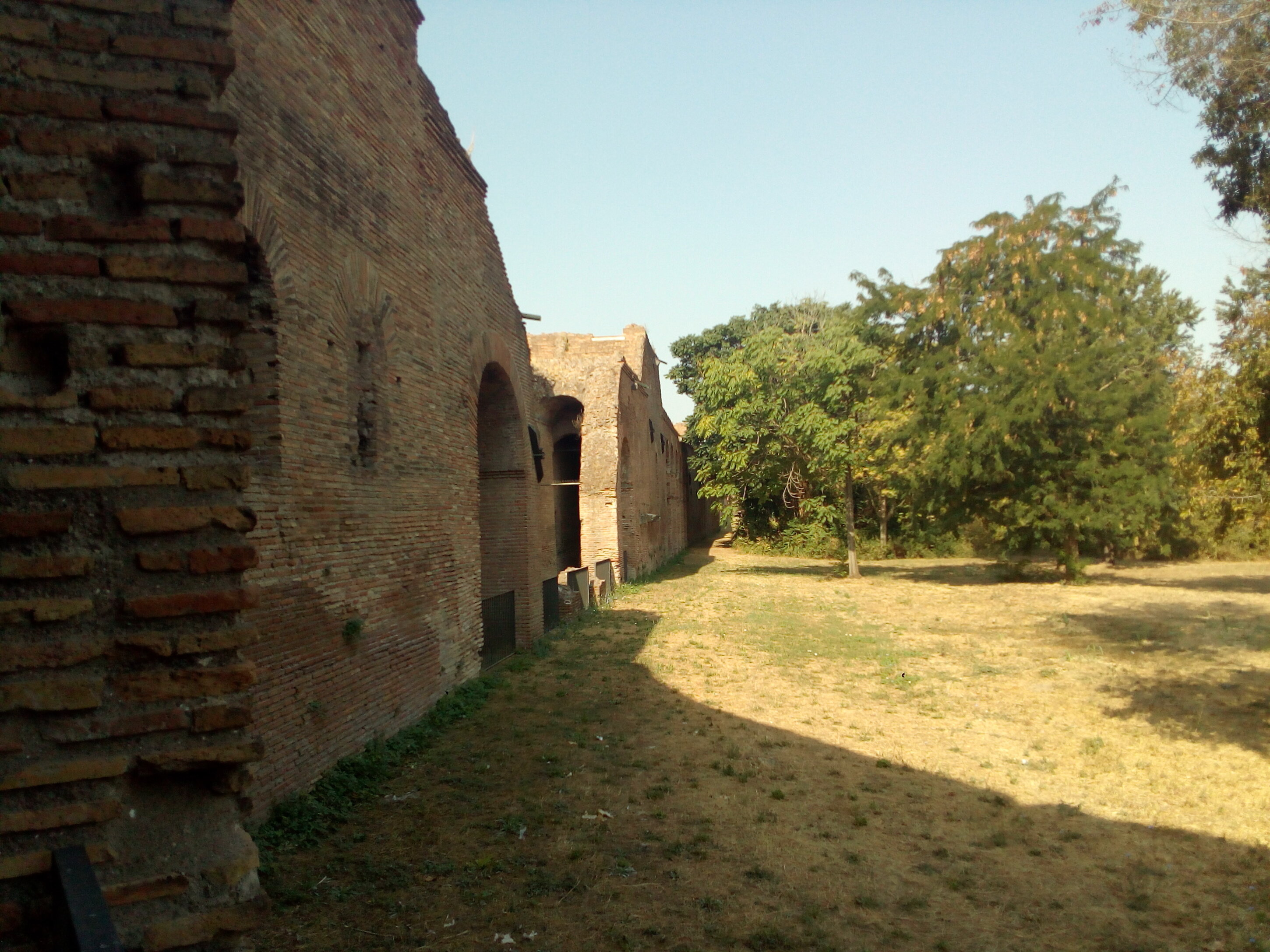
Amid the experiences to do and live in the Museum of the Walls in Rome there are the 350 meters of walkway recently reopened, after a restoration and cleaning. To follow the footsteps of the soldiers who, over the centuries, protected Rome walking along the Aurelian Walls (19-kilometer wall built in the third century AD by the emperor Aurelian), means to get in touch with the history of Rome! Along the way you understand how you are faced with a real puzzle, made up of walls and elements that span the centuries, in the moments in which the walls were rebuilt or restructured. The passage between the walls byAureliano and those by the pope Honorius I, who during the fifth century wanted to fortify the walls again, is well known, to prevent the barbarian populations from entering the city. The details also tell us a lot, like the narrow slits used by archers to shoot their arrows, while still remaining safe and sheltered. The walkway, which also extends embracing ten towers, tells us how they worked: they were on two floors, with the upper floor dedicated to the patrol soldiers, where even today, despite the collapses, you can see the ancient stairways that led up. It is interesting to immerse yourself in this atmosphere of other times, very useful for understanding how an important city like Rome needed a powerful defense that would defend its domains, a defense that was sometimes overcome, but often for internal betrayals.
Let's mention the almost square loopholes that you meet along the way... why this change compared to the oblong ones that you can initially notice? For the simple fact that, during the Roman Republic of 1848, which arose after having expelled pope Pius IX from Rome, they no longer fought with arrows but with rifles. A period certainly not easy, in which it was even the pope, Pius IX, who had to flee, and for many reasons. Finally, in order not to be surprised, at the height of the third tower you can see, above a lunette, a fresco with the Madonna and Child, from the Middle Ages. Probably the tower was taken by a hermit, who wanted to spend his days outside society in contemporary realities where the history of Rome itself had been written. How many things, how many news, how many glimpses in a short walk in the free Museum of the Walls of Rome, right?