

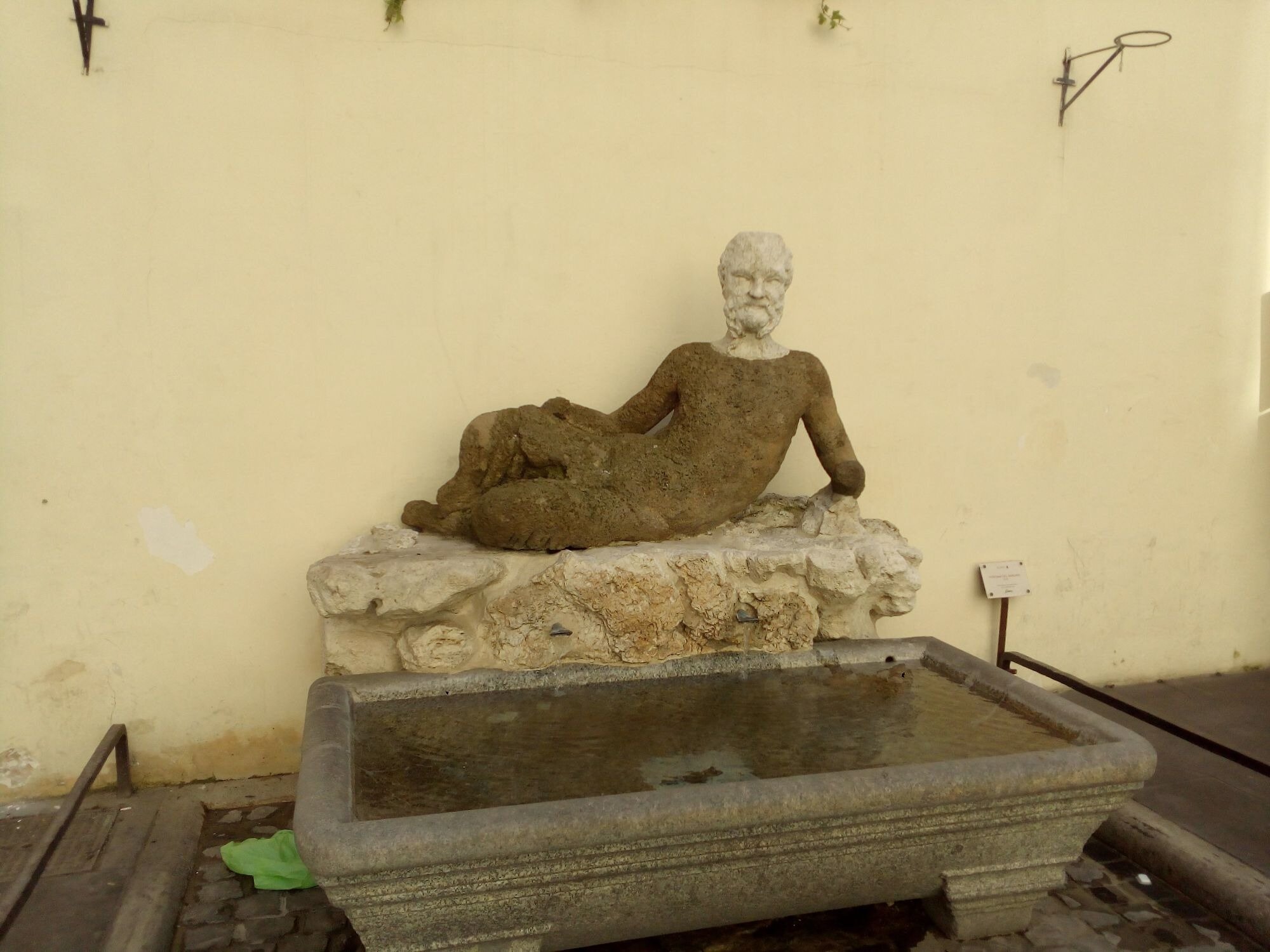
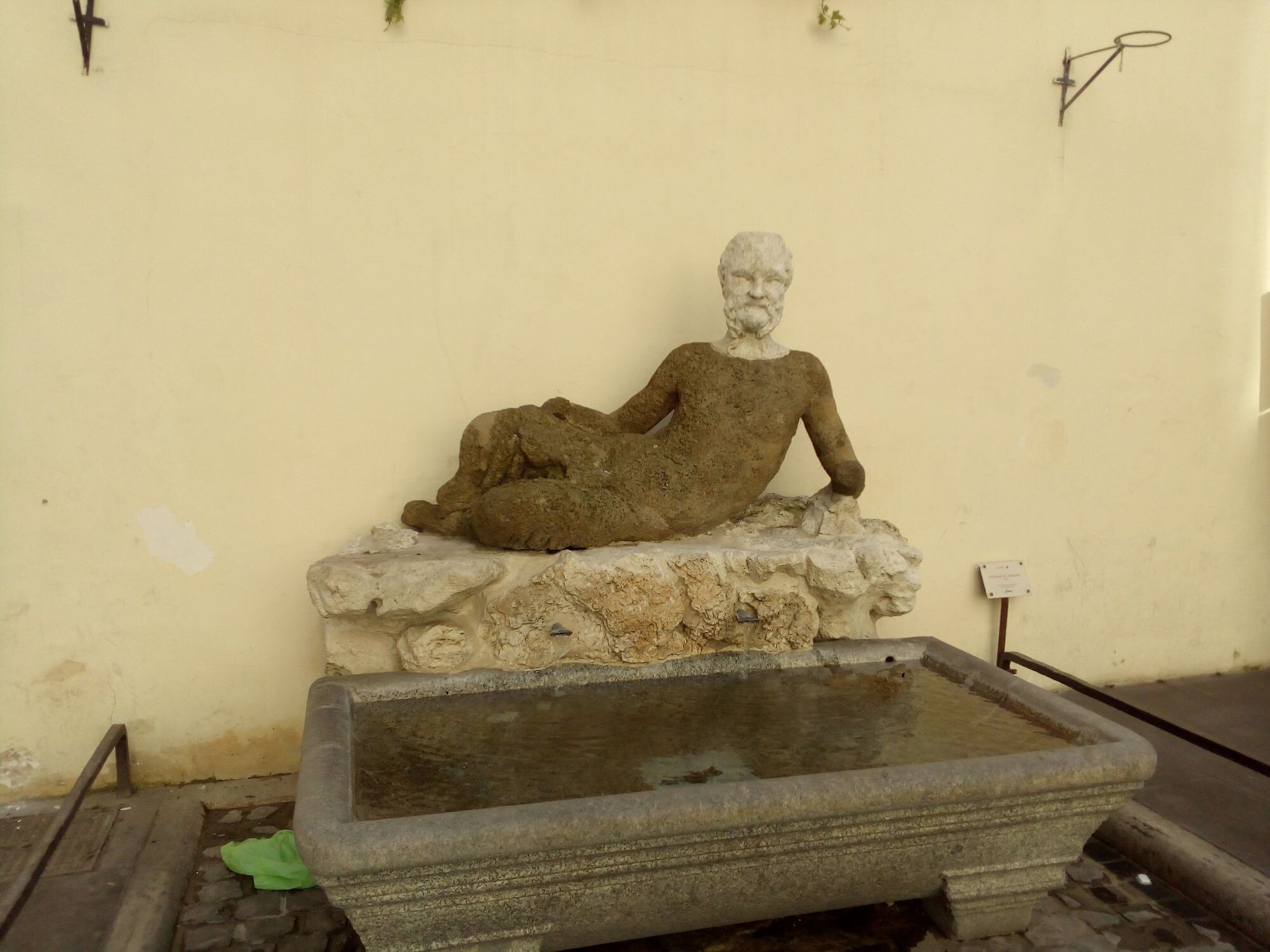
Returning to the Via del Babbuino of Rome, after talking about Via Margutta that is very close to here, the doubt might arise. Why this strange name? Why refer to this cute animal on a street in the city center? Walking you will notice one of the most reviled and mocked statues in the history of Rome: the famous Baboon, precisely! Here is one of the popular icons of Rome, a nice sign of the irony typical of the locals...
The reclining character is a silenus, an ancient creature always related to the element of water and fountains. Often, moreover, the silenians were wild creatures: hairy, dressed in rags or with goat skins, almost animalistic expressions. Moreover, in the classical era, these creatures were also obese, sometimes even deformed by the deep and rooted emotions aroused from the activities they used to carry out. And, probably, it was precisely for these characteristics and for the almost grim look that emerges from the face of this silenus, that popular tradition gives this nickname. It should be noted that the part of the body, almost completely impoverished of its original aspect, dates back to the Roman period. The head, on the other hand, dates back to the end of the sixteenth century when the pope Pius V asked to erect a fountain here, to provide the area with public water. To say, first of all, that it is one of the talking statues of the city, those statuary works used by the Romans over the centuries to attach pieces of paper with satirical writings against the powerful people who ruled the city (from the pontiff to the cardinals, up to the politicians and prime ministers). If this statue could still speak today, who knows what would come out of its marble mouth. Something that is happening still today, if we think about the most famous talking statue of Rome: the Pasquino. However it is curious the origin of the name, which recalls the well-known primate. Why?
Simply the ugliness of the statue! We do not know who or what it may represent, but it is easy to understand how its suboptimal state of conservation triggered the easy irony of the Romans, who immediately found a nickname worthy of the statue's not very graceful forms. Step by step, in fact, the statue began to be called “er babuino”. It does not end here, because according to another tradition some centuries ago a distinguished gentleman, Cardinal Dezza, probably with sight problems (and not only), used to walk along the street in front of the Baboon. Well, it seems that every day this distinguished gentleman, believing that the statue in front of him was actually a noble lady (other sources tell us that he thought he was a saint), took off his hat, as a sign of respect. He probably didn't see very well…





















